


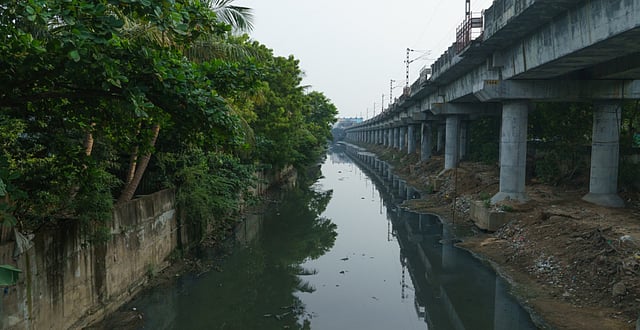
A key stretch of Chennai’s historic Buckingham Canal is set for a green transformation, as authorities move to integrate ecological restoration with urban infrastructure upgrades.
The initiative aims to convert a neglected waterway into a functional environmental and public space asset, aligning with broader goals of climate resilience and sustainable urban development.The proposed intervention, centred on the Buckingham Canal green makeover, includes landscaping, improved embankments, and enhanced pedestrian access along selected sections.Long seen as an underutilised and often polluted corridor, the canal has significant potential to serve as both a drainage channel and a linear green space in a densely built city.Urban planners view the project as an opportunity to address multiple challenges simultaneously. Chennai’s vulnerability to flooding, particularly during intense rainfall events, has underscored the importance of maintaining and upgrading natural drainage systems. Revitalising the canal could improve stormwater flow while reducing pressure on conventional drainage networks.At the same time, the Buckingham Canal green makeover is expected to contribute to mitigating the urban heat island effect.Expanding green cover along the canal corridor can help lower ambient temperatures, improve air quality, and create more liveable neighbourhoods. For a city that regularly experiences high summer temperatures, such interventions are increasingly critical.
Environmental experts emphasise that restoring water quality will be central to the project’s success. Years of encroachment, waste disposal, and untreated sewage inflows have degraded the canal’s ecosystem. Any long-term transformation will require sustained efforts in pollution control, waste management, and enforcement against illegal discharge.From a mobility perspective, the canal corridor offers potential for non-motorised transport infrastructure. Dedicated walking and cycling paths could provide alternative routes in a congested urban environment, promoting healthier and more sustainable modes of travel. Integrating such features with existing transport networks would enhance accessibility while reducing dependence on private vehicles.There are also economic implications. Well-designed waterfront developments can increase surrounding property values, attract investment, and support local businesses.However, experts caution that redevelopment must be inclusive, ensuring that existing communities are not displaced and that public access remains central to planning.Officials indicate that the project will be implemented in phases, with attention to both environmental restoration and urban design elements. Stakeholder coordination—across municipal bodies, environmental agencies, and local communities—will be crucial to maintaining momentum and ensuring accountability.
As Chennai continues to confront the dual pressures of rapid urbanisation and climate change, the canal’s transformation could serve as a model for reimagining legacy infrastructure. By combining ecological function with public utility, the project reflects a shift towards more integrated and resilient urban planning—where waterways are not liabilities, but vital assets in shaping the city’s future
Also Read:Chennai Pondy Bazaar Parking Congestion Disrupts Traffic Flow
