


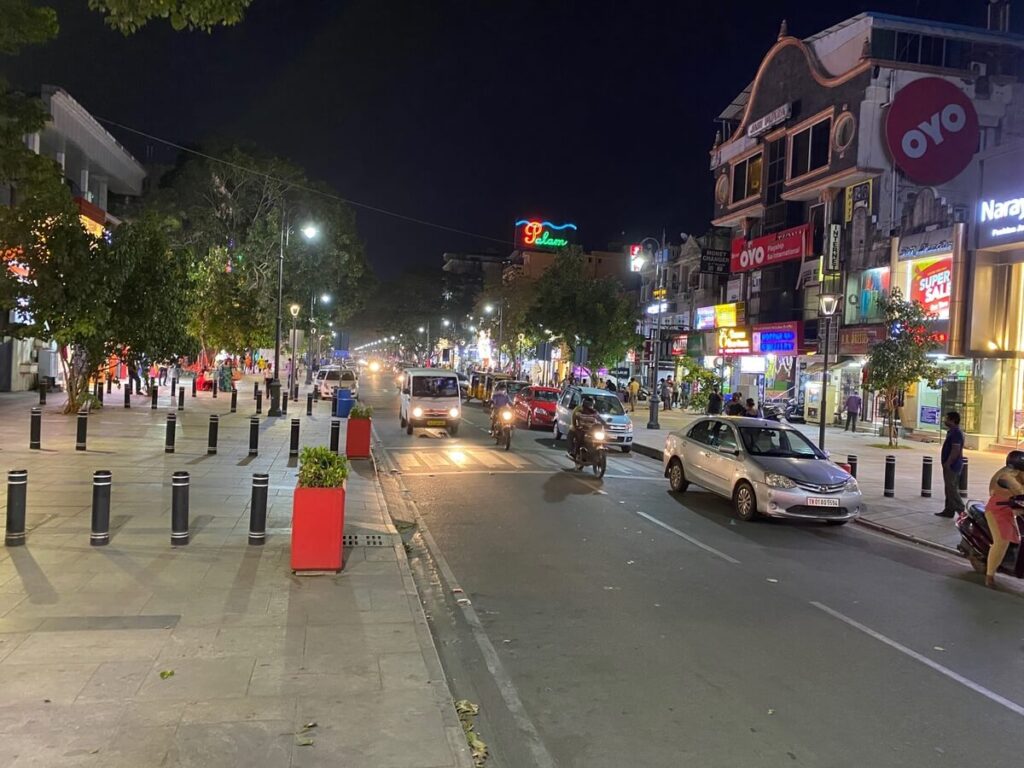
Unregulated street parking in one of Chennai’s busiest commercial corridors is increasingly constraining mobility, with mounting congestion in and around Pondy Bazaar exposing gaps in urban traffic and parking management.
The surge in private vehicle use, combined with limited designated parking infrastructure, has led to vehicles spilling onto narrow carriageways, reducing road capacity and slowing traffic flow. The situation has intensified in recent months, particularly during peak shopping hours, as visitors struggle to find legal parking spaces in the high-footfall retail zone.At the centre of the issue is the Pondy Bazaar parking congestion, which has begun to affect not only motorists but also pedestrians and local businesses. Encroached pavements and double-parked vehicles have made walking conditions difficult, undermining earlier efforts to improve pedestrian infrastructure in the area. For a district that attracts a diverse mix of shoppers, tourists, and daily commuters, the resulting bottlenecks are disrupting both accessibility and economic activity.Urban mobility experts point out that such congestion is symptomatic of a broader imbalance in city planning, where vehicle ownership has outpaced the development of supporting infrastructure. While Chennai has invested in road expansion and public transport improvements, last-mile traffic management and parking regulation continue to lag behind.The Pondy Bazaar parking congestion also highlights the limitations of relying on on-street parking in dense commercial areas.
Without dynamic pricing, time restrictions, or strict enforcement, roadside spaces tend to be occupied for extended periods, reducing turnover and increasing pressure on surrounding streets.This not only slows vehicular movement but also contributes to higher emissions as vehicles idle or circulate in search of parking.From an economic perspective, inefficient parking systems can affect retail performance. Shoppers deterred by congestion or lack of parking may shift to alternative locations or online platforms, impacting small and medium businesses that depend on physical footfall. At the same time, delivery vehicles face delays, affecting supply chains within the commercial ecosystem.There is also a sustainability dimension.Increased congestion leads to higher fuel consumption and deteriorating air quality, counteracting efforts to build cleaner, more liveable urban environments. Experts suggest that addressing parking challenges is essential to achieving broader climate and mobility goals.Potential solutions include the development of multi-level parking facilities, stricter enforcement of no-parking zones, and the integration of smart parking systems that provide real-time availability data.Encouraging public transport use and non-motorised mobility options could further reduce dependence on private vehicles in high-density areas.Officials are reportedly assessing measures to streamline parking and traffic flow, but implementation timelines remain uncertain.
As Chennai continues to grow, the experience of Pondy Bazaar underscores the need for coordinated, data-driven approaches to managing urban space—where mobility, commerce, and sustainability must be balanced to ensure long-term efficiency and accessibility
Also Read:Chennai Summer Rain Relief Brings Temperature Drop
