Nagpur station platform access limited during redevelopment
India’s national railway network is moving ahead with a major technology upgrade programme aimed at strengthening train safety and operational efficiency. Railway authorities have approved infrastructure investments exceeding ₹1,300 crore to accelerate the rollout of the Kavach safety system, expand fibre-optic communication networks and modernise signalling across several railway zones. The latest approvals are part of a broader national effort to transform the rail network into a more automated and digitally integrated transport system. Officials say the projects focus on improving real-time communication between trains and control systems, reducing the risk of collisions while enhancing network capacity on some of the country’s busiest rail corridors.
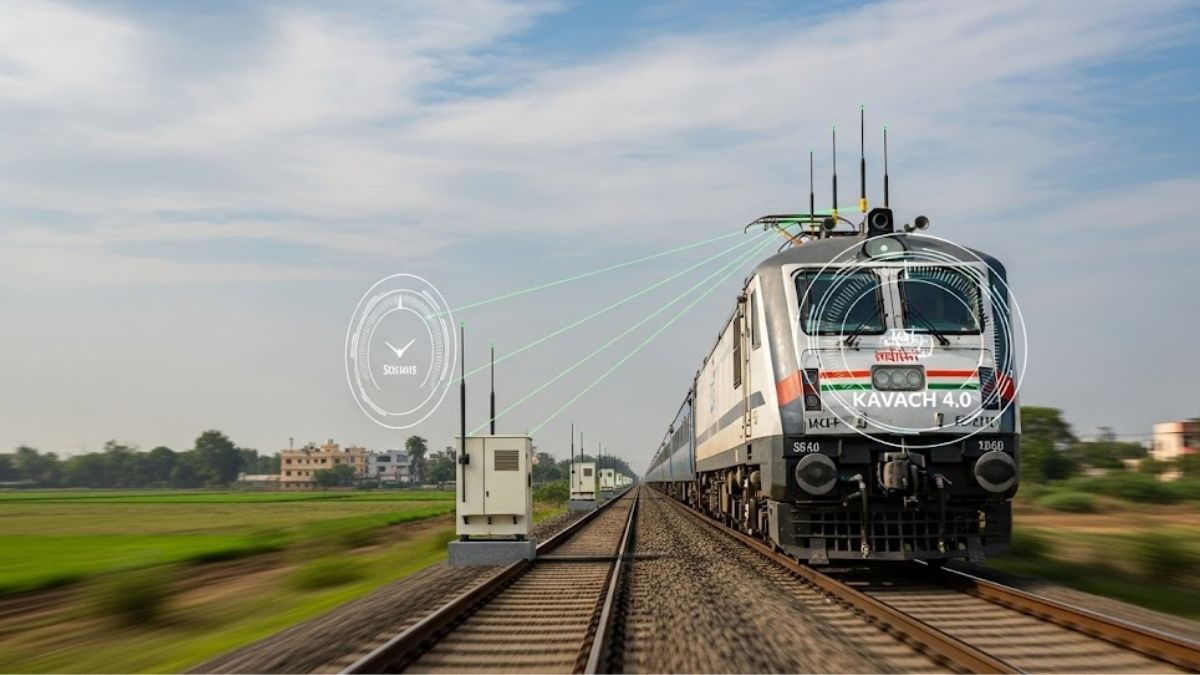
One of the central components of the programme is the deployment of the Kavach safety system, India’s indigenous train collision avoidance technology. Railway planners have cleared funding for equipping more than 200 locomotives in the southern region with the upgraded Version 4.0 of the system. The technology works through continuous communication between locomotives, signalling equipment and control centres, enabling automatic braking if two trains approach unsafe proximity. Industry specialists say expanding the Kavach safety system is critical as railway traffic continues to rise on high-density routes connecting major cities and industrial regions. Automated safety interventions can significantly reduce the risk of human error while improving the reliability of train operations. Supporting this safety technology is a large investment in the railway communication backbone. A fibre-optic network upgrade covering thousands of route kilometres has been approved across northern rail divisions. Optical fibre cables provide high-speed data transmission required for advanced signalling systems, train monitoring tools and the functioning of digital safety platforms such as Kavach.
Transport infrastructure analysts note that communication networks form the invisible backbone of modern railway operations. Real-time data exchange between trains, control rooms and signalling systems allows faster decision-making, smoother train scheduling and more efficient utilisation of track capacity. Further south, railway authorities have also approved funding to replace conventional signalling systems with electronic interlocking at multiple stations. Electronic interlocking automates route setting and signal clearance, reducing manual intervention while enhancing operational safety in busy rail yards. Urban mobility planners highlight that such technology upgrades have implications beyond the railway sector. India’s rail network remains a crucial component of sustainable transportation, carrying millions of passengers daily while producing significantly lower carbon emissions compared with road transport. Strengthening safety and reliability can encourage more travellers and freight operators to shift to rail, supporting long-term climate goals. The combination of digital safety platforms, communication infrastructure and automated signalling represents a coordinated modernisation strategy for Indian Railways. Experts say these investments will also help prepare the network for future technologies such as predictive maintenance systems and AI-driven traffic management.
As the Kavach safety system rollout accelerates alongside digital infrastructure upgrades, railway planners are positioning the national network to handle growing passenger demand while maintaining higher safety standards. The modernisation programme signals a broader shift toward technology-led infrastructure that supports both economic growth and more sustainable transport systems.