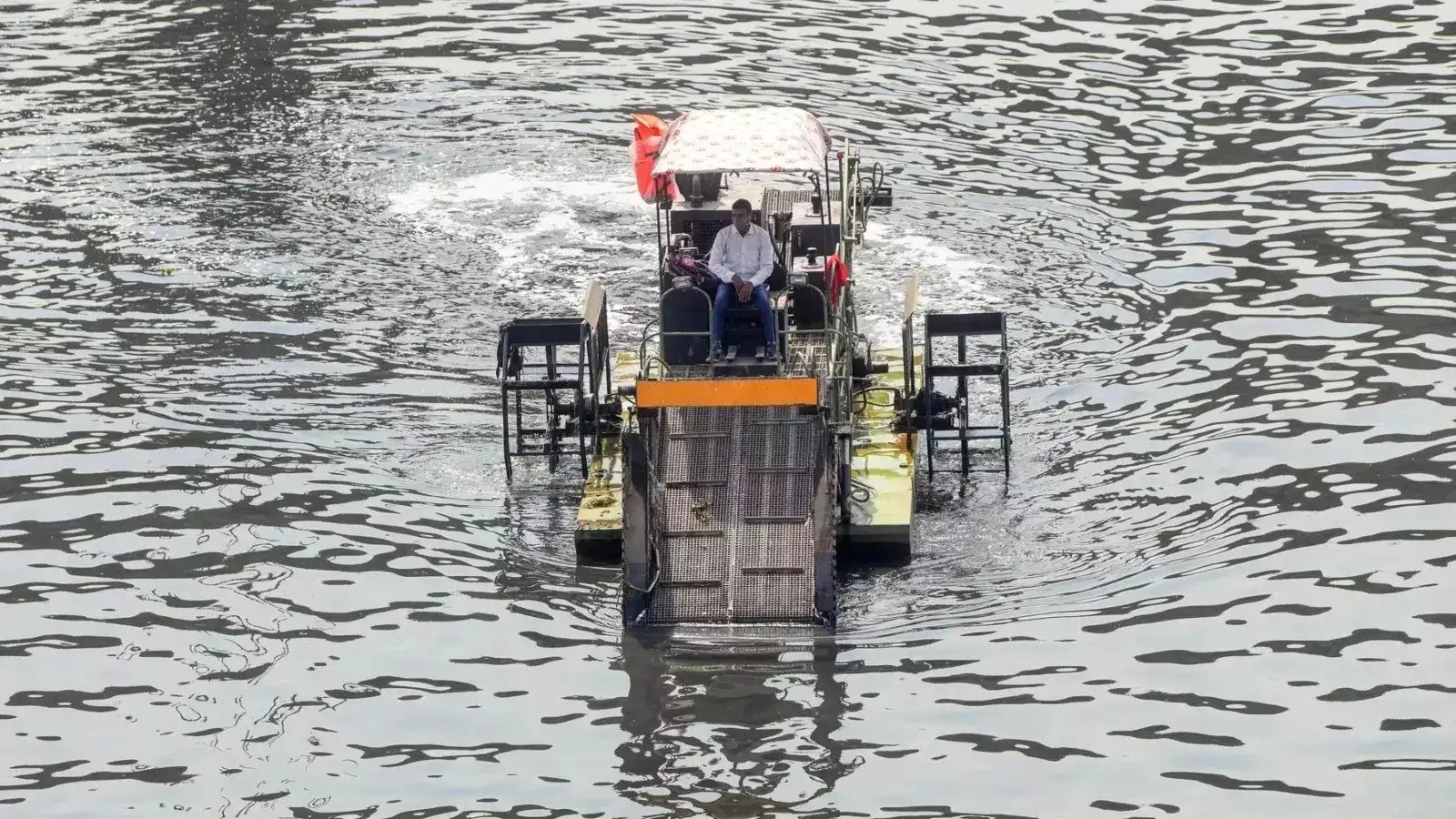
Delhi authorities are preparing to introduce a real-time monitoring network to track pollution levels in the Yamuna and several major drains feeding into the river, a move intended to strengthen data-driven environmental management in the capital. Yet environmental planners and river restoration specialists say the success of any Yamuna cleanup effort will ultimately depend less on technology and more on consistent governance, enforcement and everyday civic management. According to officials involved in the project, the proposed monitoring system will measure a wide range of water quality indicators such as dissolved oxygen, biochemical oxygen demand, chemical oxygen demand and nutrient levels. Continuous monitoring stations are expected to transmit data on pollution levels, allowing authorities to track contamination patterns across the river and connected drainage channels.
While environmental monitoring tools can improve transparency and enable faster policy responses, experts caution that the introduction of sensors alone will not significantly accelerate the Yamuna cleanup unless it is accompanied by stronger enforcement and operational reforms. Delhi already collects real-time environmental data for air and noise pollution, yet translating those insights into sustained improvement has proved challenging. Urban water specialists note that the most persistent source of pollution entering the Yamuna remains untreated domestic sewage discharged through dozens of drains across the city. Although several wastewater treatment plants operate in the capital, many drains continue to carry partially treated or untreated effluent into the river. Interception of these drains and temporary treatment interventions, they say, could reduce pollution loads more quickly than large infrastructure projects that take years to complete. Solid waste entering the river system is another major concern. Along several riverbank stretches, plastic waste and debris accumulate before eventually flowing downstream. Environmental planners suggest installing physical barriers and trash traps at drain outlets to prevent solid waste from reaching the river, combined with routine mechanical cleaning of riverbank areas.
Civic practices also play a role in shaping the success of the Yamuna cleanup. Religious offerings, including flowers and decorative materials, are often disposed of directly into the river at public ghats. Municipal authorities could mitigate this by providing designated collection points and recycling facilities for biodegradable materials, an approach already adopted in several Indian cities. Industrial discharge represents a smaller share of the river’s total pollution load but carries higher toxicity. Experts emphasise the need for strict inspections of industrial effluent treatment systems and transparent disclosure of non-compliant units to ensure accountability. Urban governance analysts point out that restoring urban rivers typically requires coordinated action across agencies responsible for water supply, waste management, industrial regulation and land-use planning. Without clear accountability structures, monitoring systems risk becoming information platforms rather than instruments of change.
For Delhi, where the Yamuna remains central to the region’s ecological health and urban resilience, the challenge now lies in translating environmental data into tangible improvements. Effective enforcement, improved waste management and sustained administrative coordination may ultimately prove more decisive than any technological intervention in delivering meaningful progress in the Yamuna cleanup.