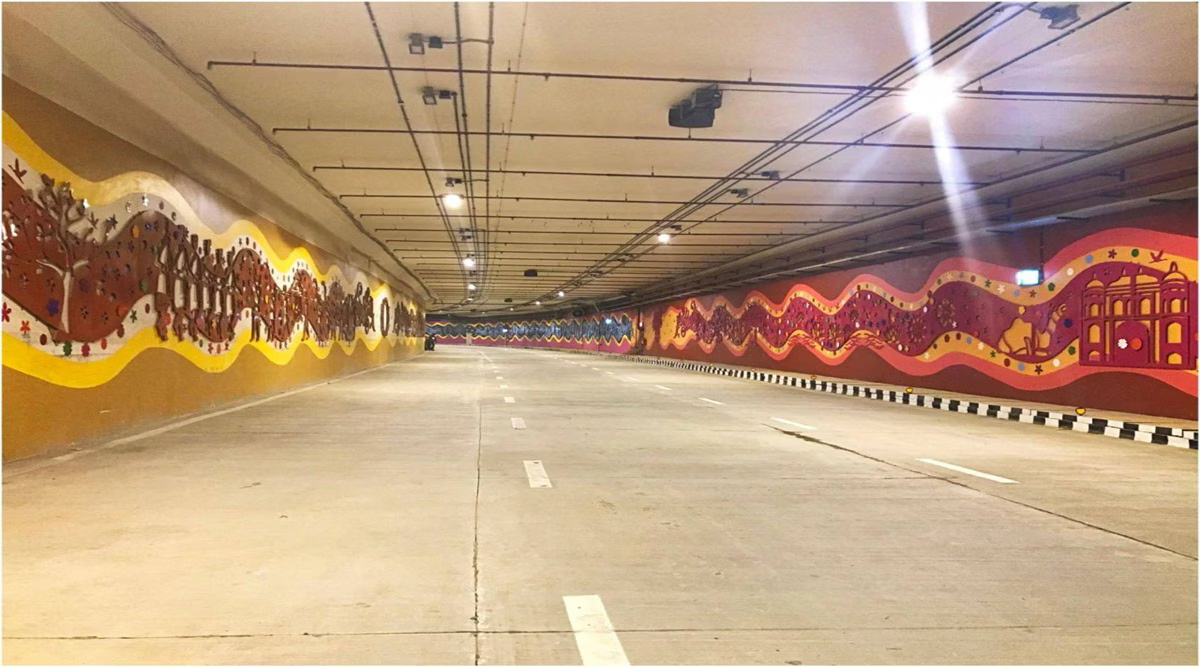
A long-delayed transport infrastructure project near Pragati Maidan in central Delhi is set to move into its final construction phase after railway authorities issued a key regulatory clearance, enabling work on the ITPO tunnel project to resume. The development removes the last major administrative obstacle for the underpass linking key arterial roads in one of the capital’s busiest traffic corridors, with authorities now targeting completion by late 2026. The ITPO tunnel project, located close to the heavily congested ITO–Pragati Maidan stretch, was designed to ease traffic flow and improve connectivity around the exhibition and convention district. However, despite partial construction over the past several years, progress had stalled due to a combination of technical challenges and overlapping approvals required from multiple agencies overseeing rail and road infrastructure.
Officials familiar with the project said the final clearance was required because the underpass passes beneath railway infrastructure, necessitating extensive safety and structural assurances before construction could continue. Without this permission, work had remained paused even after several engineering revisions were proposed. The project received a significant boost last year when the Union urban development ministry approved an updated construction strategy prepared by the city’s public works department. Engineers revised the design to address structural stability concerns caused by soil movement beneath the tunnel alignment. The revised approach includes foundation strengthening through pressure grouting, reinforcement measures below the railway track and adoption of cast-in-situ construction techniques better suited to the site’s geotechnical conditions. Urban infrastructure specialists note that the ITPO tunnel project illustrates the complexities involved in building transport infrastructure within densely built metropolitan areas. Projects located near railway lines, metro corridors and utility networks often require multiple safety clearances and design modifications, which can extend construction timelines even when funding is available.
The Pragati Maidan area has witnessed several major infrastructure upgrades over the past decade as the city attempts to modernise transport access around its largest convention and exhibition venues. These improvements include road expansions, pedestrian facilities and integrated mobility planning aimed at managing traffic surges during large-scale events. According to planners, the tunnel will allow through traffic to bypass surface intersections that frequently experience heavy congestion during peak hours and major trade exhibitions. Reducing surface traffic delays can improve overall mobility while lowering fuel consumption and vehicle emissions — a growing concern in Delhi’s air-quality management strategy. Transport experts say that grade-separated road infrastructure, when carefully integrated with public transport systems, can play a role in improving traffic efficiency in dense urban cores. However, they emphasise that such projects must be aligned with broader mobility planning, including public transport expansion and pedestrian infrastructure. With the final regulatory approval now in place, officials indicate that the immediate priority will be accelerating on-site construction while maintaining structural safety near the railway corridor. Monitoring mechanisms are expected to remain in place throughout the final construction phase.
If completed within the revised timeline, the project could help ease pressure on one of Delhi’s most congested transport corridors and demonstrate the importance of coordinated planning among multiple agencies responsible for urban infrastructure delivery.