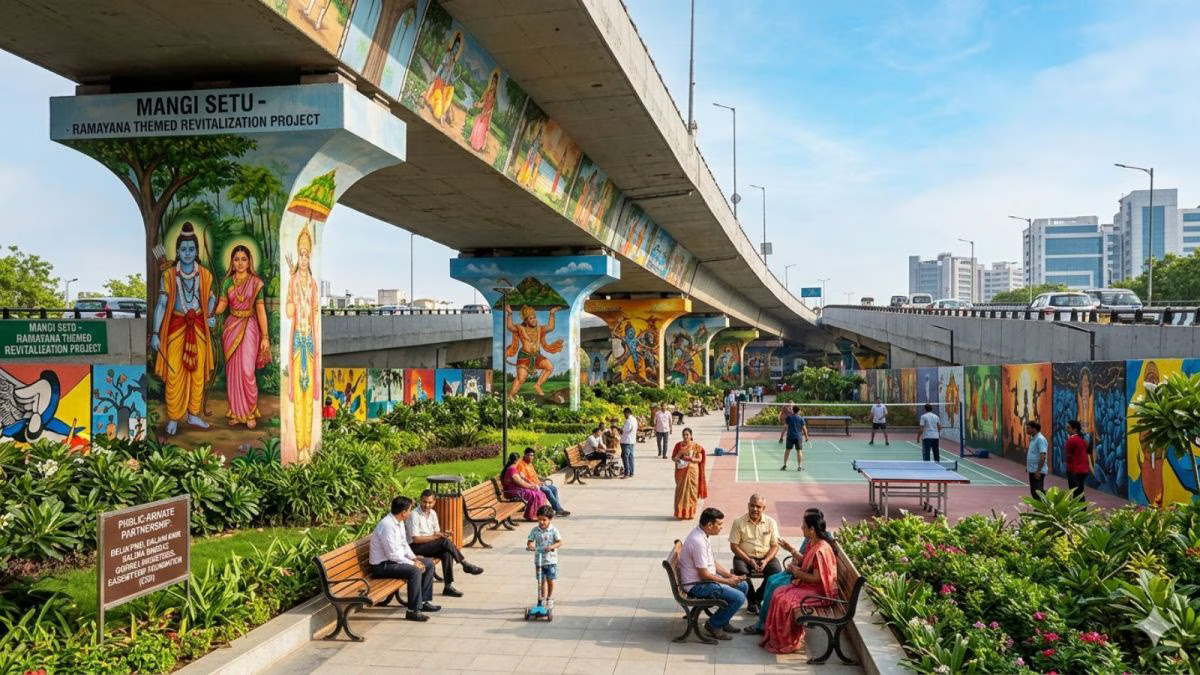
Delhi authorities have initiated a plan to redesign several under-flyover areas across the city, turning previously neglected transport infrastructure spaces into organised public zones featuring artwork, greenery and community amenities. The initiative aims to improve the visual quality and usability of these areas while addressing urban cleanliness and public safety concerns, signalling a broader shift in how Indian cities are beginning to view leftover infrastructure land as valuable civic space. Officials involved in the programme confirmed that six major flyover sites across the capital have been selected for the first phase of redevelopment. These locations will see the introduction of curated murals, landscaped gardens, improved lighting, sanitation facilities and structured pedestrian areas. Some of the artworks planned for these sites will draw inspiration from historical and cultural narratives, reflecting an attempt to connect public infrastructure with local identity.
The initiative relies on partnerships between public authorities and private organisations through corporate social responsibility collaborations. Several companies from sectors such as travel services, manufacturing and infrastructure materials have agreed to support the design and maintenance of these flyover spaces, reducing the financial burden on municipal agencies while encouraging shared responsibility for urban improvement. Urban design experts say the transformation of flyover spaces has become a global strategy in cities dealing with high-density infrastructure networks. Elevated roads and metro corridors often leave large tracts of land below them unused or poorly maintained. Without structured planning, these areas can become dumping grounds, parking zones or informal storage spaces that degrade neighbourhood environments. In recent years, planners have increasingly viewed these spaces as opportunities for urban placemaking — a concept that focuses on creating public environments that encourage community interaction, cultural expression and safer pedestrian movement. By introducing greenery, seating areas and public art, authorities hope to convert otherwise overlooked locations into active parts of the urban fabric.
Officials from the city’s infrastructure department noted that the redevelopment programme will also focus on improving basic civic infrastructure in these areas. Measures such as waste management systems, improved drainage and adequate lighting are expected to be integrated into the design, addressing long-standing complaints from nearby residents about poorly maintained underpasses and flyover corridors. Urban planners point out that reclaiming flyover spaces can also contribute to environmental benefits. Landscaped patches and vertical greenery in these zones can help reduce dust levels and moderate local temperatures in heavily trafficked areas. In addition, well-lit and active spaces may improve safety, particularly for pedestrians and cyclists navigating busy transport corridors. For Delhi, a city with an extensive network of flyovers and elevated roadways, the initiative could signal a wider shift toward more thoughtful infrastructure planning. Transport projects have historically prioritised vehicle movement, often leaving surrounding public spaces underdeveloped.
If the pilot phase proves successful, officials suggest similar transformations may be extended to other flyover corridors in the capital. Urban development specialists say such efforts could help cities balance mobility infrastructure with liveability, ensuring that transport investments also contribute to more inclusive and human-centred public spaces.