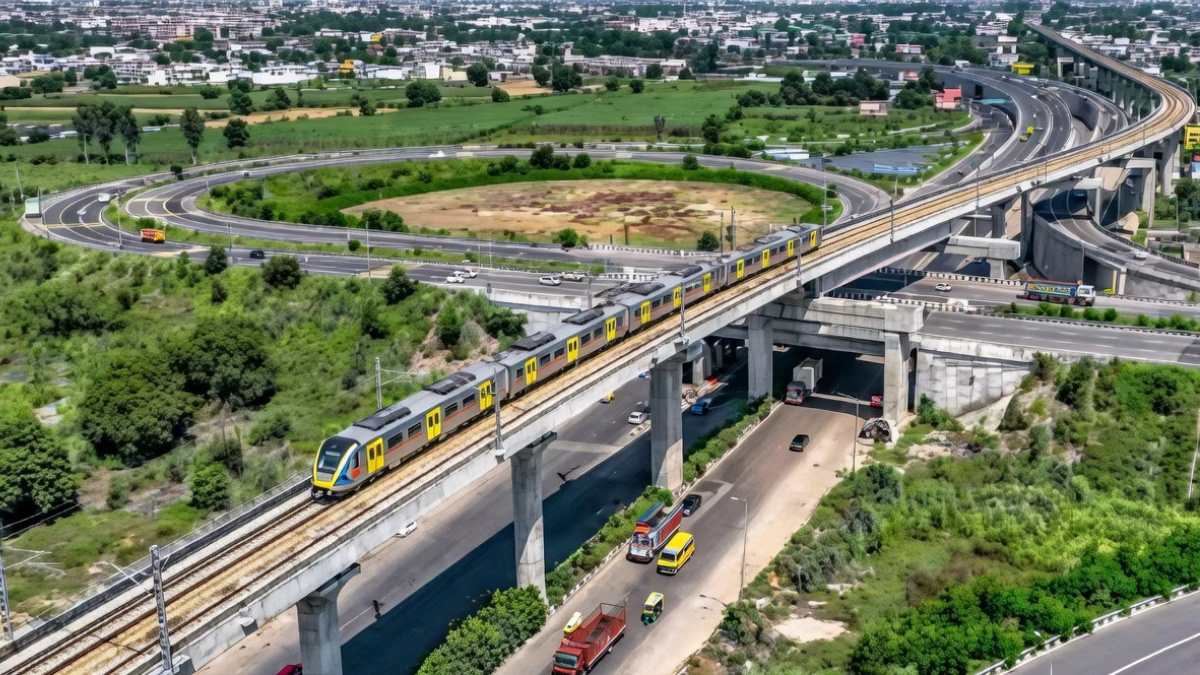
Large-scale infrastructure development across the National Capital Region is triggering new demand for professional audiovisual market technologies, as expanding transit hubs, commercial districts and cultural venues increasingly require advanced sound, lighting and digital display systems. Industry observers say the region has quietly emerged as one of India’s most influential growth centres for professional AV hardware, reflecting how modern urban infrastructure now depends heavily on integrated communication technologies. The Delhi-NCR region already accounts for a substantial share of India’s professional audiovisual equipment demand, supported by a dense network of convention centres, transport terminals, corporate campuses and entertainment venues. Analysts tracking the sector estimate that the regional audiovisual market contributes nearly half of the country’s total industry activity, underlining its importance as a testing ground for emerging technologies in public spaces.
Urban infrastructure expansion has played a key role in shaping this growth. New metro stations, airport upgrades, mixed-use business districts and hospitality developments require sophisticated digital communication systems to manage passenger information, safety announcements, live events and immersive visitor experiences. These systems include professional audio equipment, architectural lighting, LED displays, acoustic engineering tools and music production technologies. Industry data indicates that India’s professional AV sector is currently expanding at a faster pace than the global average, with annual growth estimates ranging between seven and ten percent. Within this broader ecosystem, the professional lighting segment has emerged as one of the most dynamic areas, driven by demand from theatres, public venues, stadiums and large-scale cultural events. Market projections suggest that lighting systems used in entertainment and commercial infrastructure could approach a value of nearly USD 400 million in the coming years. Experts say the growth of the audiovisual market reflects a broader transformation in how cities communicate with residents and visitors. Urban planners are increasingly integrating digital information systems, immersive public displays and sound engineering into infrastructure planning, particularly in high-density environments such as transit interchanges and public plazas.
For cities undergoing rapid urbanisation, audiovisual systems are no longer viewed solely as entertainment infrastructure. They are becoming critical tools for public information, crowd management, safety alerts and inclusive communication. Accessible announcements, multilingual displays and well-designed sound systems can improve mobility for diverse groups of citizens, including older adults and people with disabilities. Industry bodies are also preparing to showcase technological developments through major sector exhibitions scheduled in the coming years, which are expected to draw manufacturers, technology firms and urban infrastructure stakeholders to the region. These events often act as platforms where city planners, venue operators and real estate developers evaluate next-generation AV solutions for public infrastructure projects. Urban development specialists note that as Indian cities pursue smarter and more climate-resilient infrastructure, the integration of energy-efficient audiovisual technologies will become increasingly important. Lower-power LED lighting, adaptive sound systems and digital displays designed for minimal energy consumption are already gaining traction.
As infrastructure investment continues across the Delhi-NCR corridor, the evolution of the audiovisual market may increasingly influence how public spaces are designed, experienced and managed in rapidly expanding metropolitan environments.