Uttar Pradesh Infrastructure Projects Reshape State Growth
Uttar Pradesh is advancing a cluster of large-scale infrastructure projects spanning expressways, metro systems, airports, and a proposed film city, signalling a coordinated push to reposition the state as a major economic and logistics hub. The multi-sector expansion reflects a strategy to strengthen connectivity while diversifying urban economies across key cities.
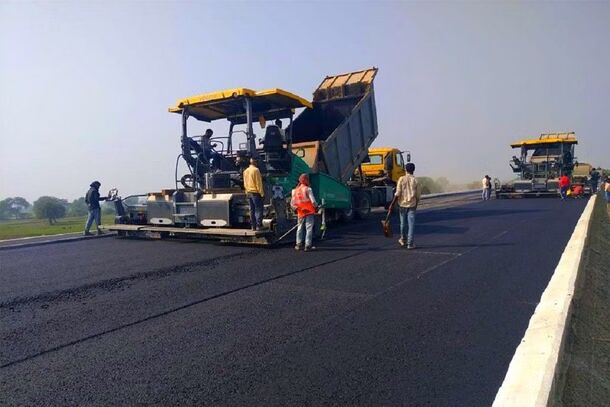
At the centre of this transformation is an expanding expressway network designed to reduce travel time between industrial and urban centres. Corridors linking eastern and western districts are expected to improve freight movement and support manufacturing clusters by creating faster, high-capacity road infrastructure. These highways are increasingly being integrated with logistics parks and industrial zones, reinforcing their role in economic value chains. Parallel investments in metro rail systems across cities such as Lucknow, Kanpur, and Agra highlight a growing focus on urban mobility. These projects aim to reduce congestion, improve public transport accessibility, and provide sustainable alternatives to private vehicle use. As urban populations expand, such systems are becoming critical to maintaining efficiency in city transport networks.
The state’s aviation infrastructure is also undergoing rapid expansion, with new and upgraded airports being developed to improve regional connectivity. These facilities are expected to support both passenger movement and cargo operations, enhancing access to domestic and international markets. Improved air connectivity is particularly significant for emerging urban centres seeking to attract investment and tourism. Another key component of the infrastructure push is the development of a large-scale film city near the National Capital Region. The project is intended to create a dedicated ecosystem for media production, including studios, post-production facilities, and allied services. Officials suggest that the initiative could generate employment and position the state as a competitive destination for the entertainment industry.
Together, these initiatives form the backbone of the Uttar Pradesh infrastructure projects pipeline, which is increasingly oriented toward integrated development rather than isolated investments. Urban planners note that combining transport, logistics, and sector-specific infrastructure can create multiplier effects—stimulating real estate, services, and employment simultaneously. However, the scale and pace of expansion also bring challenges. Land acquisition, environmental clearances, and project financing remain critical factors that can influence timelines. Ensuring that infrastructure development is inclusive—benefiting both urban and rural populations—will be essential to achieving balanced growth. There is also a growing emphasis on sustainability. As the state builds new expressways and urban systems, integrating green design elements such as energy-efficient construction, public transport prioritisation, and climate-resilient planning is becoming increasingly important. Without these measures, rapid expansion could exacerbate environmental pressures.
From an economic perspective, the infrastructure push is expected to enhance the state’s competitiveness by improving ease of doing business and reducing logistics costs. For cities, it could lead to the emergence of new growth corridors, decentralising development away from traditional urban cores. The success of the Uttar Pradesh infrastructure projects will ultimately depend on execution—ensuring that projects are completed on schedule, integrated effectively, and aligned with long-term urban planning goals. As these developments move from blueprint to reality, they are set to redefine mobility, investment patterns, and the spatial dynamics of one of India’s largest states.