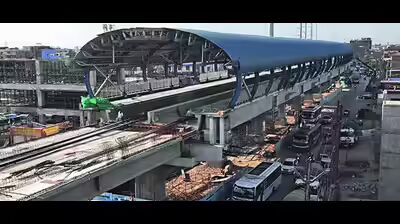
Patna ISBT Clearance Move To Improve Commuter Flow
Patna’s district administration has initiated a targeted clearance drive around the city’s primary inter-state bus hub to address mounting congestion and safety concerns, signalling a renewed focus on reclaiming critical transport infrastructure. The move centres on the removal of unauthorised structures and roadside encroachments near the Patliputra Inter-State Bus Terminal, a key node in Bihar’s public mobility network.
Officials have directed immediate action to clear obstructions that have gradually narrowed approach roads and disrupted vehicular movement around the terminal. The intervention comes amid growing commuter complaints about delays, unsafe pedestrian conditions, and operational inefficiencies at one of the city’s busiest transit points. The terminal, located along a major highway corridor, handles intercity and interstate bus services and is integrated with emerging urban transport systems, including the metro network. However, unregulated vending, informal parking, and temporary constructions have increasingly encroached upon public space, reducing road capacity and creating choke points during peak hours. Urban planners note that such encroachments are a recurring challenge in fast-growing cities where transport hubs often become magnets for informal economic activity. While these activities provide livelihoods, their unplanned concentration can severely compromise mobility efficiency and public safety. In the case of Patna, the congestion around the bus terminal has had a cascading effect on nearby corridors, impacting last-mile connectivity and increasing travel uncertainty. The current enforcement push is part of a broader administrative approach aimed at improving urban mobility by restoring intended land use.
Authorities are expected to coordinate with municipal agencies and law enforcement to ensure that cleared areas remain free of reoccupation—a key issue that has historically undermined similar drives. From an infrastructure standpoint, the initiative aligns with ongoing investments in transport systems across Patna, including metro expansion and road upgrades. The bus terminal itself plays a critical role in this evolving network, serving as a multimodal interchange point. Ensuring unobstructed access to such nodes is increasingly seen as essential for building efficient and integrated urban transport systems. There are also environmental implications. Reduced congestion around high-density transport hubs can lower vehicle idling time, contributing to improved air quality and reduced emissions. For a city grappling with rising pollution levels, such incremental gains are significant in the broader transition toward low-carbon urban systems. However, experts caution that enforcement alone may not offer a sustainable solution. Long-term success will depend on creating designated vending zones and planned commercial spaces that accommodate informal livelihoods without disrupting mobility. Integrating such provisions into urban design frameworks can help balance economic inclusion with infrastructure efficiency.
For commuters, the immediate outcome is expected to be smoother access to the terminal and more predictable travel times. For city authorities, the challenge lies in sustaining these improvements through continuous monitoring, policy enforcement, and integrated planning. As Patna’s transport ecosystem expands, the encroachment removal drive around its principal bus terminal underscores a larger shift—toward prioritising functional, safe, and people-centric infrastructure in the face of rapid urbanisation.