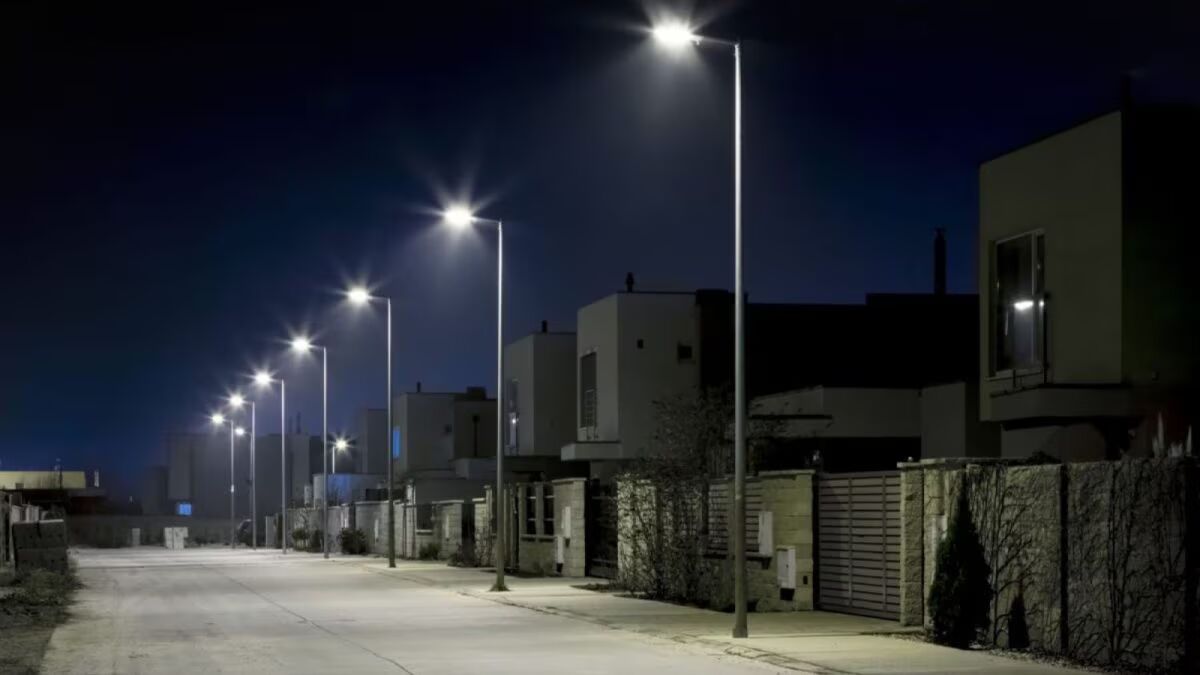
Patna Smart Streetlights Plan Targets Energy Savings
Patna is preparing a citywide overhaul of its public lighting network, combining large-scale infrastructure expansion with digital monitoring systems to improve service reliability and reduce energy use. The initiative, centred on a Patna smart streetlights programme, signals a shift toward data-driven urban utilities in one of eastern India’s fastest-growing cities.
Municipal authorities have approved a plan to retrofit roughly 82,000 existing streetlights with Internet of Things (IoT) technology while adding nearly 25,000 new automated lighting units across the city. This dual approach aims to address both legacy inefficiencies and gaps in coverage, particularly in emerging residential zones and high-traffic corridors. At the core of the upgrade is a centralised control and monitoring system that will allow officials to track performance in real time. Urban planners indicate that such systems can significantly reduce downtime by enabling predictive maintenance and faster fault detection. In dense cities like Patna, where public lighting directly influences mobility, safety, and informal economic activity, this transition could reshape how municipal services are delivered.
The Patna smart streetlights network will rely on sensor-based automation, with lights switching on and off based on ambient conditions. This feature is expected to cut electricity consumption while also reducing manual intervention. Experts note that energy-efficient lighting is one of the most immediate pathways for cities to lower operational costs and carbon emissions, especially in states where power demand continues to rise. Beyond energy savings, the project introduces a citizen interface layer. A helpline and messaging-based reporting system have been integrated to allow residents to flag outages or maintenance issues. Data from recent months shows a high resolution rate for complaints, suggesting that digital feedback loops are beginning to influence service delivery standards.
The plan also includes the installation of high-mast lighting at key junctions and public spaces, aimed at improving visibility in accident-prone and high-footfall areas. Such interventions are increasingly seen as essential for inclusive urban design, particularly in enhancing safety for pedestrians and vulnerable groups during evening hours. From a financing and execution standpoint, the involvement of a central public sector energy services provider reflects a broader model being adopted across Indian cities—where upfront capital investment is balanced against long-term savings in energy and maintenance. This performance-linked approach is gaining traction as municipalities face fiscal constraints while trying to modernise infrastructure.
As Indian cities scale up smart infrastructure, Patna’s approach highlights a pragmatic pathway: leveraging existing assets, embedding digital intelligence, and prioritising service outcomes over standalone technology deployment. The success of the Patna smart streetlights initiative will ultimately depend on sustained maintenance, institutional capacity, and the ability to integrate lighting with wider urban systems such as mobility and surveillance.