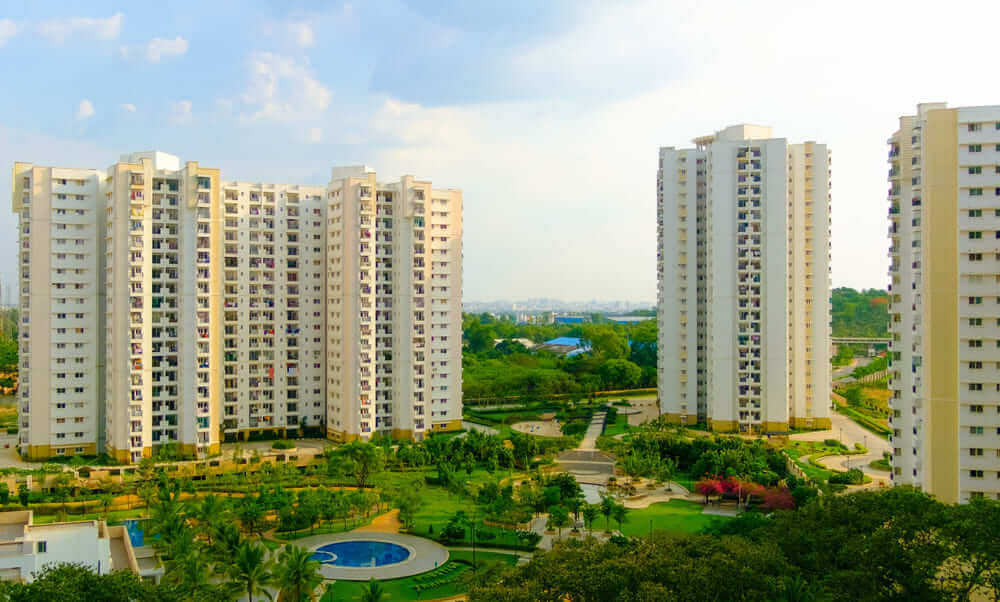
India Property Market Sees Structural Growth Shift
India’s property sector is showing signs of a structural reset, with FY26 marking a transition from cyclical volatility to steadier, demand-driven expansion across both metropolitan and emerging urban centres. The shift reflects deeper changes in buyer profiles, infrastructure-led growth, and the increasing formalisation of the industry, with implications for how cities evolve and accommodate future populations.
Across major metros, housing demand has remained resilient, supported by end-users rather than speculative investors. At the same time, Tier-2 cities are no longer peripheral to the national housing story. Improved transport networks, digital connectivity, and expanding social infrastructure have begun to position these cities as viable alternatives for both living and investment, easing pressure on saturated urban cores. A difining feature of the India real estate market this year has been the rising share of premium housing. Industry estimates suggest that higher-value homes now account for nearly half of total residential transactions in leading cities. This trend indicates a shift towards financially stable buyers seeking larger, better-designed homes, often aligned with hybrid work lifestyles and long-term asset creation.
Urban planners note that this demand is reshaping land use patterns. Peripheral micro-markets once considered distant are gaining traction due to improved connectivity through expressways, metro corridors, and ring roads. These infrastructure investments are not only shortening commute times but also enabling more balanced urban expansion, potentially reducing congestion and environmental stress in city centres. The commercial segment is also regaining momentum. Office leasing has rebounded, driven by multinational firms and the continued expansion of Global Capability Centres. This resurgence signals confidence in India’s economic outlook, even as workspace strategies evolve to accommodate flexible and hybrid models. Retail real estate, meanwhile, is undergoing a transformation, with developers prioritising experience-led formats that combine shopping with leisure and community engagement.Experts highlight that the India real estate market is increasingly aligning with global trends, where quality of life, sustainability, and integrated planning are becoming central to development.
New residential projects are incorporating green building practices, open spaces, and mixed-use elements, reflecting growing awareness of climate resilience and liveability. However, this growth trajectory also presents challenges. Rapid expansion in emerging corridors requires careful urban governance to ensure equitable access to infrastructure, public services, and affordable housing. Without coordinated planning, there is a risk of uneven development and rising socio-spatial inequalities.Looking ahead to FY27, the sector is expected to maintain its upward momentum, albeit with greater caution. Developers are likely to focus on calibrated launches, while investors may prioritise assets with long-term value and sustainability credentials. Tier-2 cities are poised to remain key growth drivers, supported by policy attention and infrastructure investments. As the India real estate market matures, its evolution will play a critical role in shaping more inclusive, efficient, and climate-responsive urban environments an outcome that will define the next phase of India’s urban transformation.