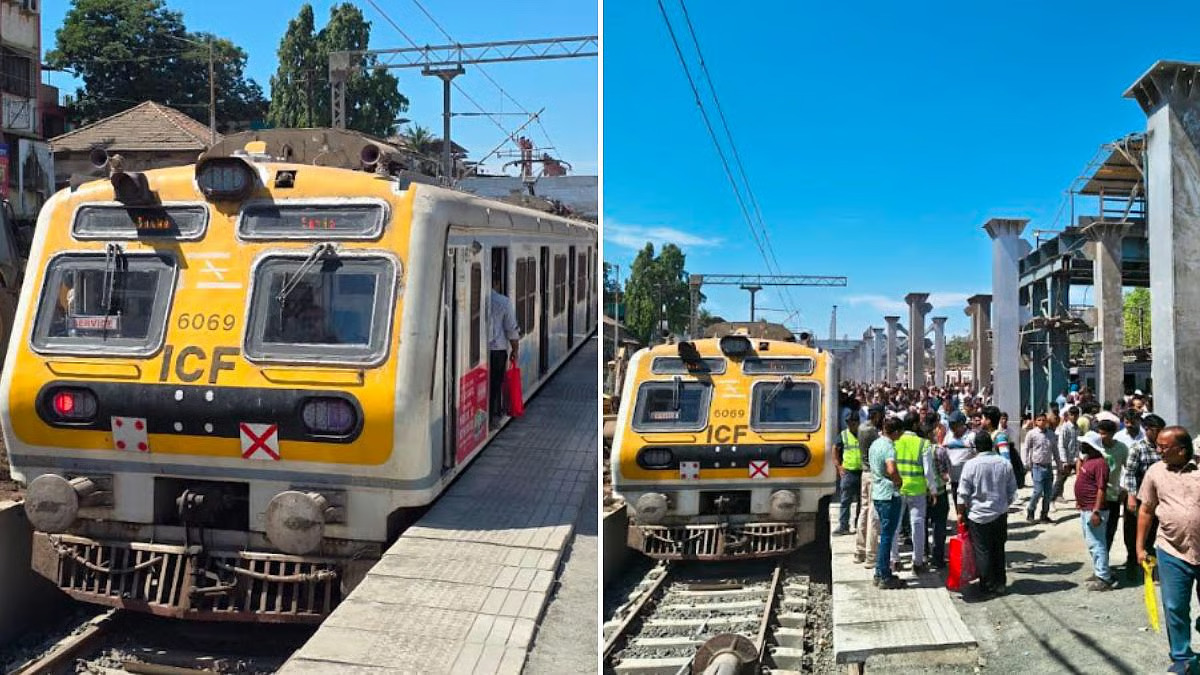
A key suburban rail node in Mumbai’s northern corridor has undergone a capacity upgrade, with platform expansion works at Virar station now complete, paving the way for longer train operations. The intervention is expected to ease crowding on one of the most heavily used stretches of the Western suburban network, which serves a rapidly growing commuter population.
The upgrade forms part of the broader rail capacity enhancement programme between Virar and Dahanu Road, where additional tracks and station improvements are being developed to support rising demand. At Virar, platforms have been widened and extended to accommodate 15-coach trains, replacing the earlier 12-coach configuration that often struggled to handle peak-hour passenger volumes. Railway officials confirmed that trial runs have been successfully conducted on the upgraded infrastructure, indicating operational readiness. Once formally integrated into the suburban timetable, the longer trains are expected to increase carrying capacity per trip, reducing congestion both on platforms and inside coaches.
Urban mobility experts view this as a critical step in improving service efficiency without requiring entirely new corridors. “Extending train length is one of the most cost-effective ways to scale capacity in high-density rail systems,” said a transport planner familiar with suburban rail operations. “However, it must be supported by platform design, passenger flow management, and scheduling optimisation.” In addition to extending existing platforms, a new platform has been added to streamline train handling and reduce turnaround time. The redesign also includes improved passenger circulation space, which is essential for safety and accessibility at high-footfall stations like Virar, a major terminus for long-distance suburban commuters.
The Western Railway corridor has witnessed sustained ridership growth due to suburban expansion in areas such as Vasai-Virar, where relatively affordable housing has driven population inflows. This has increased pressure on rail infrastructure, making capacity augmentation projects like this one essential for maintaining service reliability. From a sustainability perspective, enhancing suburban rail capacity aligns with broader goals of reducing dependence on private vehicles and limiting road congestion. Rail-based mass transit remains one of the most energy-efficient modes of urban transport, and increasing its utilisation is key to lowering emissions in metropolitan regions.
However, experts caution that infrastructure upgrades must be accompanied by last-mile connectivity improvements and station area planning. Without integrated transport systems, the benefits of increased train capacity may not fully translate into reduced travel times or improved commuter experience. The Virar station upgrade also reflects a shift towards incremental modernisation of existing networks, rather than relying solely on greenfield projects. By optimising current assets, authorities can deliver faster, more cost-effective improvements to urban mobility.
As longer train services begin operations, their impact on crowding and commute times will be closely monitored. If successful, similar platform extensions across other high-demand stations could further strengthen Mumbai’s suburban rail system, ensuring it remains the backbone of daily mobility for millions.
Mumbai Virar Station Upgrade Enables Longer Train Services