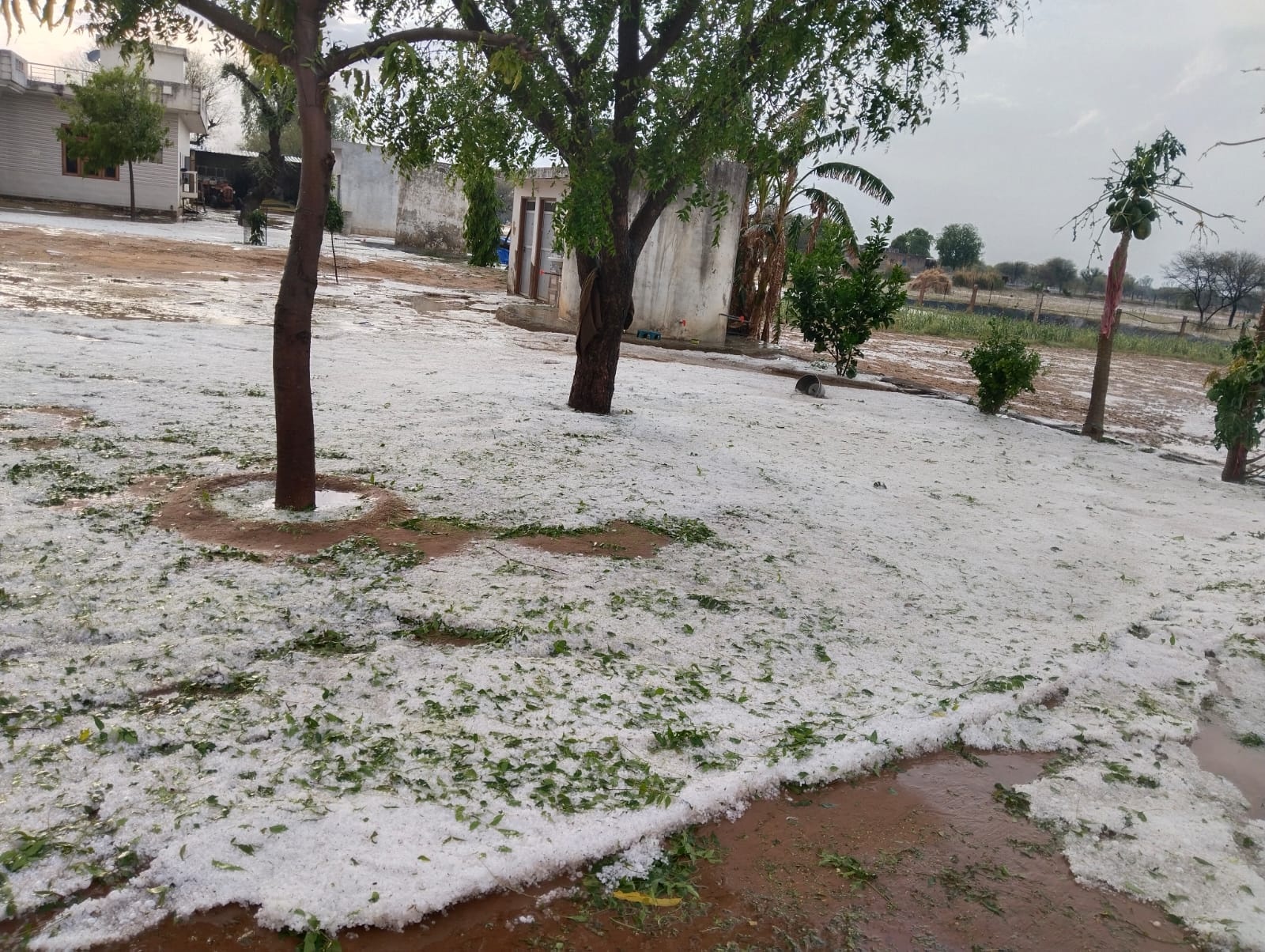
Rajasthan Weather Alert As Hailstorm Warning Issued
A fresh spell of unstable weather is forecast across parts of Rajasthan, with meteorological authorities issuing a hailstorm warning for multiple districts as a new atmospheric system approaches the region. The development comes after widespread rainfall and hail activity disrupted several cities over the past two days, bringing cooler temperatures but also raising concerns for agriculture and urban infrastructure. Officials monitoring regional weather patterns indicate that another western disturbance is expected to influence north-western India beginning early this week. Such systems typically originate in the Mediterranean region and move eastwards, often triggering sudden changes in weather conditions across northern states. For Rajasthan, this means thunderstorms, gusty winds, and the possibility of hail in at least 13 districts over the coming days.
Weather experts say the current pattern reflects an increasingly volatile pre-summer transition period. Strong daytime heating combined with incoming moisture creates atmospheric instability, which can produce short but intense storms. These weather episodes are usually concentrated in the afternoon or evening, when rising surface temperatures supply energy to the storm systems. Several districts, including those in eastern and south-eastern Rajasthan, experienced heavy rain and hail during the latest weather event. In some locations, rainfall exceeded 30 millimetres within a short period, temporarily lowering daytime temperatures and providing relief from rising heat. However, sudden hailstorms caused damage to standing crops in rural areas and disrupted transport in parts of the state. Temperature data across major cities also reflected the unusual weather shift. Many locations recorded daytime temperatures between four and six degrees Celsius below seasonal averages. Urban centres such as Jaipur, Jodhpur and Bikaner reported noticeably cooler conditions following the rain and hail activity. Meteorologists note that moisture inflow from both the Arabian Sea and the Bay of Bengal has strengthened the present disturbance, contributing to stronger thunderstorms than typically seen during early April.
While such systems are not uncommon in north India, their increasing intensity highlights the role of shifting climatic patterns that can influence both rural livelihoods and urban resilience. For rapidly expanding cities across Rajasthan, these weather disruptions carry broader implications. Sudden storms can affect drainage systems, traffic mobility and construction activity, particularly in dense urban corridors undergoing infrastructure growth. Urban planners have increasingly emphasised the need for climate-resilient infrastructure that can withstand short bursts of extreme weather without causing widespread disruption. Authorities have advised residents and farmers in affected districts to remain cautious during the forecast period. Hailstorms and strong winds can damage crops, uproot trees and impact power supply networks, especially in semi-urban areas where infrastructure remains vulnerable. Forecast models suggest that the active weather pattern may continue for several days before gradually weakening. If rainfall follows the dust-laden winds accompanying the storms, it could temporarily improve air quality and reduce suspended particles in the atmosphere.
For policymakers and city administrators, the latest hailstorm warning underscores the need to integrate weather preparedness into urban planning and agricultural risk management, particularly as seasonal climate variability becomes more pronounced across north-western India.