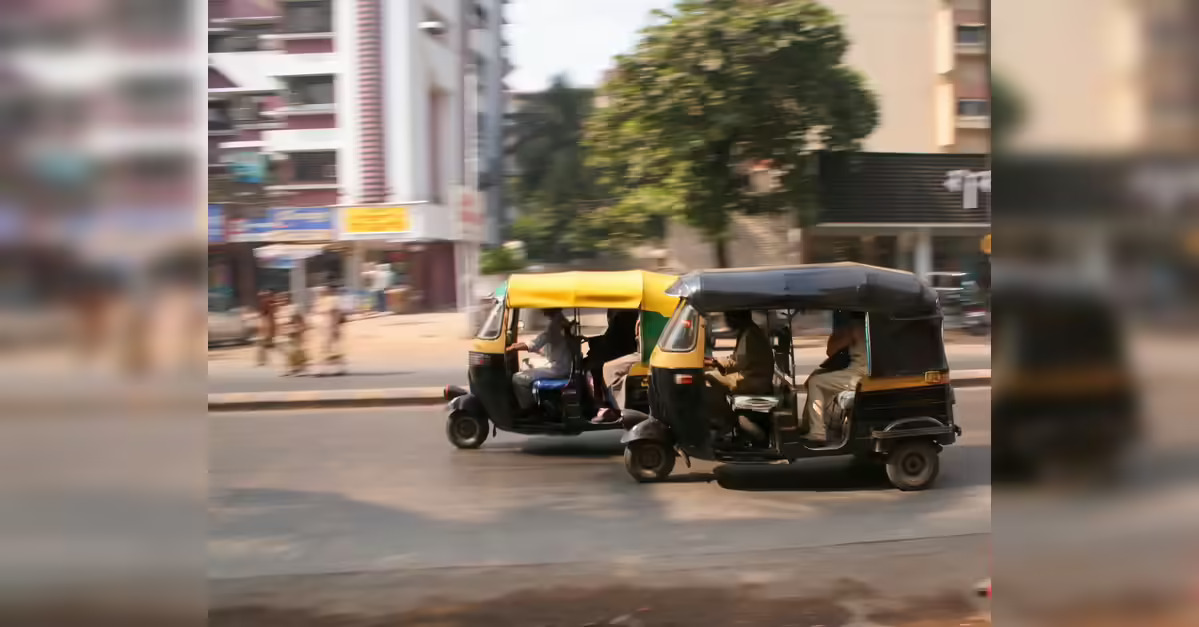
A large-scale audit of autorickshaw permits has been initiated in Mira-Bhayandar on the northern edge of the Mumbai Metropolitan Region, after authorities flagged potential irregularities in the issuance process. The move signals a deeper scrutiny of urban transport governance in rapidly expanding peri-urban zones, where informal mobility systems often intersect with weak regulatory oversight.
State transport authorities have directed a comprehensive re-verification exercise covering autorickshaw permits issued over the past decade. The review will examine documentation, eligibility compliance, and adherence to operational norms, including local language requirements for drivers. Officials indicated that the findings are expected within a defined timeline, with enforcement actions likely to follow in cases of non-compliance. The decision comes amid concerns that digital permit systems, while designed to improve transparency, may still be vulnerable to misuse through falsified records. Complaints received by the department pointed to instances where permits were allegedly granted on questionable documentation, raising both governance and security concerns in a densely populated suburban corridor.
Urban mobility experts note that autorickshaws remain a critical last-mile transport mode in areas like Mira-Bhayandar, where formal public transport networks are still evolving. However, gaps in permit regulation can distort the supply-demand balance, contributing to congestion, inefficient fleet operations, and safety risks for commuters. In this context, the ongoing autorickshaw permit verification exercise is being viewed as an attempt to restore regulatory credibility and improve service quality. The audit will be conducted through Regional Transport Offices, which have been tasked with cross-checking permit records, verifying residential proofs, and ensuring that licence holders meet statutory requirements. Authorities have also indicated that accountability mechanisms will extend to officials involved in the approval process, reflecting a broader push for administrative transparency.
This development aligns with a wider policy shift in Maharashtra’s urban transport planning, where authorities have recently paused the issuance of new autorickshaw permits. The decision was linked to concerns around rising traffic congestion and vehicular emissions, particularly in high-density urban clusters. By focusing on cleaning up the existing permit base through autorickshaw permit verification, policymakers appear to be prioritising system efficiency over expansion. For Mira-Bhayandar, which has witnessed rapid population growth and increasing commuter dependency on intermediate public transport, the outcome of this exercise could reshape how last-mile connectivity is regulated. Urban planners argue that better data integrity and enforcement are essential for integrating informal transport into a more sustainable, low-emission mobility framework.
As the audit progresses, stakeholders across the transport ecosystem will be watching closely. The findings could inform future policy decisions not just for Mira-Bhayandar, but for other urbanising regions grappling with similar challenges in balancing accessibility, regulation, and environmental sustainability.
State Orders Audit of Auto Permits in Mira Bhayandar