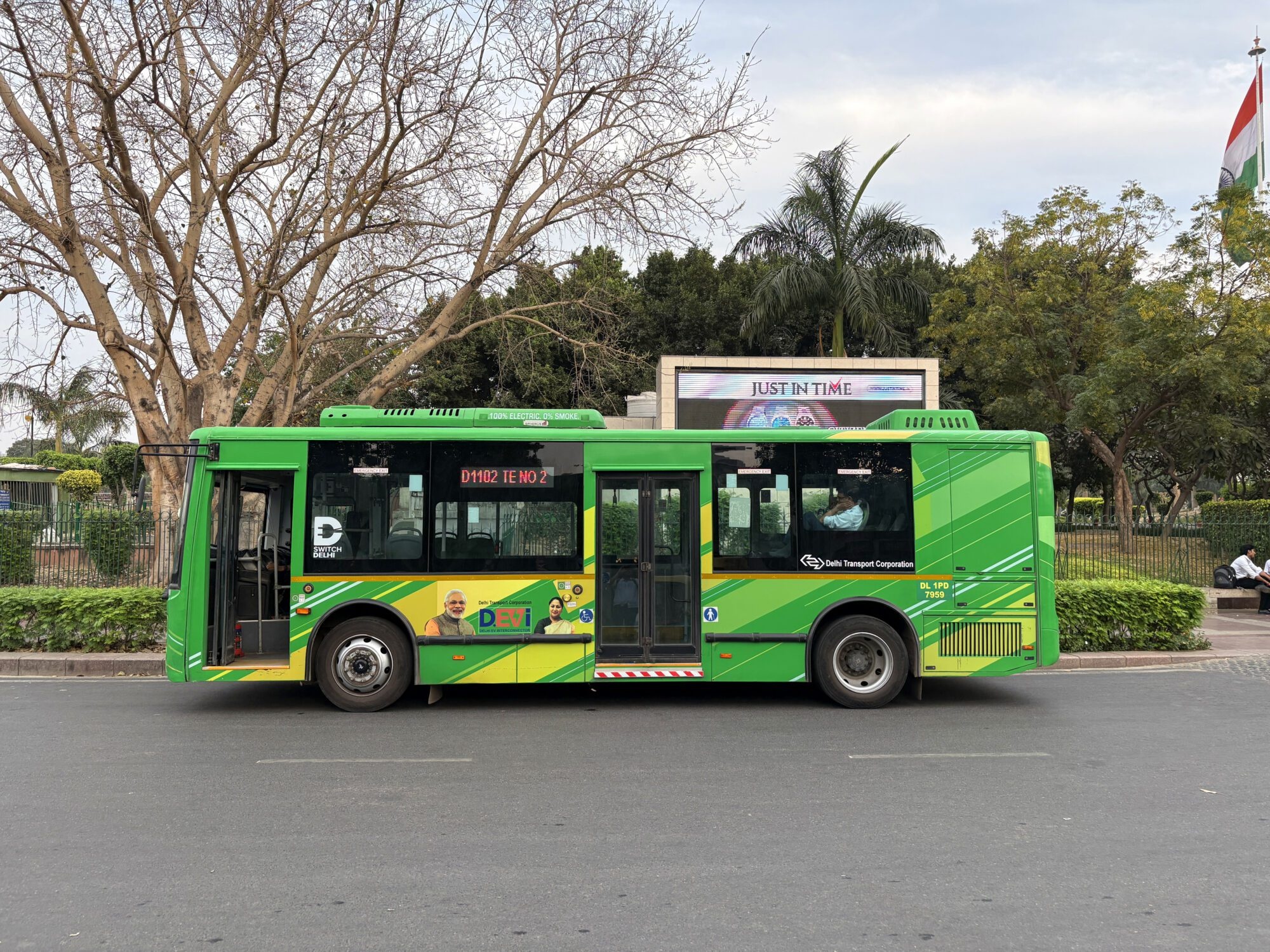
Delhi Expands Neighbourhood Transit With DEVi Electric Bus Network
Delhi’s public transport system is undergoing a subtle but significant transformation as small electric neighbourhood buses increasingly connect residential districts to the city’s metro network. The DEVi electric buses Delhi programme, operated by the city’s public transport utility, is designed to strengthen last-mile connectivity and reduce dependence on informal or high-pollution travel options that have historically filled the gap between homes and major transit corridors. Urban mobility experts say the initiative represents an important evolution in Delhi’s transport planning. Instead of relying solely on large buses that operate on major roads, the new fleet focuses on short neighbourhood routes where narrower streets and lower passenger volumes previously limited public transport coverage.
Across several local corridors in south Delhi, these compact buses now provide frequent connections between residential clusters and nearby metro stations. Commuters travelling from neighbourhoods such as Vasant Kunj and surrounding areas can reach metro access points in minutes, significantly reducing the time previously required when journeys involved multiple transfers or congested arterial roads. Transport planners note that the DEVi electric buses Delhi system is built around data-driven route design. Instead of operating along already saturated roads, services are often routed through secondary streets or bypass corridors that allow faster travel and more predictable journey times. The approach reflects a growing focus on micro-transit systems in large cities where traditional bus networks struggle to serve dispersed neighbourhoods efficiently. Frequency has also been a key factor in improving reliability. Several routes now operate at intervals of five to ten minutes, replacing older services that often ran at much longer gaps. Shorter waiting times have made the buses more attractive for everyday commuting, particularly for office workers, students and service employees who rely on public transport for short-distance travel. The DEVi electric buses Delhi fleet has expanded rapidly and now includes hundreds of vehicles designed specifically for urban neighbourhood streets.
Unlike conventional twelve-metre buses typically used in city transport fleets, these vehicles are smaller and capable of operating on roads with limited width, allowing them to reach residential areas previously underserved by formal transit. Passenger amenities and safety features have also been integrated into the system. The buses are equipped with air-conditioning, surveillance cameras, emergency communication systems and real-time GPS tracking. Accessibility elements such as low-floor entry, wheelchair ramps and reserved seating for women and vulnerable passengers aim to create a more inclusive public transport environment. Beyond mobility improvements, the environmental benefits of the programme are significant. Electric buses produce no tailpipe emissions, helping reduce pollution exposure for passengers and pedestrians. Transport analysts say replacing short-distance trips currently made by petrol scooters, auto-rickshaws or private cars could significantly reduce urban emissions if the model is scaled further. Affordability is another factor driving adoption. Neighbourhood bus fares are typically far lower than comparable auto-rickshaw trips, making them a practical option for daily commuters. Lower travel costs also support more equitable access to jobs, education and services across the city.
Urban transport specialists say neighbourhood-scale electric buses are increasingly seen as an essential component of integrated mobility systems. By bridging the distance between homes and mass transit networks, the DEVi electric buses Delhi programme could play a key role in strengthening sustainable mobility while reducing congestion and emissions across the capital.