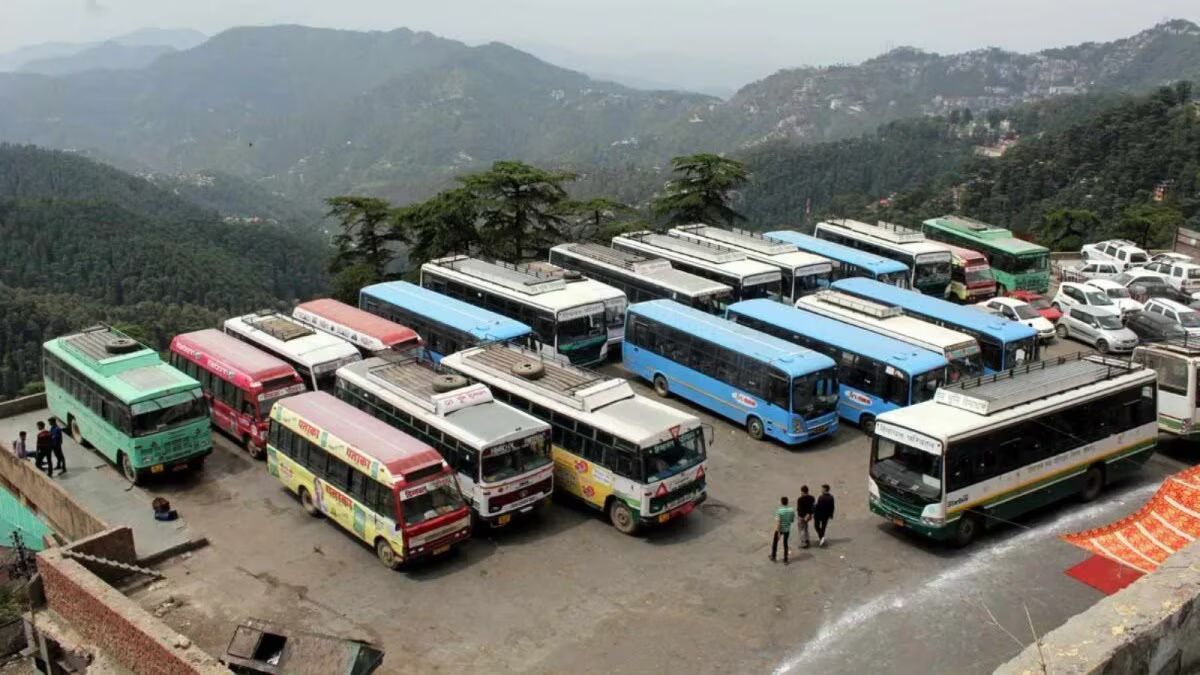
Chandigarh Crackdown On Tourist Bus Parking Violations
A stricter regulatory framework for managing tourist bus parking is taking shape in Chandigarh, as the municipal corporation moves to introduce graded penalties aimed at curbing unauthorised parking on public land. The proposal, expected to be placed before the civic body’s House meeting, signals a more enforcement-driven approach to managing growing transport pressures in the city.
Under the proposed system, tourist buses found parked without permission could face escalating fines—starting at ₹5,000 for a first violation, doubling to ₹10,000 for a second offence, and rising to ₹15,000 for repeated breaches. Persistent non-compliance may trigger regulatory escalation, with authorities recommending cancellation of permits through the State Transport Authority. The initiative follows judicial direction, with a committee constituted under administrative oversight to examine the issue of unregulated tourist bus parking. The recommendations are aimed at bringing order to a segment that has increasingly strained urban infrastructure, particularly in high-demand commercial and transport zones. Urban planners note that the move reflects a broader challenge in cities balancing tourism growth with infrastructure capacity. Tourist buses, often operating on flexible schedules, tend to occupy public spaces not designed for long-term parking, leading to congestion, reduced road capacity, and conflicts with local traffic. In a planned city like Chandigarh, where land use is tightly structured, such informal practices can quickly disrupt system efficiency.
The proposal also introduces a formalised parking framework, including a monthly pass system for buses alongside existing per-entry charges. This signals a shift towards regulated access rather than ad hoc enforcement, potentially creating a predictable system for operators while generating municipal revenue streams. From a governance perspective, the enforcement will be coordinated across multiple agencies, including the municipal engineering wing, traffic police, and transport authorities. This inter-agency approach is critical in addressing enforcement gaps that have historically limited the effectiveness of parking regulations in Indian cities. The move aligns with a series of recent efforts by Chandigarh authorities to reclaim public space and improve traffic discipline. Previous enforcement drives have targeted illegal parking, encroachments, and misuse of designated parking areas, indicating a shift towards stricter civic compliance mechanisms. However, experts caution that penalties alone may not resolve the issue without parallel investments in designated parking infrastructure. Dedicated bus bays, peripheral parking hubs, and integration with public transport systems are often necessary to accommodate tourist inflows without burdening core city areas.
The Chandigarh bus parking penalties proposal thus sits at the intersection of mobility management and urban planning. As the city continues to attract visitors and expand its economic footprint, the effectiveness of such measures will depend on whether enforcement is complemented by infrastructure planning and stakeholder coordination. In the coming months, the policy’s impact will be measured not only by compliance levels but also by its ability to ease congestion, improve traffic flow, and restore the intended use of public spaces—key indicators of a well-managed and resilient urban transport system.