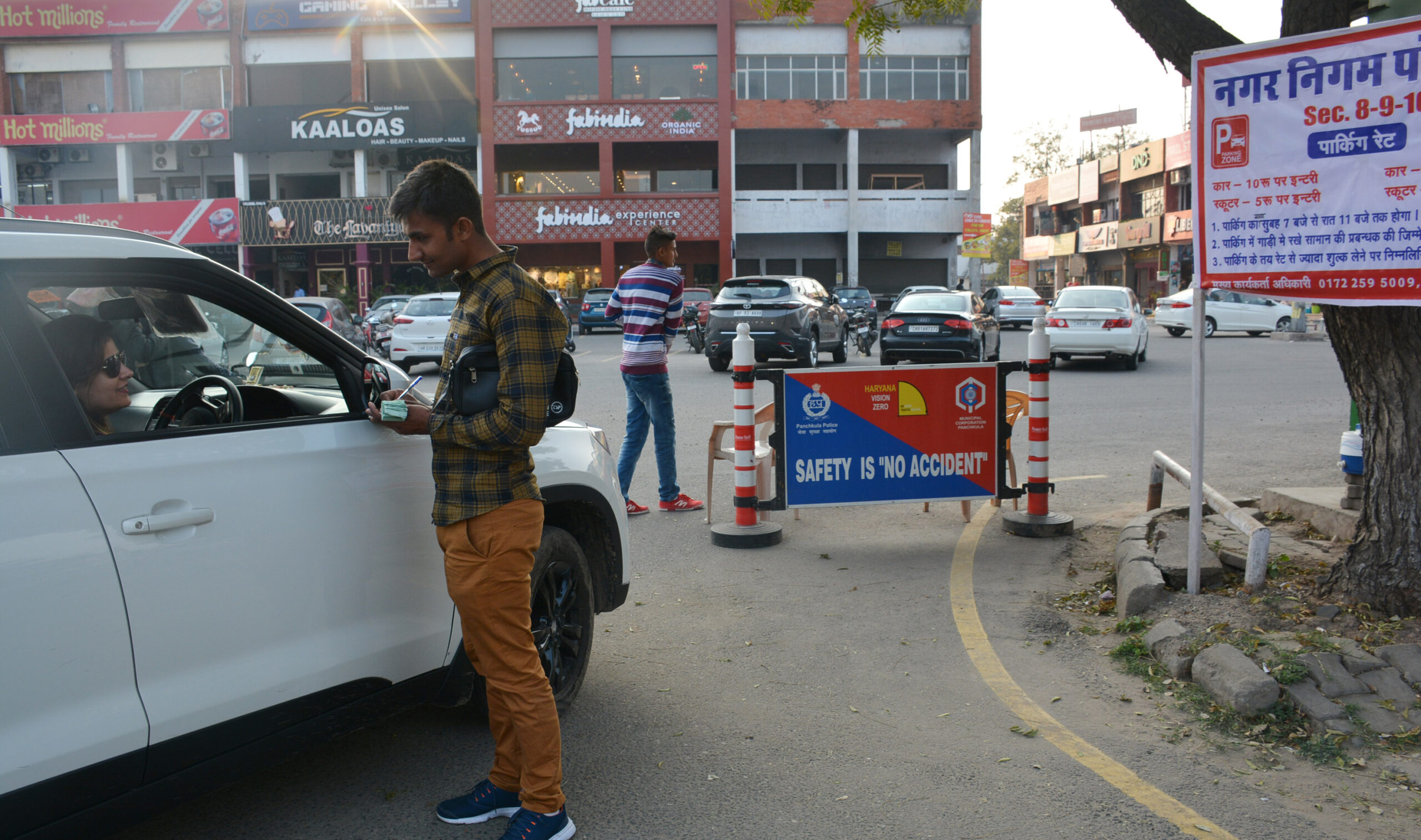
Panchkula Parking Crisis Strains Urban Mobility Systems
A deepening parking crisis across Panchkula is beginning to strain everyday mobility, exposing structural gaps in urban planning and infrastructure management. With vehicles routinely spilling onto roads, pavements, and even cycle tracks, the issue is no longer limited to inconvenience—it is now affecting safety, traffic flow, and the overall functionality of public spaces.
Multiple sectors, including residential and commercial zones, have emerged as congestion hotspots where informal parking has effectively reduced road capacity. Commuters report regular bottlenecks on internal roads, while pedestrians are increasingly pushed onto carriageways due to blocked footpaths. Urban analysts note that such patterns reflect a mismatch between rising vehicle ownership and the city’s static parking infrastructure. Despite intensified enforcement, including thousands of challans issued over recent years, the impact has remained limited. Officials argue that penalties alone cannot address the issue when designated parking supply is inadequate. Residents echo this concern, pointing out that even planned areas under development authorities have been overtaken by unregulated parking, highlighting lapses in both design and enforcement.
The Panchkula parking crisis also underscores a broader urban dilemma—how cities accommodate rapid motorisation without compromising liveability. In many neighbourhoods, increasing household vehicle ownership has outpaced available parking provisions, particularly in areas with older layouts or evolving land-use patterns. As a result, streets originally designed for mobility are being repurposed as storage spaces for vehicles. Experts suggest that the absence of integrated transport planning has compounded the issue. Limited public transport options have reinforced dependence on private vehicles, further intensifying parking demand. Proposals such as introducing feeder bus systems or ring routes have been discussed, with the aim of reducing short-distance car usage and easing pressure on local roads.
From a governance standpoint, authorities have initiated discussions around creating new parking infrastructure and optimising underutilised land parcels. Multi-level parking facilities, better zoning of commercial areas, and stricter management of existing spaces are among the measures being considered. However, planners caution that infrastructure expansion alone may not be sufficient without behavioural change and demand management strategies. The implications extend beyond congestion. Poorly managed parking can delay emergency response times, increase road conflict, and degrade the quality of urban life. It also reflects a missed opportunity to reclaim public space for pedestrians, cyclists, and community use—key elements of sustainable and inclusive city design.
As Panchkula navigates this challenge, the path forward may lie in a combination of infrastructure upgrades, policy reforms, and mobility alternatives. Addressing the parking crisis will require moving beyond reactive enforcement towards a more integrated urban mobility framework—one that aligns land use, transport planning, and public space management with the realities of a growing city.