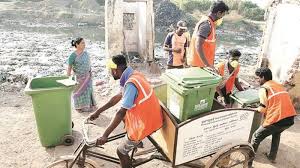
A phased rollout of revised solid waste management rules is underway in Chandigarh, marking a structural shift in how the city plans to manage, track, and regulate urban waste. The transition, aligned with the newly notified national framework effective April 2026, introduces stricter accountability for bulk waste generators and a stronger emphasis on segregation at source.
At the core of the reform is a four-stream waste segregation system—covering wet, dry, sanitary, and special care waste—replacing earlier, less granular practices. Urban authorities have begun implementation with a focus on awareness and behavioural change, before moving towards enforcement and penalties in subsequent phases. The revised framework significantly expands the definition of bulk waste generators to include large residential complexes, institutions, and commercial establishments based on waste generation, water usage, or built-up area thresholds. These entities are now required to process waste on-site or ensure scientifically managed disposal through authorised channels, shifting responsibility from municipalities to generators themselves. A key feature of the Chandigarh waste rules rollout is the integration of digital monitoring systems. Waste generation, collection, transportation, and processing will be tracked through a centralised platform, enabling real-time oversight and data-driven enforcement. Experts note that such systems could improve transparency and reduce leakages in waste handling—long-standing challenges in Indian cities.
The policy also embeds circular economy principles, encouraging waste recovery, recycling, and reduced landfill dependency. By promoting decentralised processing—such as composting and material recovery—the city aims to reduce pressure on centralised dumping sites and lower environmental risks associated with legacy waste. Urban planners view the initiative as a critical step towards modernising civic infrastructure in a city that has historically performed well on cleanliness indicators but continues to face constraints in waste processing capacity. The success of the new system will depend on how effectively institutions, resident welfare groups, and commercial establishments adapt to their expanded roles. However, implementation challenges remain. Experiences from other cities suggest that infrastructure gaps, limited awareness, and behavioural resistance can slow adoption. Experts emphasise the need for sustained public engagement, training programmes, and logistical support—particularly for smaller establishments transitioning to on-site waste management systems.
From a climate and sustainability perspective, the Chandigarh waste rules rollout signals a move towards lower-emission urban systems. Improved segregation can enhance recycling rates, reduce methane emissions from landfills, and create opportunities for resource recovery—key components of zero-waste and low-carbon city models. As enforcement tightens in the coming months, the focus will shift from compliance on paper to measurable outcomes on the ground. For Chandigarh, the phased approach offers a test case in balancing regulatory ambition with practical execution—an increasingly important equation for cities navigating rapid urbanisation and environmental stress.