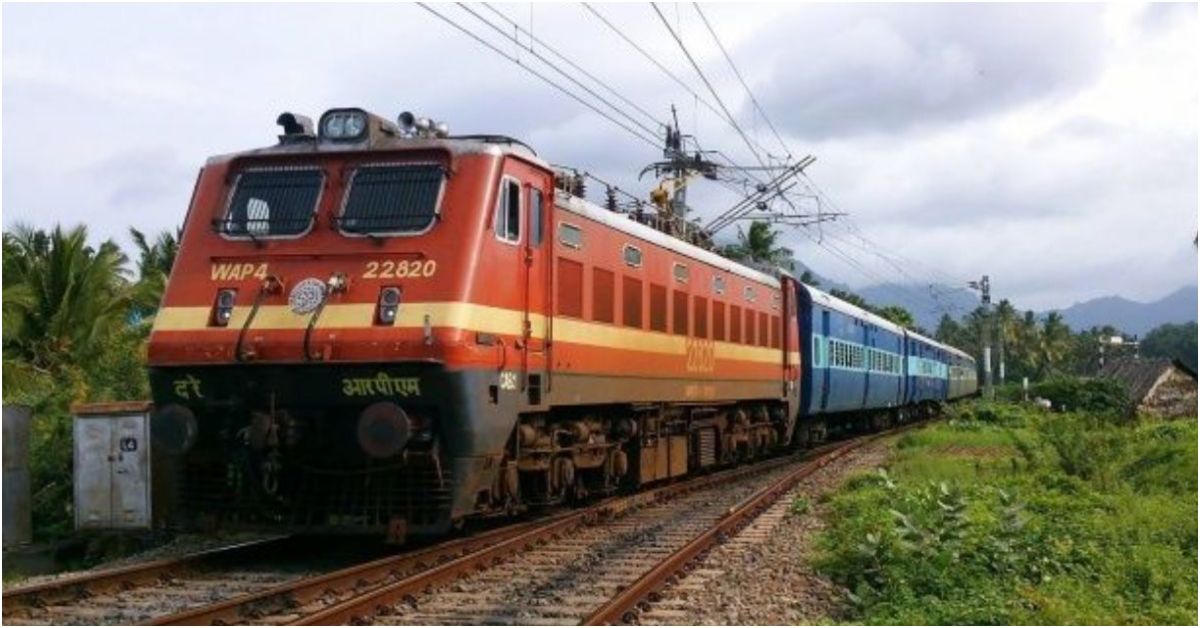
A newly regularised daily rail service between Patna and Rajgir is beginning to reshape how tourists access one of Bihar’s key heritage and eco-tourism clusters. The shift from occasional or special services to a predictable daily train is expected to strengthen regional mobility while reducing dependence on road travel along increasingly congested corridors.
The service allows early departures from Patna, enabling travellers to complete same-day visits to Rajgir’s प्रमुख attractions, including its expanding safari and heritage circuits. Tourism planners say this improves the viability of short-duration travel, especially for families and domestic tourists seeking structured, time-efficient itineraries. Railway officials have positioned the move as a response to sustained passenger demand and growing tourism flows. Regular operations are expected to benefit not just leisure travellers but also daily commuters, small businesses, and service providers operating between the two urban centres. From an urban systems perspective, the development signals a gradual rebalancing of transport modes. Road connectivity between Patna and Rajgir has improved in recent years, but rising vehicular traffic has led to longer travel times and higher emissions. A reliable rail alternative introduces a lower-carbon mobility option, aligning with broader goals of sustainable transport planning.
The timing of the service expansion coincides with ongoing upgrades to Rajgir’s tourism infrastructure. Authorities have been investing in capacity expansion at the zoo and nature safari complexes, alongside improvements in visitor amenities and integrated ticketing systems. These efforts indicate a transition from seasonal tourism to a more consistent, year-round visitor economy. Urban planners highlight that such rail-based interventions can influence settlement patterns and local economies. Improved accessibility often leads to increased footfall, which in turn supports hospitality, retail, and informal sector activity. However, this also places pressure on local infrastructure, including waste management, water supply, and ecological conservation systems. The concept of “day tourism” enabled by reliable rail connectivity is particularly significant. It reduces the need for overnight stays and long-distance road travel, lowering both cost and environmental impact. At the same time, it raises questions about carrying capacity and the need for visitor management frameworks in ecologically sensitive zones.
For Bihar, the Patna–Rajgir corridor is emerging as a test case in integrating transport infrastructure with tourism-led economic development. As investments continue across rail, road, and destination infrastructure, the challenge will be to ensure that growth remains balanced—supporting local livelihoods while preserving the environmental and cultural integrity of the region. In the coming months, the effectiveness of this daily rail service will likely be measured not just by passenger numbers, but by how well it integrates with last-mile connectivity, tourism planning, and sustainable urban development outcomes.