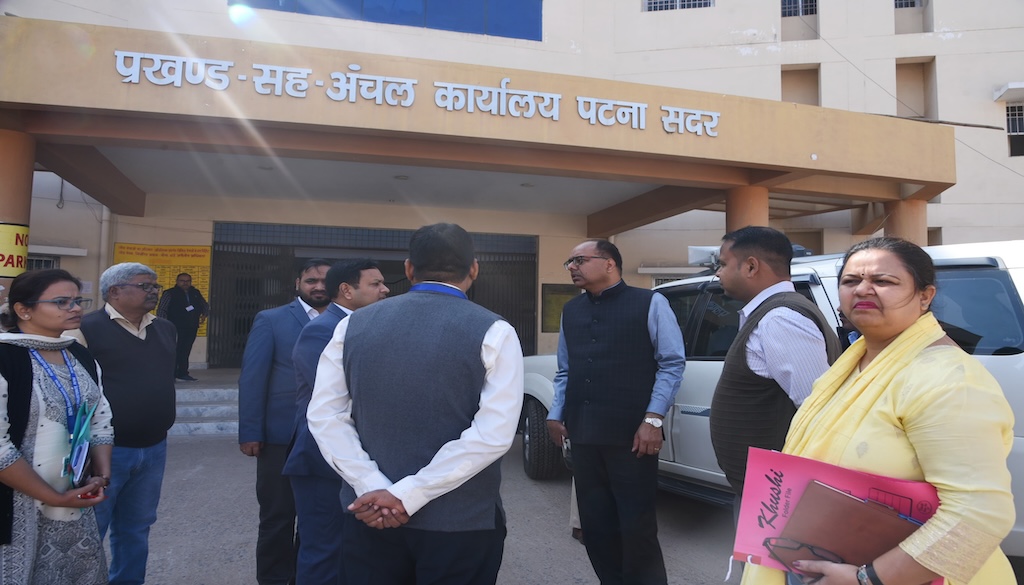
A statewide review mechanism aimed at accelerating stalled urban works is gaining traction in Bihar, with the Bihar Urban Infrastructure Development Corporation launching an intensive “Mission Project Completion” programme to fast-track infrastructure delivery across all 38 districts. The initiative reflects a growing administrative shift towards time-bound execution in a state where urban expansion is increasingly tied to basic service upgrades.
The programme, anchored in a multi-day review workshop in Patna, brings together district-level engineers and project officials to assess progress across sectors such as water supply, sewerage, drainage, and road construction. The focus has moved beyond routine monitoring to identifying implementation bottlenecks—ranging from land availability to documentation gaps—that often delay project timelines. Senior officials overseeing urban development have emphasised the need for stronger scrutiny of project planning documents, including detailed project reports and bid processes, to minimise execution errors. Administrative coordination, particularly around land clearances and financial approvals, has been flagged as critical to ensuring continuity in project pipelines.
The Mission Project Completion exercise is also being positioned as a performance-driven governance tool. Districts are being assessed on delivery metrics, with rankings expected to introduce a competitive framework within the public system. Such mechanisms, experts say, can improve accountability in large-scale infrastructure programmes where delays often cascade across sectors. BUIDCO, the state’s primary urban infrastructure agency, has been at the centre of Bihar’s expanding project portfolio, covering everything from sewage treatment systems to integrated water supply networks. As project volumes rise under national and state-led schemes, the need for tighter monitoring has become more pronounced—particularly in ensuring that assets are delivered not just quickly, but with long-term resilience.
Urban planners note that Bihar’s infrastructure push is entering a critical phase, where execution efficiency will determine outcomes more than policy intent. Delays in projects such as drainage or sewerage systems can have cascading impacts on flood management, public health, and urban productivity. In this context, initiatives that align administrative processes with on-ground realities are increasingly seen as essential. The programme also includes field-level inspections and structured feedback loops, enabling officials to align technical assessments with real-time project conditions. This approach reflects a broader shift towards data-backed governance, where site-level observations inform decision-making rather than periodic reviews alone.
For cities across Bihar, the implications are significant. Faster completion of urban infrastructure projects can improve service delivery, reduce climate vulnerability, and unlock economic activity in growing urban centres. However, sustaining this momentum will depend on whether institutional reforms—such as continuous monitoring, technical capacity building, and inter-departmental coordination—become embedded practices rather than one-time interventions. As Bihar’s urbanisation gathers pace, the success of Mission Project Completion could shape how effectively the state translates infrastructure investment into liveable, resilient, and inclusive city systems.