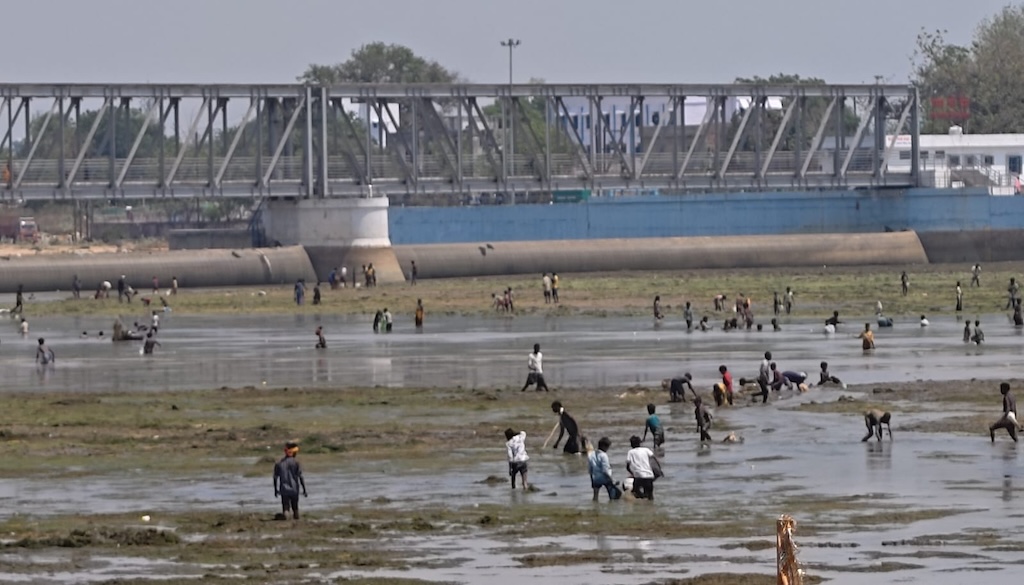
A sudden surge of people into the Falgu River riverbed in Gaya following a controlled water release from a local rubber dam has spotlighted critical gaps in urban water management and public safety enforcement.
The incident unfolded after authorities drained sections of the reservoir to enable cleaning operations ahead of the monsoon, inadvertently drawing large crowds into potentially hazardous conditions. Officials had released water downstream as part of routine desilting and sanitation efforts, aimed at restoring the ecological and functional health of the river stretch. Over time, ritual offerings and organic waste had accumulated in the retained water body, contributing to visible pollution and odour concerns.
As water levels dropped, fish became easily accessible in shallow sections, prompting residents to enter the exposed riverbed in large numbers. Eyewitness accounts indicate that people of all age groups waded into the area with nets and containers, despite repeated advisories warning against the risks of slippery terrain, residual currents, and sudden water movement. Urban governance experts point to this episode as a familiar pattern in Indian cities where infrastructure interventions intersect with informal public behaviour. In the absence of controlled access and behavioural enforcement, even planned maintenance activities can create unintended safety hazards. The Falgu river, which holds religious significance and supports year-round ritual practices due to the dam’s presence, also functions as a shared civic space—making crowd management particularly complex.
The incident also underscores the dual challenge of maintaining urban water bodies: balancing religious, ecological, and civic uses. While the cleaning operation was necessary to improve water quality and prepare for increased seasonal flows, the lack of perimeter control and real-time monitoring allowed the situation to escalate into a public safety concern. From a climate resilience perspective, such dams play a crucial role in retaining water in otherwise seasonal rivers, aiding groundwater recharge and supporting urban ecosystems. However, their operation requires robust risk communication strategies, especially during water release cycles that can alter flow patterns unpredictably.
For city administrators, the focus is likely to shift towards preventive planning—establishing clear exclusion zones, deploying surveillance during maintenance operations, and integrating community awareness into infrastructure management. As mid-sized cities like Gaya expand and modernise their water systems, aligning technical interventions with human behaviour will be essential to ensure both safety and sustainability.