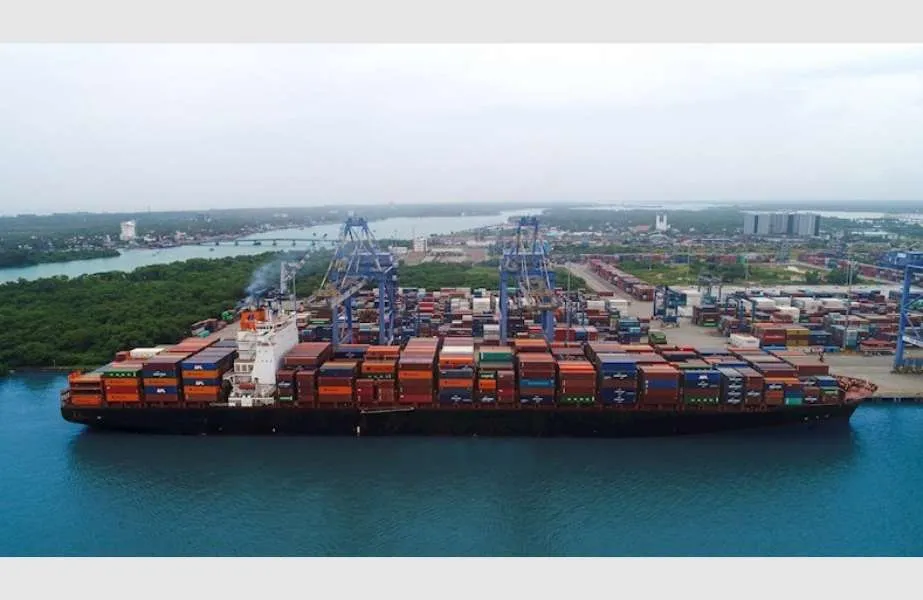
DP World Cochin, the operator of the International Container Transshipment Terminal (ICTT) in Kochi, has recorded a new milestone in cargo handling, marking a significant moment for the city’s logistics and trade infrastructure. The terminal handled over 8,000 twenty-foot equivalent units (TEUs) from a single vessel call — the highest volume ever achieved in one operation at the facility — reinforcing Kochi’s role as a pivotal maritime gateway in southern India.
The record was set when MSC Ilaria, one of the largest container vessels to call at the port, docked at the ICTT and delivered a mix of import, export and transshipment containers. The volume handled surpassed the previous benchmark of more than 6,000 TEUs, illustrating both the growing scale of global shipping and the terminal’s expanding operational capabilities. This development comes against the backdrop of broader enhancements at DP World Cochin, where strategic infrastructure investments have boosted annual capacity to around 1.4 million TEUs. Upgrades include new ship-to-shore cranes, electrified rubber-tyred gantry cranes (e-RTGs) and expanded yard space — all designed to improve productivity and accommodate larger vessels with greater efficiency. For urban planners and economic strategists in Kochi, the record underscores the terminal’s importance not just for maritime trade but for the city’s wider economic ecosystem. Ports like ICTT are vital nodes in supply chains that link local manufacturers, exporters and importers to global markets. Enhanced throughput capacity can reduce logistics bottlenecks, shorten delivery times and lower freight costs — factors that make Kochi more attractive for industrial investment and export-oriented enterprises.
Kochi’s strategic location on major east–west shipping routes and its connectivity to hinterland markets in Kerala and southwest Tamil Nadu provide inherent advantages for trade facilitation. The minimal deviation required from international sea routes, combined with proximity to key cargo origins, gives the terminal a competitive edge in handling both coastal and transshipment traffic. Beyond trade facilitation, DP World Cochin’s infrastructure trajectory also reflects evolving sustainability priorities in port operations. The electrification of yard equipment, supported by an in-house solar power plant, reduces carbon emissions associated with cargo handling. This aligns with broader efforts to integrate cleaner technologies into logistics infrastructure, which is increasingly important as cities pursue climate-resilient economic growth. The ability to handle larger vessels and higher container volumes also has implications for urban development. Reliable and efficient port operations can stimulate ancillary industries such as warehousing, freight forwarding and multimodal transport services. In turn, this can generate employment opportunities and drive infrastructure upgrades in road and rail networks that link the port to urban and industrial centres.
However, challenges remain. To sustain growth and fully leverage its expanded capacity, DP World Cochin must continue investing in digitalisation, workforce skills and hinterland connectivity. Strengthening these elements will be key to maximising the terminal’s contribution to regional supply chains and ensuring that Kochi’s port infrastructure keeps pace with the demands of global trade.As container traffic grows and vessel sizes increase worldwide, Kochi’s record achievement signals the city’s rising prominence in India’s maritime logistics landscape — a development with far-reaching implications for trade, urban economic growth and sustainable infrastructure planning.