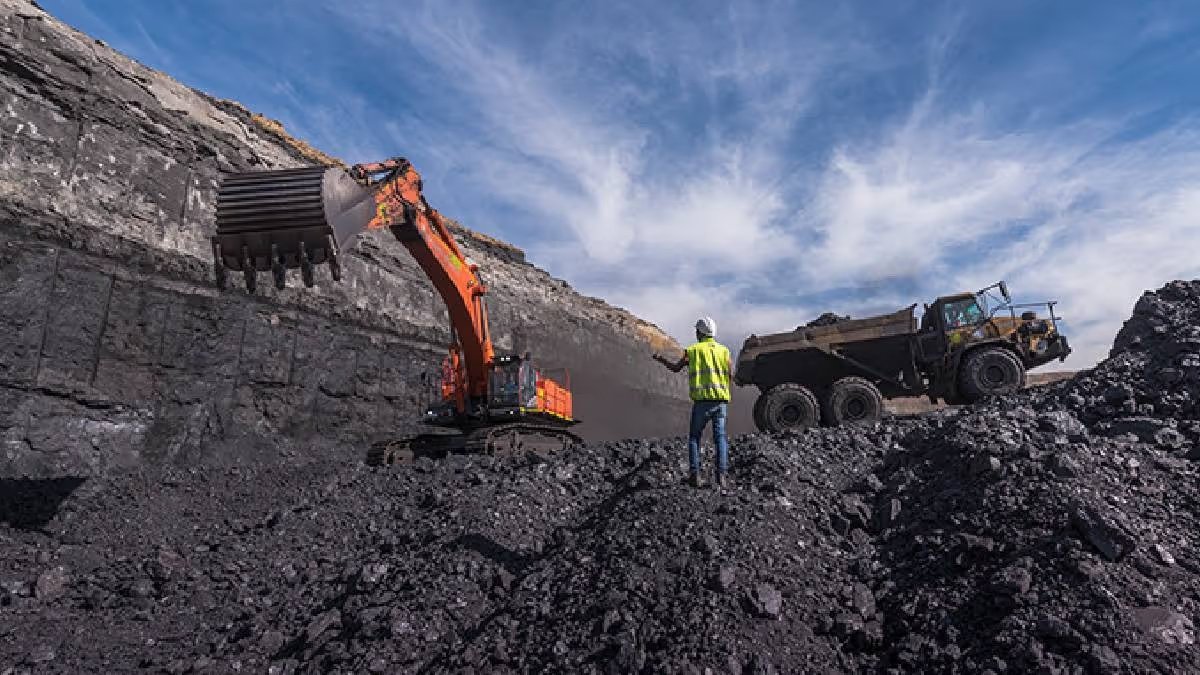
India Coal Output Growth Strengthens Energy Supply
India’s coal sector has recorded a significant production milestone in FY 2025–26, with output from captive and commercial mines reaching approximately 210 million tonnes. The surge reflects a sustained push to strengthen domestic energy supply chains, even as the country balances rapid infrastructure growth with long-term climate commitments.
Data from the Ministry of Coal indicates that production from captive and commercial blocks has shown double-digit year-on-year growth, driven by improved operational efficiency, policy reforms, and expanded private sector participation. The milestone also surpasses the previous year’s output well ahead of schedule, underlining the sector’s accelerated capacity expansion.The rise in India coal production is closely linked to increasing demand from power generation, steel manufacturing, cement, and infrastructure sectors. As construction activity intensifies across urban and industrial corridors, reliable access to fuel remains critical to sustaining economic momentum. Captive mining—where companies extract coal for their own industrial use—has become particularly important in ensuring supply stability for core industries.Experts note that the steady increase in India coal production is helping reduce dependence on imports, while improving resilience across energy-intensive sectors. Over the past few years, regulatory changes, auction-based allocation of mines, and investment in mechanisation have contributed to higher output and faster project execution.
However, the expansion of coal output also brings into focus the environmental and urban implications of resource-intensive growth. Coal continues to be a major contributor to carbon emissions, and its increased use presents challenges for cities aiming to transition towards low-carbon development pathways. Urban planners point out that while coal remains essential in the near term, especially for baseload power, its role will need to evolve alongside investments in renewable energy and cleaner technologies.The growth in production is also influencing regional economies, particularly in mining states where infrastructure development, employment generation, and ancillary industries are closely tied to coal activity. Improved logistics, including rail connectivity and coal evacuation systems, have played a role in supporting higher dispatch levels, which have also recorded consistent growth during the year. From an infrastructure perspective, coal remains deeply embedded in India’s construction value chain. Cement and steel production—key inputs for urban housing, transport networks, and industrial projects—are heavily dependent on steady coal supply. As a result, fluctuations in coal availability can directly impact project timelines and costs.
Looking ahead, the trajectory of India coal production will likely be shaped by a dual imperative: meeting immediate energy and infrastructure demands while gradually aligning with decarbonisation goals. The sector’s ability to integrate cleaner mining practices, improve efficiency, and support a transition to diversified energy sources will determine its role in India’s evolving urban and industrial landscape.