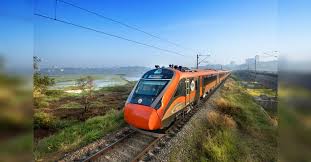
Bihar Rail Upgrade Drives Tourism And Commuter Relief
Bihar’s regional transport network is gaining momentum with the approval of a regular train service between Patna and Rajgir, a move expected to strengthen daily commuting and unlock tourism potential along a key corridor linking the state capital with a major heritage destination.
The decision by railway authorities to convert an existing special service into a permanent operation reflects sustained passenger demand and growing interdependence between Patna and surrounding towns. Regular scheduling is expected to bring predictability to travel, particularly for workers, students, and small business operators who rely on consistent rail connectivity. The Patna–Rajgir stretch, spanning roughly 100 kilometres, connects several intermediate urban nodes such as Bihar Sharif and Nalanda, which are witnessing gradual population and economic expansion. A daily MEMU service on this route typically covers the journey in around two and a half hours, underscoring its importance as a short-distance mobility backbone in the region. Urban development experts see the move as part of a broader shift towards strengthening regional mobility systems rather than focusing solely on intra-city infrastructure. Reliable rail services allow smaller towns to integrate more effectively with larger urban economies, distributing growth and reducing pressure on core city infrastructure. In Bihar’s case, improving such corridors can help balance migration patterns and support decentralised development.
Tourism is another key driver behind the decision. Rajgir, a prominent destination within India’s Buddhist and heritage circuits, attracts domestic and international visitors throughout the year. Improved rail connectivity from Patna—often the primary entry point for travellers—can enhance visitor flows, reduce travel friction, and support local hospitality and service economies. The regularisation also signals a wider operational strategy within Indian Railways to transition high-demand special services into permanent offerings. Such decisions are increasingly data-driven, based on passenger load factors and route viability, indicating a more responsive approach to infrastructure utilisation. From an economic perspective, the benefits extend beyond transport. Better connectivity can stimulate real estate activity in peri-urban zones, encourage small-scale entrepreneurship, and improve access to education and healthcare facilities. For daily commuters, predictable train services reduce reliance on road transport, which is often subject to congestion and variability. Sustainability considerations further reinforce the importance of rail-based mobility. Compared to road transport, trains offer lower emissions per passenger kilometre, making them a more energy-efficient option for short-distance intercity travel. As cities like Patna expand, integrating rail into everyday mobility patterns becomes essential for managing both congestion and environmental impact.
However, experts caution that the full potential of the Patna Rajgir train service will depend on supporting infrastructure. Station upgrades, last-mile connectivity, and multimodal integration will be critical to ensuring that improved rail services translate into seamless travel experiences. As Bihar continues to invest in connectivity, the regularisation of this corridor reflects a broader effort to align transport infrastructure with economic growth, tourism development, and inclusive urbanisation—key elements shaping the next phase of regional development.