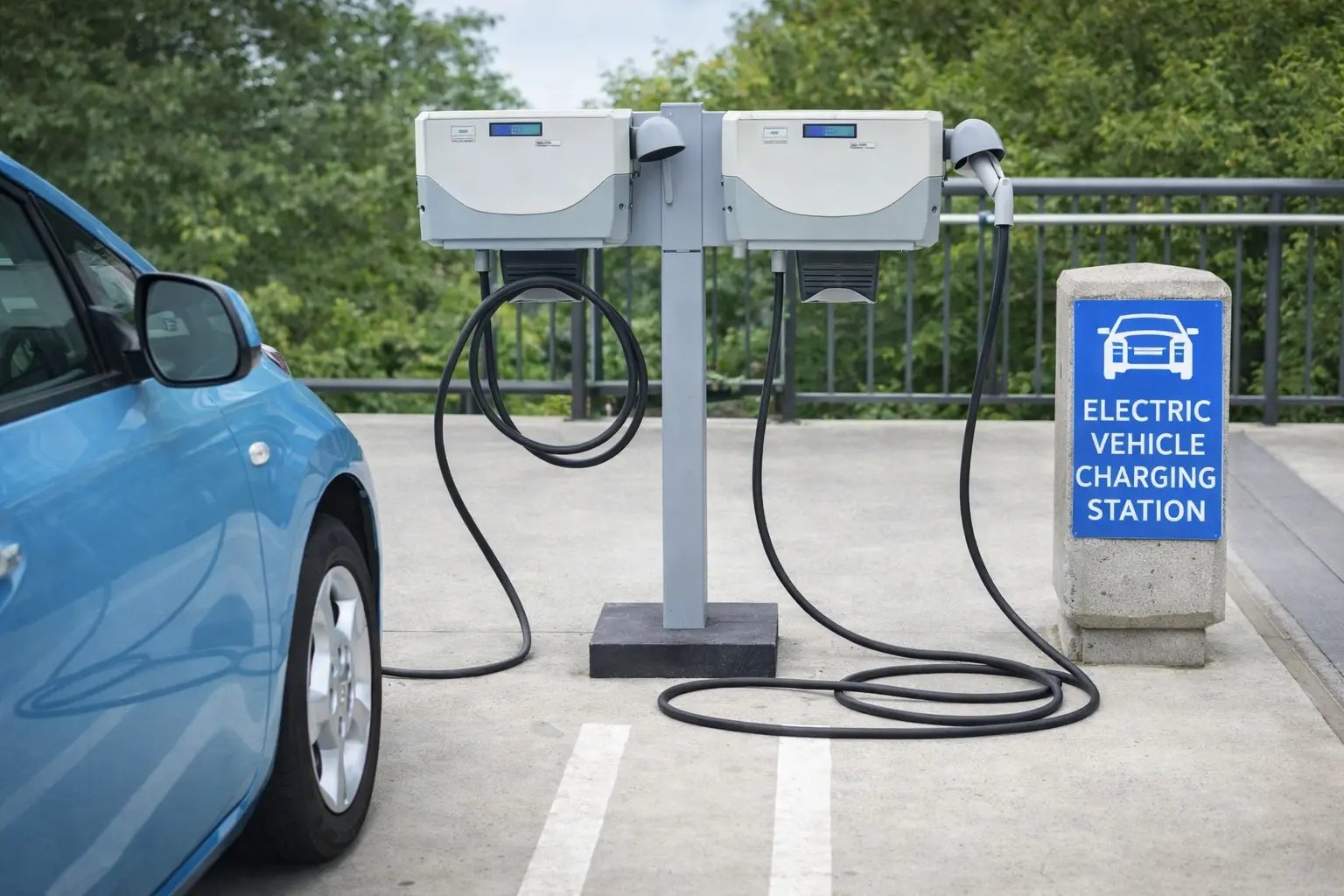
A major expansion of EV charging infrastructure has been introduced along the regional rapid transit network in the National Capital Region, with a new high-capacity facility becoming operational near Anand Vihar in Delhi. Developed along the Namo Bharat rapid rail corridor, the charging hub marks a step toward integrating clean mobility solutions with large-scale public transport infrastructure. Urban transport planners say the project reflects a broader shift in how mobility systems are being designed in Indian cities—moving beyond rail or road projects in isolation to include charging infrastructure that supports the transition to electric vehicles.
The newly commissioned station includes multiple high-output chargers capable of powering both passenger vehicles and heavy commercial electric vehicles. According to officials associated with the corridor’s development, each unit offers high charging capacity designed to significantly reduce waiting time for users. Four-wheel electric vehicles can reach substantial charge levels within roughly half an hour, while specialised connectors have been installed for commercial vehicles that require larger energy loads. Authorities indicated that the facility has been integrated into a digital platform that allows EV owners to book charging slots in advance and monitor charging sessions remotely. Through a mobile application, users can schedule a visit, track battery status in real time, and complete payments digitally, a model increasingly adopted in modern charging networks. Urban mobility experts view the expansion of EV charging infrastructure along the Namo Bharat corridor as an important development for the Delhi–Meerut regional transport system. Rapid transit corridors often attract significant commuter traffic, and combining them with charging hubs could help accelerate the adoption of electric vehicles in surrounding urban clusters. The Anand Vihar installation is part of a wider effort to equip stations along the corridor with EV charging facilities.
Charging services are already operational at several other transit nodes between Delhi and Meerut, enabling a distributed network that can support both urban and intercity travel. Transport analysts note that integrating charging infrastructure with transit hubs offers multiple advantages. Besides supporting electric mobility, it encourages commuters to combine private EV use with public transport, helping reduce congestion and emissions in dense urban areas. Such models are also being explored globally as cities look for ways to align electrification goals with sustainable transport planning. The National Capital Region has been investing heavily in rapid transit and mobility upgrades, including high-speed regional rail and improved last-mile connectivity. Adding EV charging infrastructure to these projects could strengthen the ecosystem required for low-carbon urban transport, particularly as electric vehicle adoption grows across northern India.
Looking ahead, planners believe that scaling such facilities across major transit corridors will be essential for building a reliable charging network. As infrastructure expands and charging technology becomes more accessible, the success of these initiatives will depend on how seamlessly they integrate public transport systems with emerging electric mobility needs.