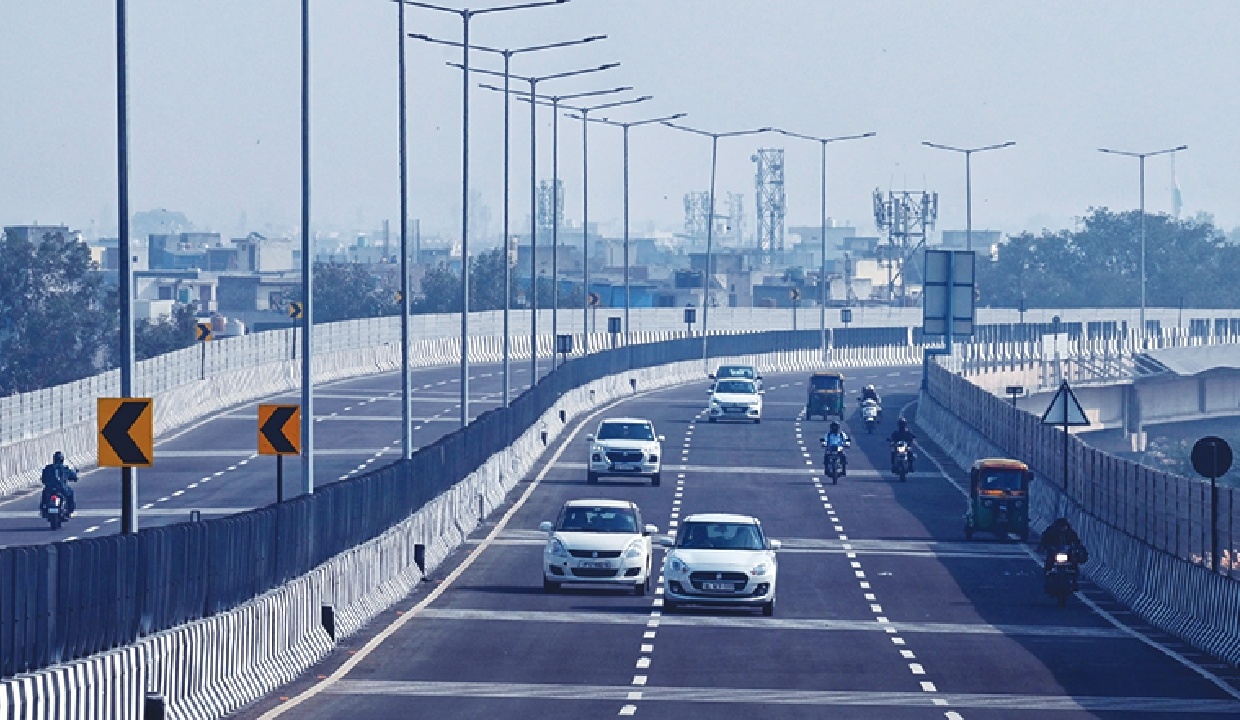
Delhi MB Road Elevated Corridor Cleared For Construction
Authorities have cleared a major transport infrastructure initiative in south Delhi after approving funding for the MB Road elevated corridor, a multi-level mobility project aimed at easing chronic congestion along one of the capital’s busiest arterial routes. The project involves constructing a 2.48-kilometre elevated corridor designed to streamline traffic movement along Mehrauli-Badarpur Road, a critical stretch connecting residential clusters, commercial areas and transit hubs in the southern part of the city. With an estimated cost exceeding ₹1,400 crore, the proposal forms part of broader efforts to modernise Delhi’s urban transport infrastructure while improving road capacity in high-density neighbourhoods.
According to officials involved in the planning process, the MB Road elevated corridor will be implemented as an integrated double-decker transport structure during its first development phase. The design includes a six-lane elevated flyover intended to carry through-traffic above ground level, while a combination of underpasses and ramps will handle local vehicular movement below. The project alignment between Saket and Sangam Vihar is expected to include a major underpass near the Saket G-Block junction, allowing vehicles to bypass heavily congested intersections. Additional connectivity will be provided through an elevated ramp linking the Bus Rapid Transit (BRT) corridor with the elevated roadway. A smaller two-lane underpass is also planned to facilitate direct movement between MB Road and the BRT route. Urban mobility experts say the MB Road elevated corridor represents an attempt to address long-standing traffic bottlenecks in south Delhi, particularly during peak commuting hours when traffic volumes from residential areas, educational institutions and office hubs converge along the corridor.
Transport planners note that MB Road serves as a key north-south connector in the capital’s road network, linking several densely populated areas with the rest of the city. Over time, population growth and rapid real estate development in surrounding neighbourhoods have increased pressure on the existing road infrastructure. Beyond easing congestion, the project also includes environmental mitigation measures. A portion of the allocated budget has been earmarked for tree plantation and landscape improvements to offset ecological impacts associated with construction. Urban design specialists say such measures are increasingly being integrated into large transport projects as cities attempt to balance mobility expansion with environmental considerations. However, large elevated infrastructure projects also bring challenges, including land constraints, construction disruption and the need to maintain traffic flow during implementation. Experts say detailed traffic management strategies will be critical to minimise disruptions in surrounding residential areas while work progresses. The MB Road elevated corridor forms part of a broader shift toward multi-level urban transport solutions in India’s largest cities, where limited land availability often requires infrastructure to be built vertically rather than through road widening alone.
As planning moves toward implementation, city authorities will focus on detailed design approvals, contractor selection and construction timelines. Once completed, the corridor is expected to significantly improve travel time and connectivity across south Delhi, offering relief to thousands of daily commuters while supporting the capital’s evolving urban mobility network.