


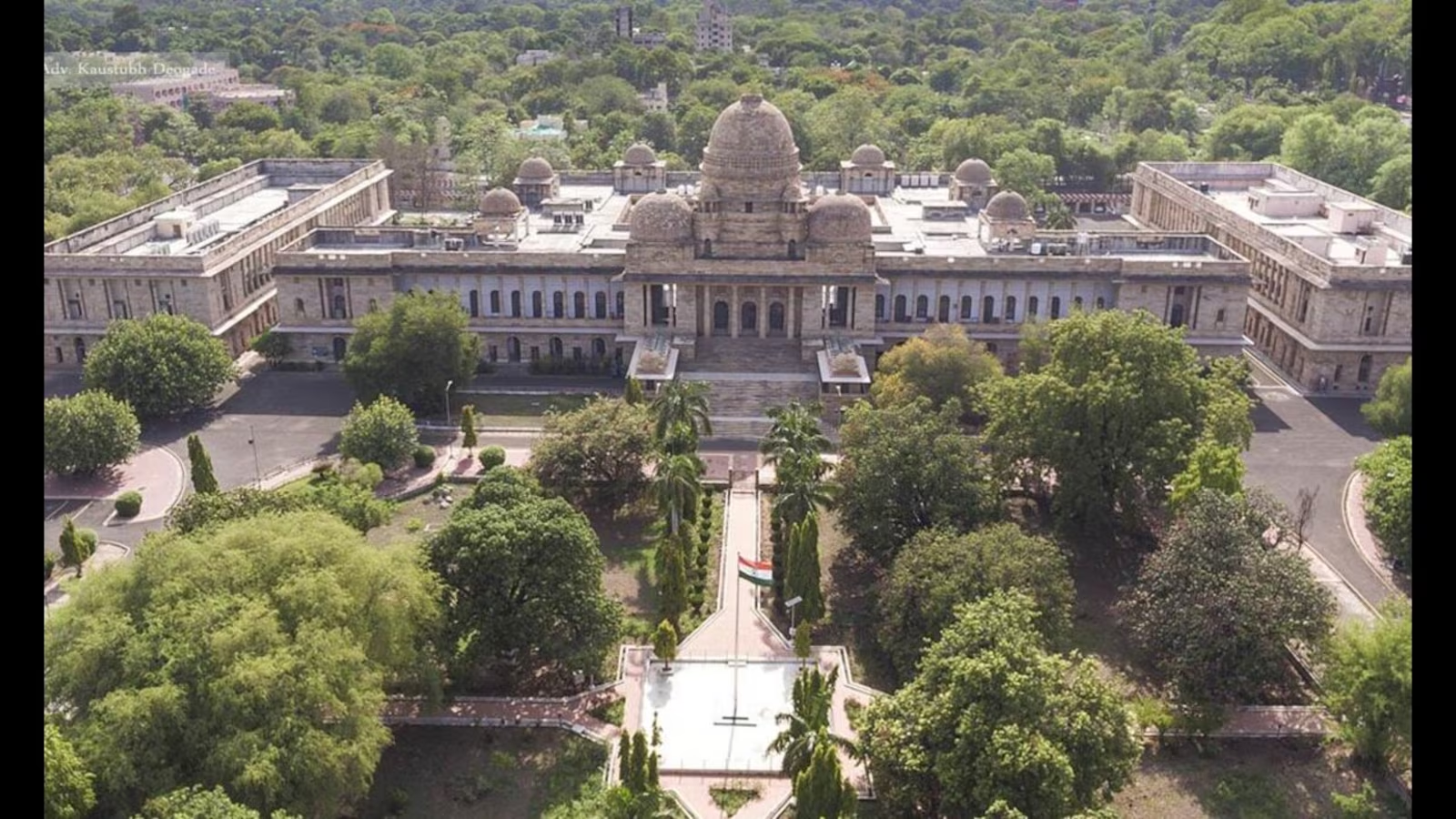
Nagpur is poised for a significant transformation in its role as Maharashtra’s second capital after the state government approved more than ₹1,000 crore for a new legislative complex on the city’s Civil Lines precinct. The decision, cleared by a high-level infrastructure committee this week, marks one of the largest civic investments in Nagpur’s institutional landscape in recent years and reflects broader efforts to modernise governance infrastructure while supporting balanced regional development. The approved project will replace the existing century-old legislative building with a contemporary campus designed to meet long-term administrative and legislative needs. It comprises two principal components: a primary legislative building and annexes, and a separate administrative tower to house offices linked to legislative functions. Both segments will be implemented by the Maharashtra State Infrastructure Development Corporation under engineering, procurement and construction contracts.
Urban planners and civic experts say the investment signals a strategic shift in how Nagpur’s urban role is being shaped. As the designated winter seat of the state legislature, Nagpur draws periodic inflows of legislators, officials and media, creating economic activity and spotlighting the city’s infrastructure demands. Modernising the legislative campus not only enhances civic facilities but also strengthens Nagpur’s position in the state’s institutional architecture, a balance that policymakers have sought since the Nagpur Pact formalised its status decades ago. The new complex is expected to integrate spaces for legislative chambers, committee rooms, media zones and administrative offices, connected through pedestrian-friendly design and internal circulation. A planned underground link between the main complex and the administrative tower aims to improve operational efficiency while reducing surface congestion. Incorporating sustainable design principles and green building practices is also part of the blueprint, aligning with emerging norms for climate-responsive civic infrastructure. However, the scale of the investment has sparked debate among regional development advocates. Critics argue that while institutional infrastructure is important, parallel emphasis is needed on pressing civic needs such as flood mitigation, public transport expansion and social infrastructure in peripheral neighbourhoods. Nagpur’s urban authorities have grappled with delayed restoration of river embankments and gaps in commuter amenities, underscoring the multifaceted nature of urban resilience and quality of life. Proponents of the legislative complex counter that such investments can catalyse broader urban improvements. The construction phase is likely to generate jobs and engage local contractors, while the completed facility could attract ancillary services, hospitality and business activity around the Civil Lines zone. From a planning perspective, embedding accessible public spaces and energy-efficient systems within the design could set a benchmark for future civic projects in secondary Indian cities.
Execution risks remain, including timely tendering, coordination among civic agencies and integration with the city’s mobility networks. For residents, the project’s success will be measured not only by architectural grandeur but by how seamlessly it fits into Nagpur’s evolving urban fabric. As Nagpur prepares for this landmark infrastructure shift, the focus will likely broaden to ensuring that legislative expansion complements investments in climate resilience, inclusive mobility and equitable urban services — key pillars of sustainable city growth.
ALSO READ – India Real Estate Shift Toward Trust And Sustainability
Nagpur Set For New Vidhan Bhavan Legislative Complex
