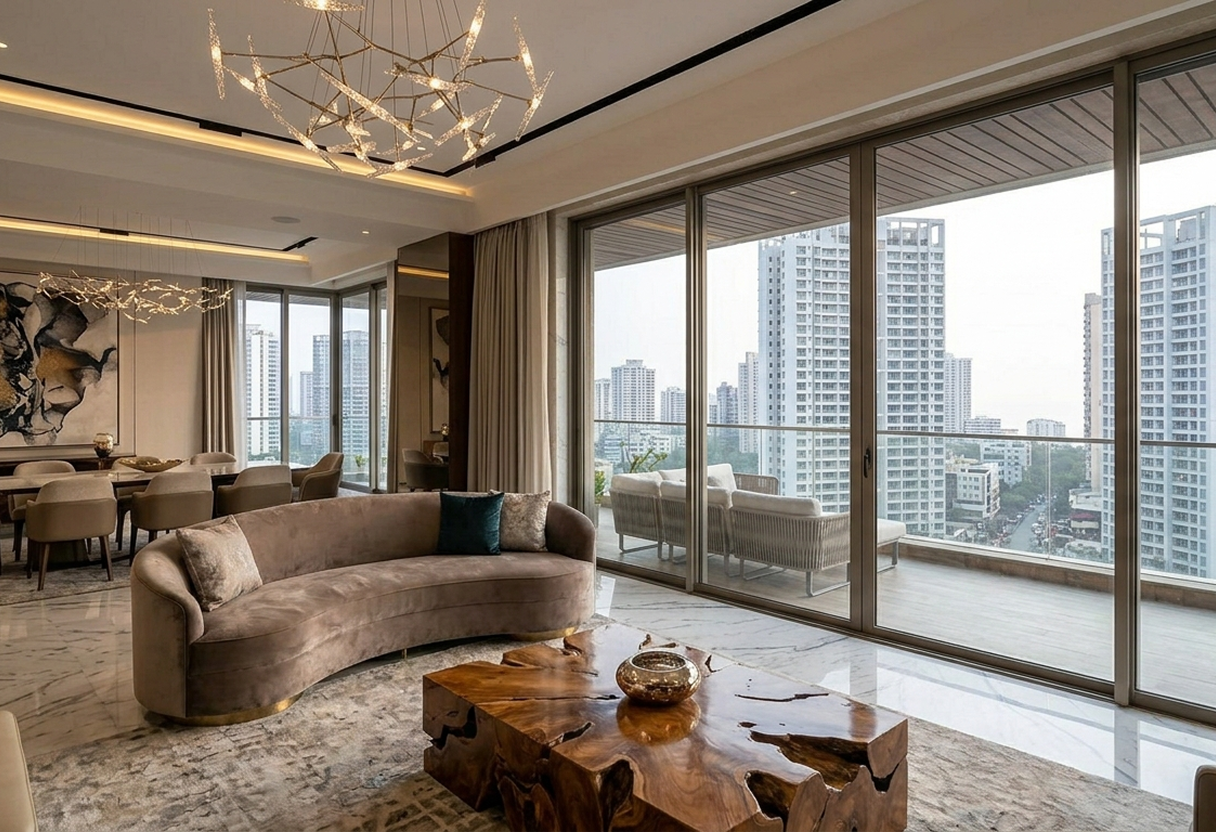
A high-value residential transaction in Mumbai’s western suburbs has signalled a notable shift in the city’s premium housing geography, with a triplex penthouse in Goregaon East changing hands for over ₹56 crore. The deal, priced at upwards of ₹65,000 per sq ft, places suburban developments increasingly within the orbit of Mumbai’s traditionally dominant luxury markets, raising questions about urban expansion, infrastructure readiness, and equitable growth.
Located within a high-rise development along the Western Express Highway corridor, the multi-level residence spans more than 8,500 sq ft and includes dedicated parking provisions features that reflect evolving buyer expectations around space, privacy, and mobility. Industry observers note that such transactions are no longer isolated, but part of a broader trend of rising Mumbai luxury housing values beyond the island city. Real estate analysts point to a convergence of factors driving this shift. Improved connectivity through arterial roads and upcoming metro networks has enhanced the accessibility of suburban locations, while large-scale, master-planned developments by established developers are delivering amenities historically associated with South Mumbai. This has enabled western suburbs such as Goregaon, Andheri, and Borivali to attract high-net-worth buyers seeking newer inventory with integrated urban infrastructure.
However, urban planners caution that the surge in Mumbai luxury housing prices in peripheral zones must be assessed alongside civic capacity. “Premium housing growth without parallel upgrades in water supply, waste systems, and public transport risks placing pressure on already stretched urban services,” said a senior urban development expert. The clustering of luxury towers along key corridors could also intensify traffic density unless multimodal transport integration keeps pace. Recent months have seen multiple high-ticket deals in similar developments, with per square foot rates in select projects approaching benchmarks once exclusive to established luxury districts such as Worli, Bandra, and Juhu. While average suburban prices remain lower overall, the narrowing gap for Grade-A properties suggests a structural recalibration of Mumbai’s housing market rather than a temporary spike.
From a policy perspective, the trend reflects both opportunity and challenge. On one hand, decentralisation of premium housing can reduce pressure on historically saturated neighbourhoods and distribute economic activity more evenly. On the other, it underscores the urgency of inclusive planning ensuring that infrastructure, public services, and affordable housing keep pace with high-end real estate expansion. As Mumbai continues to grow outward, the trajectory of its luxury housing market will likely depend not just on demand, but on how effectively the city aligns real estate development with climate resilience, transport integration, and equitable access. The next phase of suburban growth may well determine whether these emerging hubs evolve into balanced urban districts or remain enclaves of high-value isolation.