Hyderabad KBR Park Traffic Trial Exposes Urban Gaps
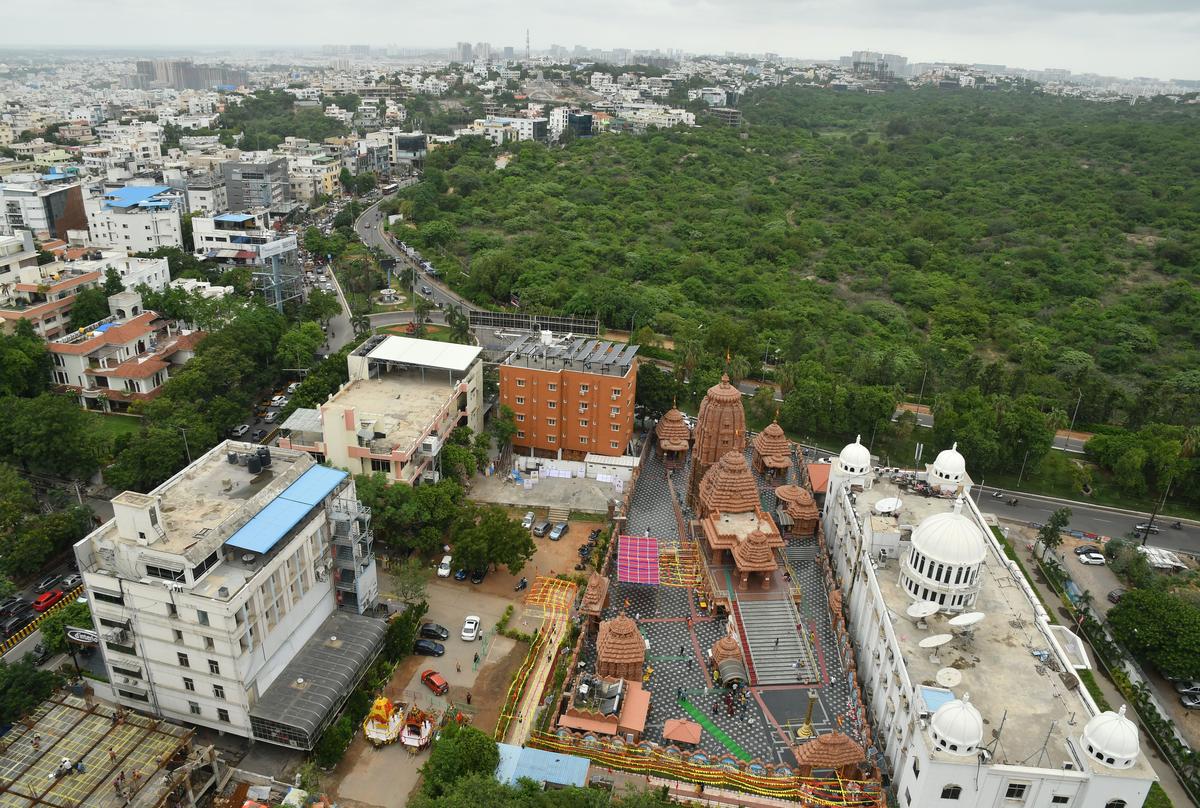
Infrastructure works around Hyderabad’s KBR Park corridor are intensifying traffic congestion across key urban stretches, highlighting the short-term disruptions that often accompany large-scale mobility upgrades. The ongoing construction activity, part of a broader plan to create signal-free corridors, is affecting daily commutes in high-density areas such as Banjara Hills and Jubilee Hills.
The works—focused on flyovers and underpasses near major junctions—have led to narrowed carriageways and traffic diversions, particularly during peak hours. Commuters travelling through the KBR Park stretch are experiencing delays as excavation and pillar construction activities restrict road capacity. The disruption is linked to the Hyderabad City Innovative and Transformative Infrastructure (H-CITI) initiative, which aims to build a network of grade separators to ease congestion in one of the city’s busiest corridors. The project includes multiple flyovers and underpasses designed to create uninterrupted traffic flow around the KBR Park belt. While the long-term objective is to reduce bottlenecks, the current phase is placing pressure on already strained urban roads. The KBR Park area connects several commercial, residential, and institutional zones, making it a critical artery for daily movement. With construction underway, traffic police have issued advisories and diversion plans to manage flow, but congestion remains a concern during morning and evening peaks.
Urban mobility experts note that such disruptions are typical in rapidly expanding cities where infrastructure upgrades struggle to keep pace with rising vehicle volumes. Hyderabad, like many Indian metros, is witnessing steady growth in private vehicle ownership, intensifying pressure on existing road networks. The KBR corridor, in particular, has long been identified as a congestion hotspot due to its strategic location and high traffic density.The project itself is part of a larger vision to build a signal-free network that can support future traffic demand. Authorities have planned multiple phases of construction, covering key junctions and arterial roads, with the aim of improving travel times and reducing intersection delays once completed. However, the situation also raises broader questions about urban planning and execution. Experts emphasise the need for better construction-phase traffic management, including staggered work schedules, real-time traffic updates, and stronger integration with public transport systems to minimise disruption.From a sustainability perspective, prolonged congestion during construction can increase fuel consumption and emissions, counteracting some of the long-term benefits of infrastructure upgrades. This underscores the importance of balancing development with climate-sensitive planning in rapidly growing cities.
For residents and commuters, the immediate challenge is navigating daily disruptions while anticipating future gains. Improved road infrastructure has the potential to significantly reduce travel time and enhance connectivity across Hyderabad’s urban core.Looking ahead, the success of the KBR Park corridor upgrade will depend on timely execution and effective coordination between civic agencies and traffic authorities. As cities invest in large-scale mobility projects, managing the transition phase will remain critical to ensuring that infrastructure development translates into tangible improvements in urban life.