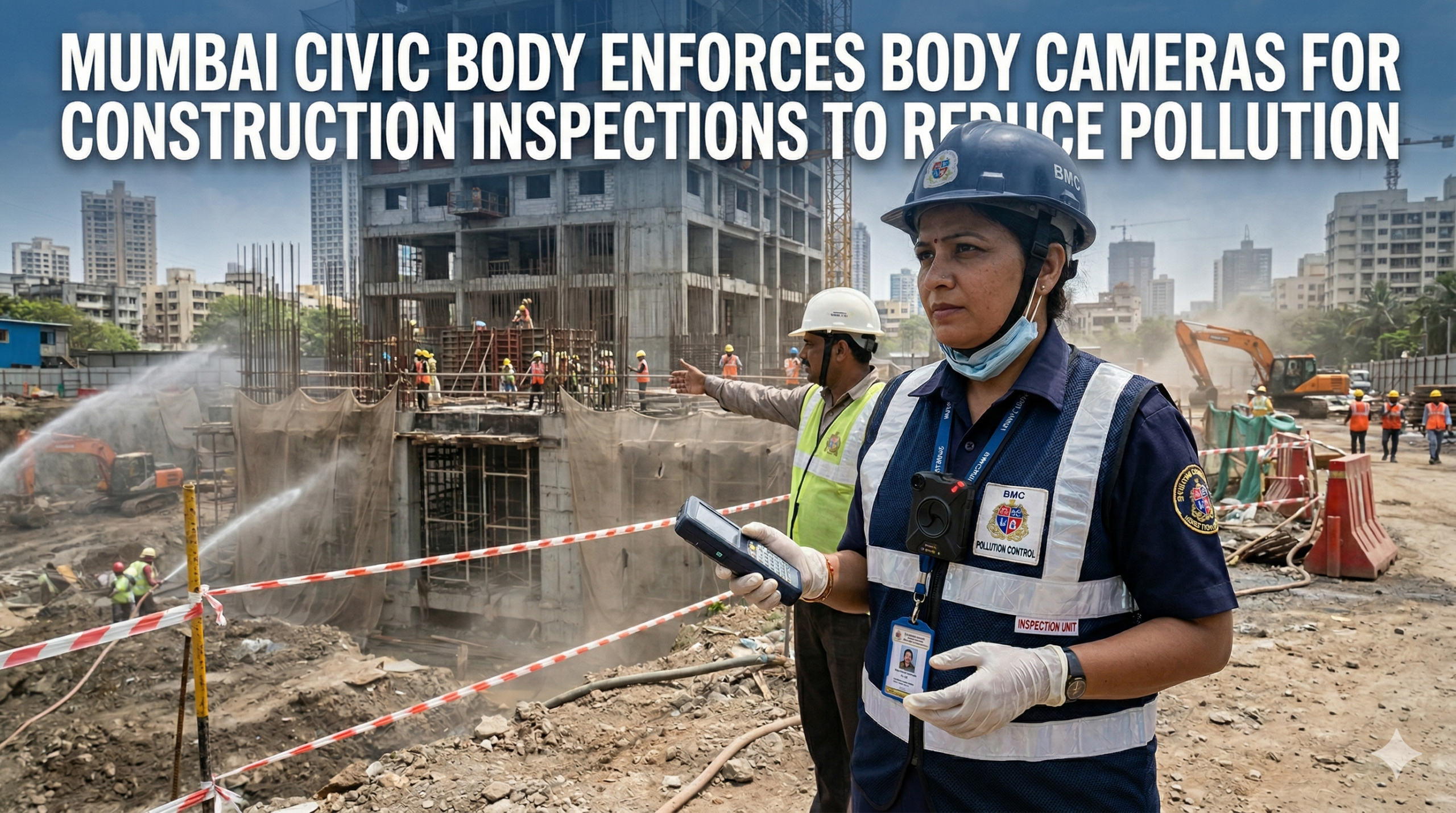
Mumbai’s civic administration is introducing body-worn cameras for field teams inspecting construction sites, in a move aimed at tightening enforcement against dust pollution and improving accountability in on-ground monitoring. The decision comes amid rising concerns over deteriorating air quality and the role of unregulated construction activity in worsening urban emissions.
Under the new directive, inspection squads deployed across the city’s administrative wards will be required to record site visits in real time using body cameras. The measure is intended to create verifiable evidence of violations while reducing the scope for discretionary enforcement. Officials indicate that the system will cover thousands of active construction sites currently under surveillance. The initiative forms part of a broader strategy to strengthen oversight of dust-generating activities, particularly in a city where rapid real estate and infrastructure expansion continues to place pressure on environmental systems. Construction dust, along with road dust, has emerged as a significant contributor to particulate pollution, impacting public health and urban liveability.
Civic authorities have also scaled up the number of monitoring teams, with each squad combining municipal staff and enforcement personnel. The addition of body cameras is expected to standardise inspection protocols, ensuring that violations such as inadequate dust barriers, uncovered debris, and improper material handling are consistently documented. Urban policy experts view the move as a step towards data-driven governance in environmental regulation. By capturing visual records of inspections, authorities can build a transparent audit trail, which may also strengthen legal action against repeat offenders. In a sector where compliance gaps often persist, digital monitoring tools could help bridge enforcement deficits.
Alongside construction oversight, the administration is intensifying efforts to tackle road dust, which accounts for a substantial share of the city’s air pollution load. Measures under consideration include mechanised sweeping, water-based dust suppression, and deployment of specialised vacuum vehicles on high-traffic corridors. Officials suggest that reducing road dust levels will be critical to achieving measurable improvements in air quality. From a sustainability standpoint, the integration of monitoring technology reflects a shift towards more accountable urban management practices. As cities like Mumbai grapple with the dual challenge of infrastructure growth and environmental degradation, such interventions aim to align development activity with stricter ecological safeguards.
However, experts caution that enforcement tools alone may not be sufficient. Long-term gains will depend on better construction practices, stricter compliance norms, and greater industry participation in adopting low-emission building methods. The effectiveness of the body camera initiative will likely be assessed over the coming months, particularly in terms of compliance rates and reduction in visible dust pollution. If successful, it could set a precedent for other Indian cities seeking to balance construction-led growth with cleaner air and improved urban health outcomes.
Mumbai Civic Body Enforces Body Cameras For Construction Inspections To Reduce Pollution