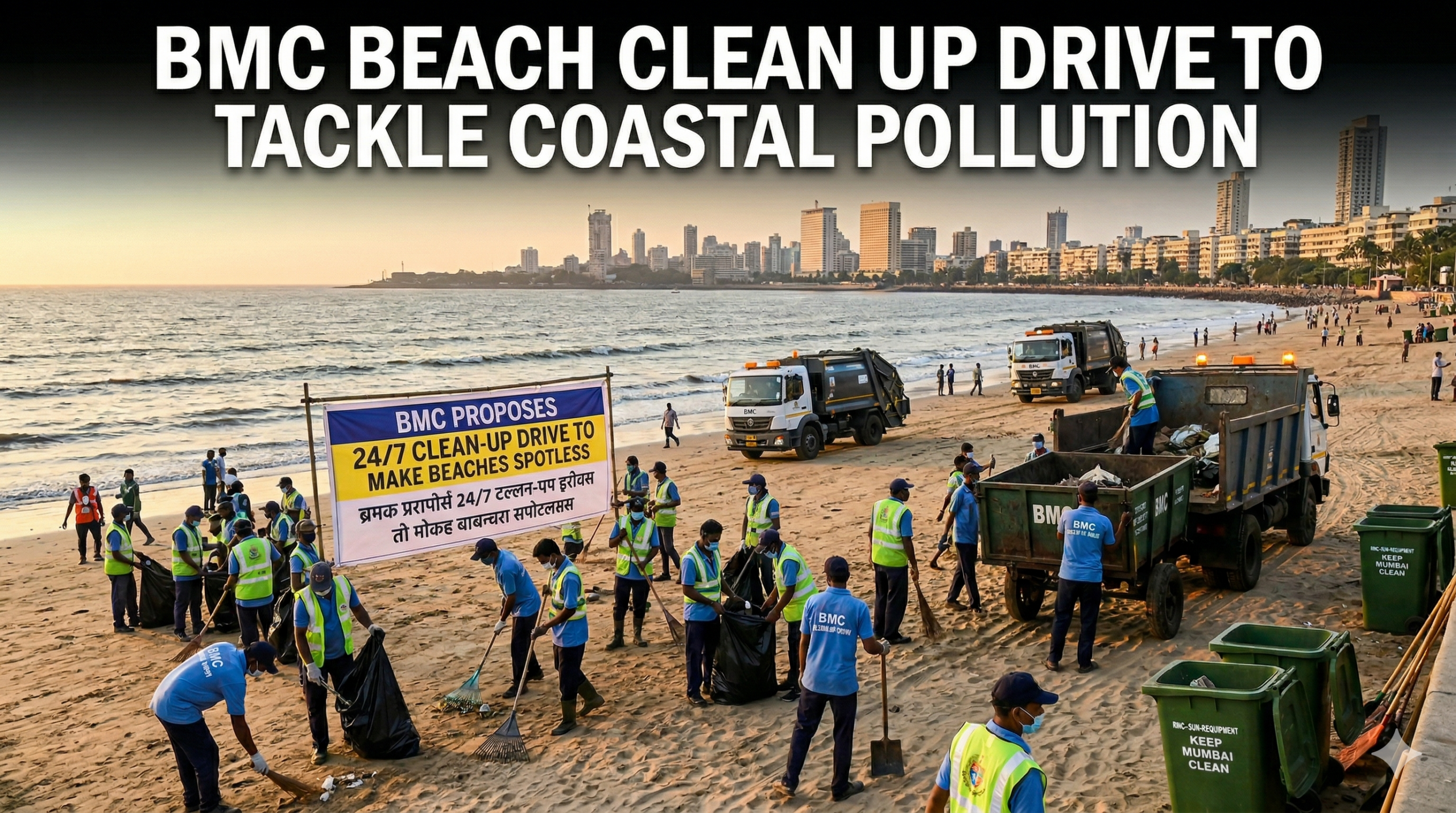
Mumbai’s civic administration is preparing to roll out an intensive beach clean up plan across key coastal stretches, aiming to curb the surge in marine waste that typically accompanies the monsoon season. The initiative, expected to begin in the coming weeks, will focus initially on two high-footfall locations in Dadar and Bandra, with authorities positioning it as a pilot for broader shoreline management reforms.
The move comes as the city braces for seasonal tidal inflows that routinely deposit large volumes of plastic and mixed waste along its coastline. With Mumbai’s shoreline extending over 140 kilometres and multiple public access beaches spread across the island city and suburbs, unmanaged debris not only degrades ecosystems but also raises public health and sanitation concerns. Officials involved in the planning indicate that the beach clean up model will operate continuously through the day, a departure from periodic clean-up drives that often leave waste accumulating for extended periods. The approach includes deploying mechanised support such as tractors, alongside manual sorting by sanitation workers and informal waste pickers. This hybrid model is being prioritised to avoid large-scale sand displacement, which can disrupt natural tidal flows and coastal stability.
Financially, the civic body has earmarked dedicated funding for the two pilot sites, signalling a shift towards sustained operational expenditure rather than one-time clean-up contracts. Daily maintenance costs are expected to vary based on waste volumes and tidal patterns, underscoring the unpredictability of marine litter management in a coastal megacity. Urban planners view the beach clean up initiative as part of a larger transition towards climate-resilient urban systems. Coastal cities like Mumbai are increasingly vulnerable to flooding, sea-level rise, and storm surges. Accumulated waste on beaches can exacerbate these risks by blocking natural drainage channels and contributing to waterlogging during heavy rainfall events.
Alongside physical clean-up efforts, the administration is also considering enforcement mechanisms through mobile monitoring teams. These squads would function similarly to earlier anti-littering enforcement units, ensuring compliance with waste disposal norms and discouraging informal dumping along the coastline. Environmental experts note that while operational clean-up is critical, long-term impact will depend on upstream waste reduction strategies. Without improved segregation, recycling infrastructure, and public behaviour change, beaches will continue to receive a steady inflow of debris from inland sources.
If scaled citywide, the beach clean up framework could redefine how Mumbai manages its coastal assets—balancing tourism, ecology, and public access. The coming monsoon season will serve as a critical test of whether continuous intervention can replace reactive clean-up cycles and move the city closer to a cleaner, more resilient shoreline.
BMC Beach Clean Up Drive To Tackle Coastal Pollution