


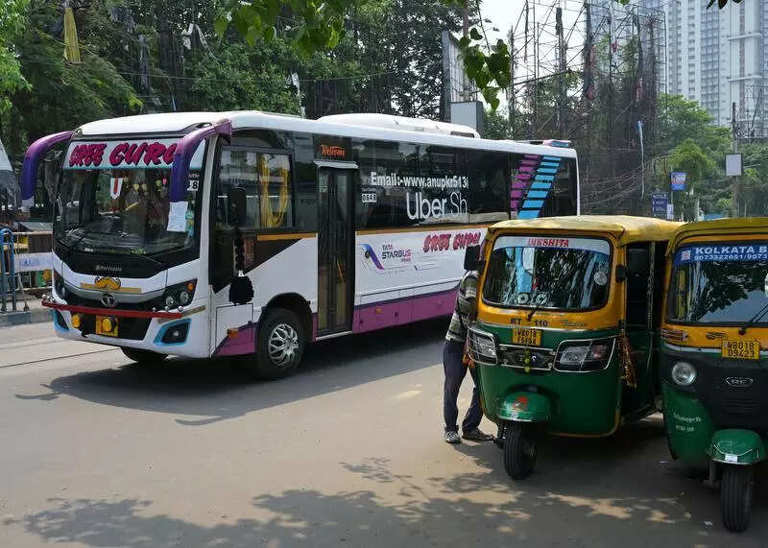
Private shuttle operators in Kolkata are reworking their business models to cater increasingly to corporate commuters, as shifting travel patterns and hybrid work structures reshape urban mobility demand.
The transition reflects a broader recalibration in the city’s transport ecosystem, where operators are prioritising predictable, high-density office routes over traditional passenger segments.This shift towards corporate shuttle travel is being driven by changing commuter behaviour across Kolkata’s business districts. With more employees returning to offices on fixed schedules, demand for reliable, point-to-point transport has surged. Shuttle providers are responding by designing routes that connect residential clusters with major office hubs, offering services aligned with standard work hours.Industry insiders say that corporate contracts are emerging as a stable revenue stream in an otherwise volatile transport market. Unlike conventional routes that depend on fluctuating daily ridership, office-linked services provide assured occupancy and recurring income. This has encouraged operators to invest in fleet upgrades, digital booking platforms, and route optimisation technologies to improve efficiency and passenger experience.Urban mobility experts note that the rise of corporate shuttle travel also reflects deeper structural gaps in public transport connectivity. While Kolkata has an extensive transport network, last-mile connectivity and overcrowding during peak hours remain persistent challenges.
Dedicated shuttle services are filling this gap by offering semi-private mobility solutions that reduce travel uncertainty for working professionals.From an urban planning perspective, the trend has mixed implications.On one hand, organised shuttle services can reduce the number of private vehicles on roads, easing congestion and lowering emissions if deployed efficiently.On the other, a shift towards segmented transport systems may deepen inequalities in access, as such services are often limited to salaried employees or corporate clients.Transport analysts emphasise that integrating these services into the broader mobility framework could enhance their impact.Coordination with metro systems, bus networks, and non-motorised transport infrastructure would allow shuttle services to function as complementary rather than parallel systems.This could support a more inclusive and sustainable urban transport model, particularly in rapidly densifying corridors.Operators are also exploring electric and low-emission vehicles as part of their long-term strategies, aligning with emerging environmental regulations and corporate sustainability mandates. As businesses increasingly prioritise carbon-conscious commuting options, fleet electrification could become a key differentiator in securing corporate partnerships.
As Kolkata’s urban mobility landscape evolves, the growing emphasis on corporate shuttle travel signals a move towards more structured and demand-driven transport services. The challenge ahead lies in ensuring that such transitions contribute to a balanced, accessible, and environmentally resilient transport system for the wider city.
Also Read:Kolkata Firm Drives North India Snacks Expansion
