


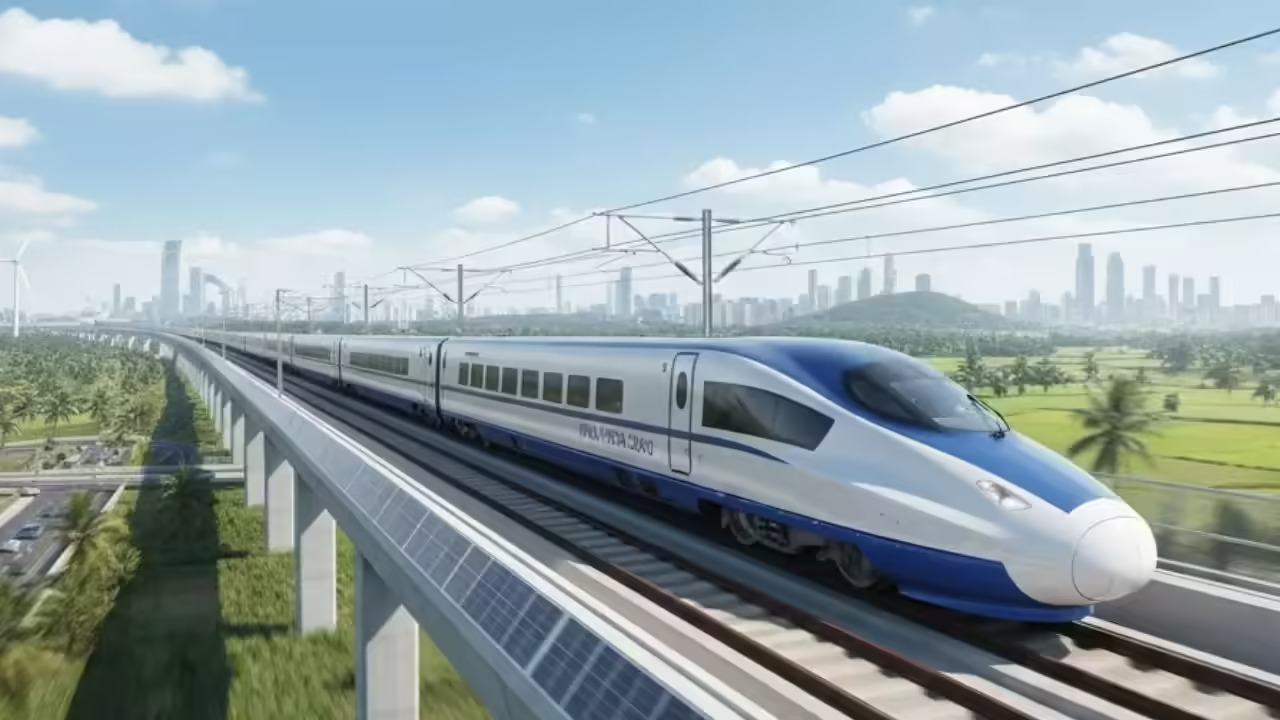
Surat is emerging as a key operational hub for India’s first high-speed rail corridor, with a major rolling stock depot under development to support the Mumbai–Ahmedabad bullet train project. The facility will handle the commissioning, inspection and maintenance of high-speed trainsets operating on the 508-kilometre corridor linking Maharashtra and Gujarat. The depot forms part of the infrastructure backbone required to operate the high-speed rail system. According to project officials, the Mumbai–Ahmedabad corridor will rely on three major depots—located in Surat and Sabarmati in Gujarat and Thane in Maharashtra—to manage train operations and maintenance throughout the route.
Spread across approximately 27 hectares, the Surat rolling stock depot will house advanced facilities designed specifically for high-speed train technology. These include inspection bays for routine checks, automated washing plants, and dedicated stabling lines where trains can be parked between operations. Engineers involved in the project say the depot will carry out daily inspections of trainsets to ensure reliability and safety for high-speed operations. The current design includes two inspection-cum-stabling lines with the provision to expand to four lines in the future, allowing the facility to accommodate increasing train traffic as the corridor becomes fully operational. In addition to scheduled inspections, the depot will also provide technical capabilities for unscheduled repairs and wheel re-profiling—an important maintenance process that ensures wheels remain perfectly shaped for safe operation at speeds exceeding 300 kilometres per hour. The infrastructure is part of the larger Mumbai–Ahmedabad High-Speed Rail Corridor, India’s first bullet train project, which aims to connect the two economic centres in under three hours using high-speed trains modelled on Japanese Shinkansen technology. Urban infrastructure analysts say the Surat depot illustrates how large transport projects extend beyond stations and tracks to include specialised operational facilities. High-speed rail systems require dedicated maintenance hubs capable of handling complex technology, advanced diagnostics and rapid turnaround times between train services. For Surat, the project also signals the city’s growing strategic role in India’s emerging high-speed rail network. Located between Mumbai and Ahmedabad—two of the country’s most powerful economic regions—the city is expected to become a major intermediate node supporting operations, maintenance and logistics for the corridor. Construction of supporting infrastructure along the route is progressing simultaneously. The corridor includes multiple stations across Gujarat and Maharashtra, viaduct sections, tunnels and bridges designed to carry trains operating at speeds of up to 320 kilometres per hour.
Urban planners note that high-speed rail projects often generate secondary development opportunities around station areas and maintenance hubs. Industrial services, logistics infrastructure and engineering support industries tend to cluster near such facilities, potentially creating new economic activity in surrounding regions. As work continues across the corridor, the Surat rolling stock depot represents a crucial step toward operational readiness for India’s first bullet train network. Once the line becomes operational, facilities like this will ensure the long-term safety, reliability and efficiency of high-speed rail travel between two of the country’s most dynamic urban regions.
ALSO READ – Surat Municipal Plan Tightens Food Waste Management
Surat Bullet Train Depot Strengthens High Speed Rail Network
