


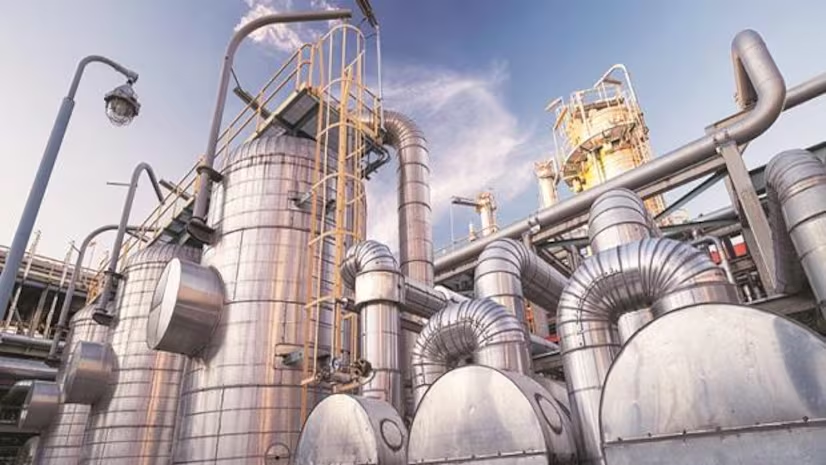
Industrial units across Indore’s manufacturing belt are facing severe operational stress as supply disruptions in piped natural gas have sharply reduced fuel availability, forcing factories to scale down production and absorb rising energy costs. The crisis is unfolding across key industrial clusters including Pithampur and Sanwer Road, where many units depend heavily on PNG as a primary fuel for manufacturing processes. Industry associations say the latest restrictions have cut PNG availability to roughly 55 percent of average consumption, significantly tightening fuel supply for factories across the region. The curbs were introduced after disruptions in liquefied natural gas shipments linked to geopolitical tensions in West Asia triggered supply constraints for distributors.
For manufacturers operating in sectors such as automotive components, pharmaceuticals, engineering products and food processing, the reduction in gas supply is translating into immediate operational challenges. Production schedules are being adjusted, and some units have begun operating below capacity as they attempt to ration available fuel for essential processes. Industry representatives warn that the situation has been compounded by soaring gas prices in the spot market. Companies attempting to secure additional gas beyond the restricted supply quota are reportedly paying more than ₹130 per standard cubic metre, significantly higher than earlier procurement costs. Such price increases are particularly difficult for small and medium-sized enterprises that operate on tighter margins. Energy analysts say the crisis illustrates the vulnerability of industrial ecosystems that depend heavily on imported fuels. India imports a substantial share of the liquefied natural gas used for city gas distribution, and disruptions in global supply routes can quickly cascade into shortages for local industries. The challenges are further intensified in Madhya Pradesh because of comparatively high taxation on natural gas. Industry bodies note that the state levies around 14 percent value-added tax on gas—among the highest in the country—making industrial fuel significantly more expensive than in neighbouring states such as Gujarat or Maharashtra. For manufacturers competing in national supply chains, these cost differentials are becoming a major concern. Industry groups estimate that production expenses in the state are already around 9–11 percent higher than in neighbouring industrial regions, raising fears that prolonged supply disruptions could affect competitiveness and investment flows. The ripple effects of the gas shortage are also visible beyond factory floors. Industrial kitchens serving large workforces in manufacturing zones have had to cut back on meal preparation due to restrictions on commercial gas usage, highlighting how energy shortages can affect everyday operations across industrial ecosystems.
Urban economists note that Indore’s manufacturing growth—anchored by industrial hubs such as Pithampur—has been central to the city’s economic expansion over the past decade. However, the current fuel supply disruption underscores the importance of diversifying industrial energy sources and strengthening domestic energy resilience. Industry groups are now seeking urgent intervention from both state and central authorities to stabilise gas supply and review tax structures. Without corrective measures, manufacturers warn that continued fuel shortages could lead to temporary shutdowns, delayed production schedules and rising costs across supply chains connected to one of central India’s most important industrial regions.
ALSO READ – Indore Small Businesses Seen Driving Future City Growth
Indore Gas Supply Crisis Disrupts Industrial Production
