


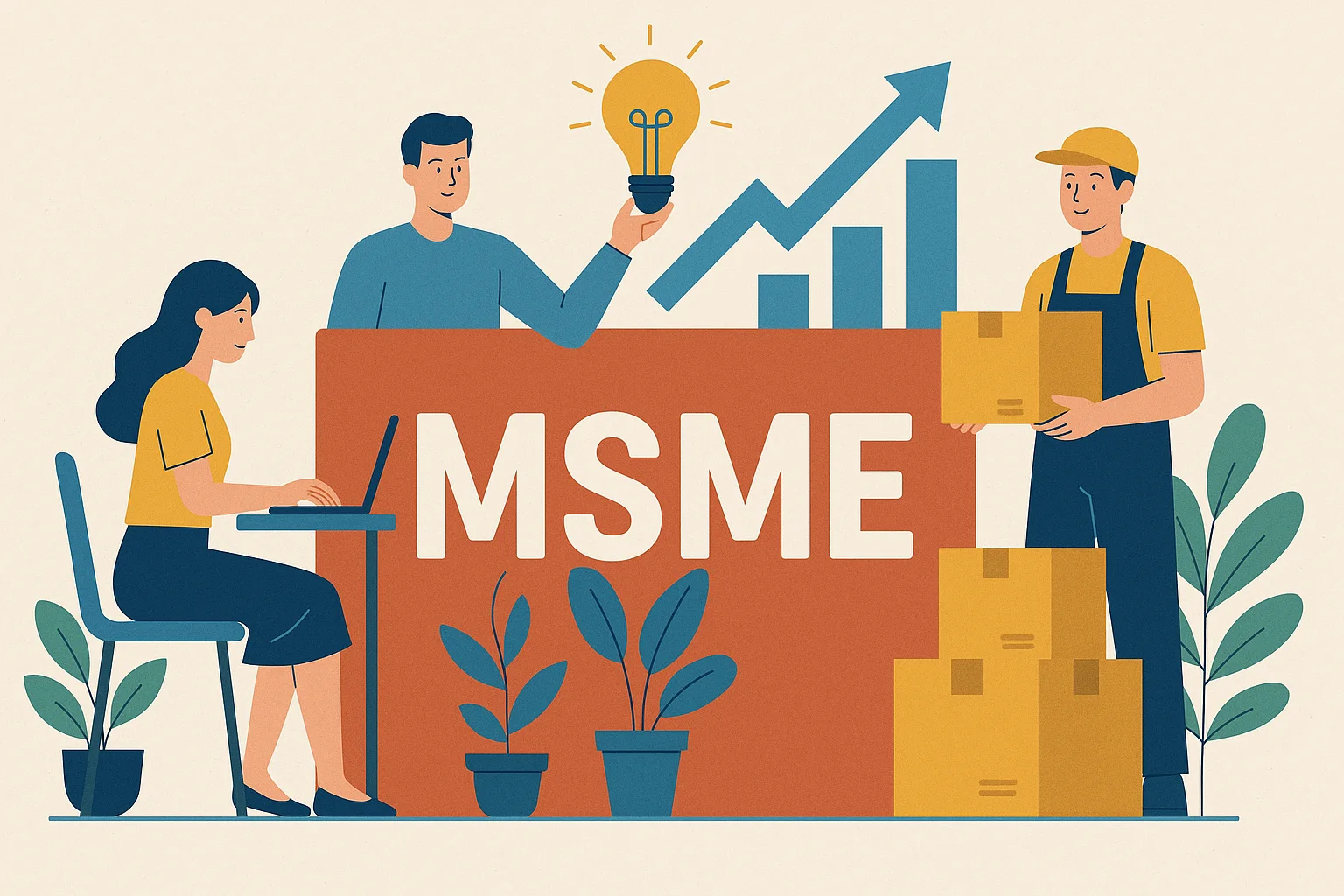
Indore’s economic growth strategy is increasingly centred on the expansion of small enterprises, with policymakers highlighting the role of local businesses in strengthening the city’s GDP over the coming decade. As the commercial capital of Madhya Pradesh continues to attract investment in manufacturing, logistics and services, small and medium enterprises are expected to play a pivotal role in sustaining job creation and broad-based economic activity. During a recent discussion on Indore’s development roadmap, a senior public representative outlined a long-term vision to significantly expand the city’s economic output by 2030, emphasising that the small-business ecosystem will be central to achieving this target. According to the roadmap, growth in road, rail and aviation infrastructure—combined with rising entrepreneurship—could accelerate economic activity across sectors ranging from manufacturing and logistics to services and technology.
Indore already functions as one of central India’s most important commercial hubs. The city has evolved from a traditional trading centre into a diversified economic ecosystem that includes manufacturing clusters, logistics networks and emerging technology enterprises. Industrial zones around the city, particularly in the Pithampur belt, host hundreds of large and small industrial units supplying automotive components, pharmaceuticals and engineering products to domestic and international markets. Within this industrial landscape, small and medium enterprises form the backbone of supply chains. SMEs provide components, services and specialised manufacturing inputs that support larger industrial operations while also generating employment across urban and peri-urban areas. Economic planners say strengthening these networks can create multiplier effects for the wider regional economy. Infrastructure development is also expected to reinforce this growth model. Improvements in highway connectivity, rail logistics and air transport are intended to strengthen Indore’s position as a regional trade gateway connecting central India with western ports and national markets. Enhanced connectivity could allow local businesses to expand their customer base, improve supply chain efficiency and attract new investment. Urban economists argue that Indore’s economic expansion reflects a broader shift taking place in India’s tier-two cities. While large metropolitan areas continue to dominate financial and technology sectors, mid-sized cities are emerging as manufacturing and logistics hubs because of relatively lower costs, expanding infrastructure and a growing skilled workforce. At the same time, policymakers emphasise that small enterprises require sustained policy support to scale effectively. Access to credit, digital infrastructure, skill development and market linkages remain key challenges for many businesses. Strengthening these ecosystems will be critical if SMEs are to translate local entrepreneurial energy into measurable economic output.
Indore’s strong civic performance—reflected in its reputation for urban cleanliness and municipal innovation—has also contributed to the city’s attractiveness for investment and business growth. Urban planners say that maintaining high standards of infrastructure, environmental management and governance can further enhance the city’s competitiveness as a business destination. As India’s urban economy continues to diversify, Indore’s development model suggests that sustained economic growth may increasingly depend on empowering local entrepreneurs and small manufacturers. If infrastructure expansion and policy support move in tandem, the city’s SME ecosystem could become a defining force shaping its economic trajectory in the years ahead.
ALSO READ – Indore Electric Vehicle Adoption Surges Past Seventy Thousand
Indore Small Businesses Seen Driving Future City Growth
