


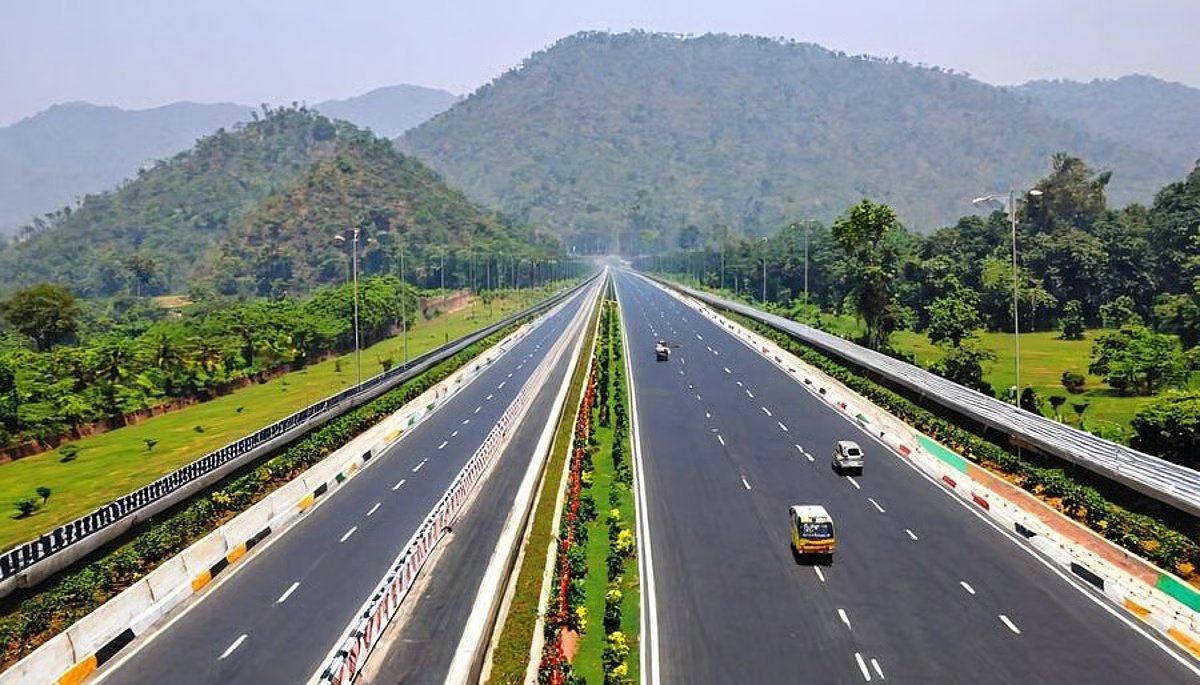
The Maharashtra government has approved a revised alignment for the proposed Shaktipeeth Expressway, a major greenfield highway intended to link central Maharashtra with the Konkan coast. The redesigned corridor will now stretch roughly 856 kilometres between the Nagpur region and Goa, incorporating additional districts and adjustments aimed at easing land acquisition challenges while strengthening regional connectivity. The project, conceived as a six-lane access-controlled highway, is expected to serve as a direct east-west transport spine across the state. The updated plan extends the route by more than 50 kilometres compared with the earlier alignment and introduces Satara district into the network, expanding the corridor’s reach across 13 districts and 40 administrative blocks.
Infrastructure planners say the Shaktipeeth Expressway aims to transform connectivity between Vidarbha, Marathwada and western Maharashtra before reaching the Konkan coast. By offering a faster corridor between Nagpur and Goa, the highway is projected to reduce travel time from roughly 18 hours to about eight hours once operational, making it one of the most significant inter-regional road projects proposed in the state. The expressway is also designed to integrate with existing highway infrastructure. Its northern end will connect with the Mumbai–Nagpur Samruddhi Expressway corridor near Wardha, creating a broader high-speed transport grid across Maharashtra. Urban mobility analysts note that such linkages can reshape freight flows and logistics networks by allowing long-distance cargo to bypass congested urban routes. Officials involved in the project indicate that the revised alignment emerged after months of consultation and technical review. Earlier versions of the corridor faced opposition in parts of western Maharashtra, where farmers and local groups raised concerns about farmland acquisition and the economic impact on irrigated agricultural zones. Adjustments to the route were therefore introduced in districts including Nanded, Hingoli, Parbhani and Sindhudurg to balance infrastructure planning with local sensitivities. Beyond mobility, the highway has been framed as a broader regional development corridor. The Shaktipeeth Expressway will pass through multiple religious destinations and pilgrimage centres across Maharashtra, potentially strengthening tourism circuits linking central India with the coastal belt. Economic planners suggest that improved road access could also stimulate logistics hubs, warehousing clusters and hospitality investments along the route.
However, the project continues to generate debate in rural areas where land acquisition remains a critical issue. Farmers’ organisations have warned that compensation frameworks and consultation processes will need careful handling to avoid delays. For Maharashtra’s rapidly expanding cities, the corridor could play a strategic role in decentralising economic activity by improving transport access across inland districts. If implemented alongside sustainable planning and environmental safeguards, the Shaktipeeth Expressway could help reshape the state’s transport geography while linking emerging urban markets with coastal trade routes
ALSO READ – Mumbai Pune Nagpur Micro Zoning Rollout Begins
Nagpur Goa Expressway Realignment Gains Cabinet Approval
