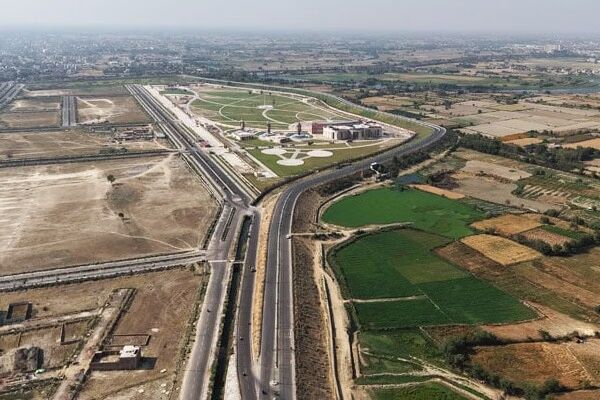
Lucknow’s transport network is set for a major upgrade with plans for a new flyover connecting Shaheed Path to the airport corridor, a move aimed at easing congestion and improving high-speed connectivity across the city’s southern and central zones. The proposed infrastructure intervention is part of a broader push to streamline movement between key urban nodes, including the airport, Ekana Stadium, and emerging residential and commercial districts along Shaheed Path.
The corridor currently functions as a critical bypass route, linking major highways and diverting traffic from congested inner-city roads. Urban planners note that rising vehicular density—particularly along airport-bound routes—has increased pressure on intersections and service lanes, leading to frequent bottlenecks. The planned flyover is expected to provide uninterrupted traffic flow across these high-load junctions, reducing travel time and improving reliability for commuters and logistics operators. The intervention aligns with the city’s ongoing Green Corridor programme, which is being implemented in multiple phases to decongest key stretches and create seamless east–west connectivity. Earlier phases have focused on road widening, flyovers, and grade separators, while upcoming stages include elevated links connecting central Lucknow to Shaheed Path and beyond. From an infrastructure standpoint, the new flyover is designed to address a specific mobility gap—ensuring faster access to Chaudhary Charan Singh International Airport, which handles over 6 million passengers annually and continues to see rising traffic.
The airport’s expansion, including the addition of Terminal 3, has further intensified the need for efficient last-mile connectivity. Experts suggest that such projects are increasingly essential in cities like Lucknow, where peripheral growth corridors are expanding faster than traditional infrastructure networks. Areas along Shaheed Path have witnessed rapid real estate and institutional development, creating new travel demand patterns that require high-capacity road infrastructure. The flyover is also expected to support event-based traffic surges, particularly around Ekana Stadium and major commercial hubs, where congestion has been a recurring issue. By segregating through-traffic from local movement, the design aims to improve both speed and safety—two critical parameters in urban transport planning. However, planners caution that flyovers alone may not offer long-term solutions unless integrated with multimodal transport strategies. Enhancing public transport connectivity, improving pedestrian infrastructure, and managing land use along major corridors will be crucial to sustaining mobility gains.
Environmental considerations are also coming into focus. Elevated road infrastructure can reduce idling emissions by easing congestion, but large-scale road expansion must be balanced with green buffers and climate-sensitive design to prevent long-term ecological strain. As Lucknow continues to evolve into a regional economic hub, the Shaheed Path–airport flyover project reflects a broader shift towards corridor-based planning—where mobility, land use, and infrastructure are developed in tandem. The project’s impact will ultimately depend on execution timelines and how effectively it integrates with the city’s wider transport ecosystem.