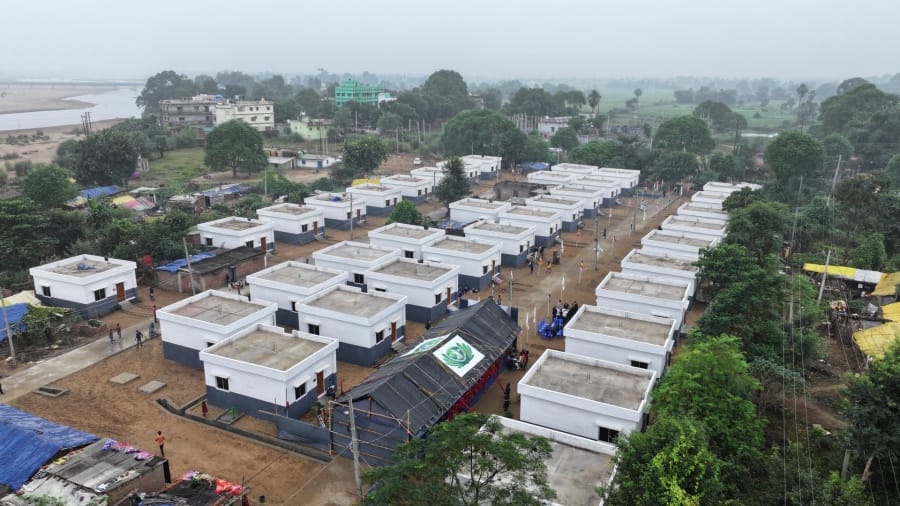
A rural construction experiment in Bihar’s Gaya district is drawing attention from planners and sustainability experts for its unconventional use of herbal and organic materials, offering an alternative model for climate-responsive housing in resource-constrained regions.
The structure, developed in a village within the Bodh Gaya block, has been built using a mix of traditional inputs, including cow-derived compounds and locally sourced herbs, eliminating the need for cement and even water during construction. This approach marks a departure from conventional building practices that rely heavily on energy-intensive materials such as concrete and steel. At a time when the construction sector is under scrutiny for its carbon footprint, the emergence of such Gaya herbal construction methods highlights the potential of low-impact, locally adaptable building techniques. By leveraging natural materials, the model aims to regulate indoor temperatures, reduce heat gain, and limit dependence on mechanical cooling—an increasingly important consideration in India’s warming climate. Experts in sustainable architecture suggest that these techniques, rooted in indigenous knowledge systems, could complement modern green building practices. The use of herbal mixtures is also being explored for secondary benefits such as pest resistance and improved indoor air quality, aligning with broader public health goals in rural housing.
From an economic standpoint, Gaya herbal construction offers a cost-effective pathway for low-income communities. With reduced reliance on industrial materials and simplified construction processes, such models can lower upfront costs while creating opportunities for local skill development and material sourcing. This decentralised approach to building could support rural livelihoods while reducing supply chain dependencies. However, scalability remains a key question. While pilot structures demonstrate feasibility, widespread adoption would require validation through structural safety assessments, standardisation of materials, and integration into existing building codes. Urban planners note that bridging the gap between traditional practices and formal regulatory frameworks will be essential for mainstreaming such innovations. The initiative also reflects a broader shift in India’s built environment discourse—from purely infrastructure-led expansion to more sustainable, context-sensitive development. As cities and villages alike confront climate risks, including heat stress and resource scarcity, there is growing interest in hybrid construction models that combine modern engineering with traditional resilience strategies.
For policymakers, the Gaya experiment underscores the importance of supporting innovation at the grassroots level. Encouraging research, pilot funding, and technical validation for such approaches could unlock scalable solutions for affordable housing programmes, particularly in regions vulnerable to environmental stress. As attention around the project grows, the next phase will likely focus on testing its durability, adaptability across geographies, and potential integration into government-backed housing schemes. If successfully scaled, this model could inform a new generation of climate-resilient construction practices—rooted not in high-cost technology, but in locally available, sustainable resources.