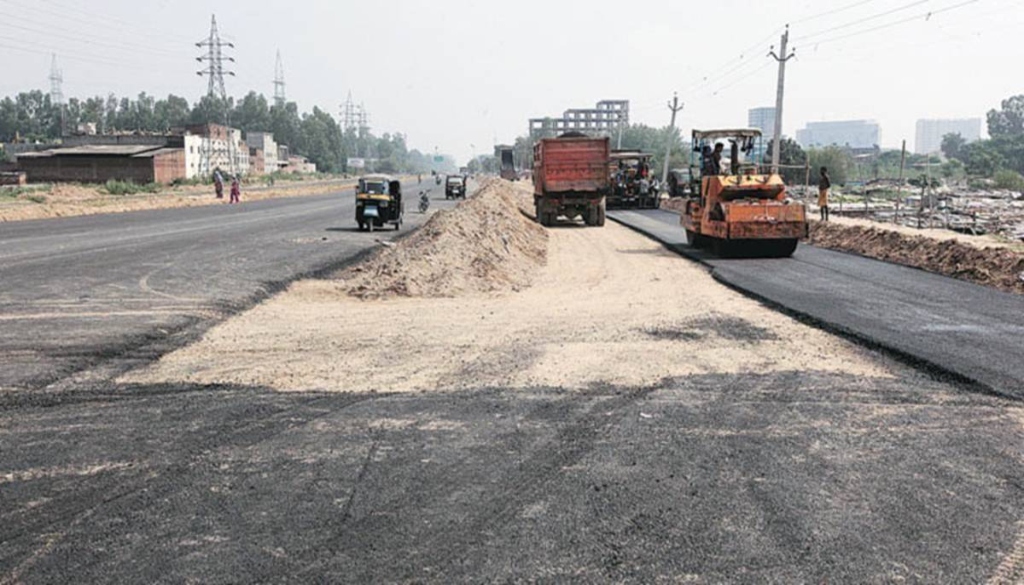
A key road corridor connecting Bakhtiyarpur and Mokama in Bihar is approaching completion, signalling a significant upgrade in regional mobility and logistics capacity in the Patna metropolitan region. The nearly ₹250 crore infrastructure project, spanning over 40 kilometres, is in its final stages and is expected to be opened to traffic shortly. Once operational, the upgraded stretch is set to reduce travel time, ease congestion on parallel routes, and improve access between peri-urban settlements and key economic nodes.
The project is part of a broader push to modernise Bihar’s road network through widening and strengthening existing corridors. In this case, the road has been expanded into a multi-lane carriageway, designed to accommodate rising vehicular volumes and support faster, more reliable movement across the region. For urban planners, the nearing completion of this Patna road connectivity upgrade reflects a growing emphasis on integrating smaller towns into regional growth frameworks. Bakhtiyarpur, Barh and Mokama serve as critical transit points for both passenger and freight movement, particularly along corridors linked to National Highway networks. Improved connectivity is expected to enhance last-mile access for agricultural produce, small-scale industries, and logistics operators operating in the region. Industry observers note that such investments are increasingly shaping land-use patterns beyond core city limits.
As road capacity improves, peripheral areas often witness rising real estate activity, with residential layouts, warehousing hubs, and commercial developments clustering along newly upgraded corridors. In this context, Patna road connectivity is not only a mobility issue but also a driver of spatial economic expansion. However, experts caution that infrastructure delivery must be accompanied by planning controls to avoid unregulated growth. Without integrated zoning and drainage planning, new corridors can trigger ribbon development—linear, unplanned construction along highways—that strains civic services and increases long-term environmental risk. The project also reflects national trends in highway expansion. India has significantly increased its four-lane and high-capacity road network in recent years, aiming to strengthen freight efficiency and regional connectivity under large-scale programmes. For states like Bihar, where logistics costs and travel inefficiencies have historically constrained growth, such upgrades can play a catalytic role in improving economic competitiveness.
Importantly, the corridor is expected to relieve pressure on older routes that frequently experience bottlenecks, particularly during peak agricultural transport cycles. Reduced congestion could translate into lower fuel consumption and emissions—an often overlooked but critical dimension in building climate-resilient transport systems. With final works underway, attention now shifts to operational readiness, including signage, safety infrastructure, and integration with adjoining transport links. As the road opens to public use, its long-term impact will depend on how effectively it is embedded within a wider framework of sustainable urban expansion and multimodal connectivity.