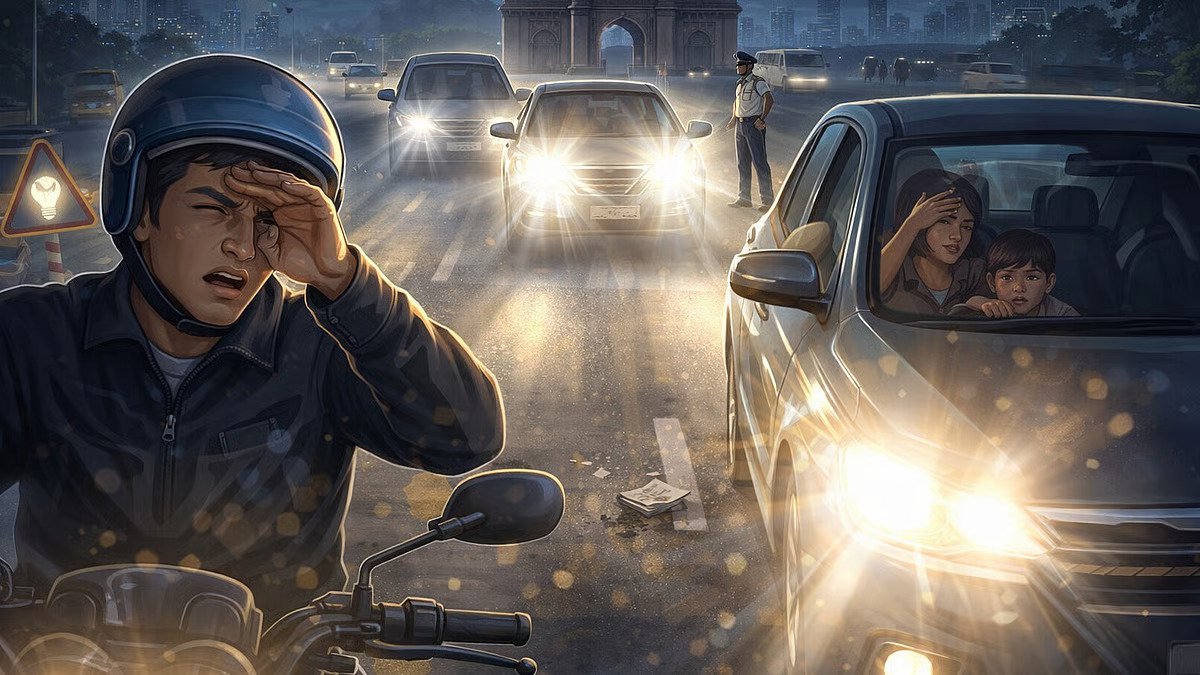
A growing number of vehicles using unauthorised high-intensity headlights is emerging as a serious road safety concern in Mumbai, with experts warning that glare-related visibility issues are increasing risks for motorists and pedestrians alike. Despite clear regulations governing vehicle lighting, enforcement levels remain limited compared to the scale of violations across the city.
The rise in illegal headlights Mumbai cases reflects a broader shift in consumer behaviour, where vehicle owners are increasingly opting for aftermarket lighting systems such as LED, Xenon, and high-intensity discharge (HID) units. These lights often exceed prescribed brightness thresholds, leading to excessive glare that can impair vision, particularly on poorly lit roads and at busy intersections. Medical professionals highlight that intense headlight glare can cause temporary blindness, reducing reaction time for drivers and making it difficult for pedestrians to judge distances. This risk is amplified for two-wheeler riders, who are more exposed to direct light beams and often navigate through narrow or congested lanes.
Regulatory provisions exist under the Motor Vehicles framework to penalise such violations, but enforcement data suggests limited coverage. Transport authorities across Mumbai’s regional offices have issued fines and conducted checks over the past year, yet the numbers remain relatively low when compared to the city’s vast vehicle population. Urban mobility analysts point out that sporadic enforcement weakens deterrence and allows non-compliant practices to proliferate. The challenge is further compounded by the easy availability of non-compliant lighting equipment in both physical markets and online platforms. With minimal accountability for manufacturers or sellers, consumers face little resistance in upgrading to brighter, often unsafe alternatives. Industry observers argue that this gap between regulation and market practices reflects the need for tighter supply-side controls.
From an urban planning perspective, the issue of illegal headlights Mumbai extends beyond individual behaviour. It intersects with broader concerns around road design, street lighting, and pedestrian safety. In areas with inadequate public lighting, high-intensity headlights may appear beneficial to drivers but can create hazardous conditions for others, especially at crossings and junctions. Experts suggest that a multi-pronged approach is required to address the problem effectively. This includes stricter enforcement, awareness campaigns on safe driving practices, and updates to lighting standards to align with evolving vehicle technologies. Integration of automated enforcement tools, such as camera-based detection systems, could also improve compliance levels.
As Mumbai continues to expand its transport network and vehicle base, ensuring safe and inclusive road conditions remains a critical priority. Addressing the rise of illegal headlights will require coordinated action between regulators, enforcement agencies, and market stakeholders to ensure that technological upgrades do not come at the cost of public safety.
Mumbai Sees Surge In Blinding Headlights Weak Enforcement Persists