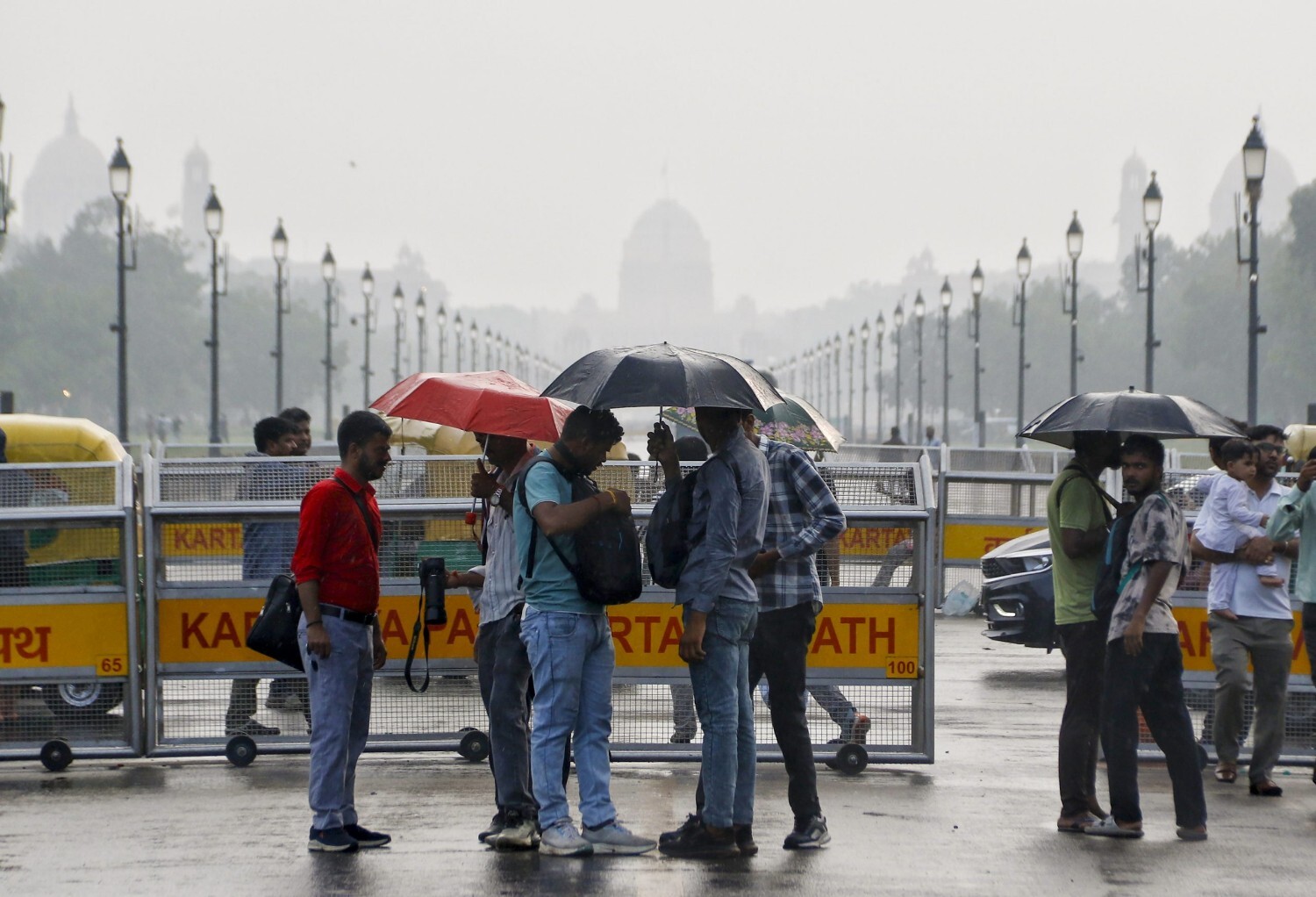
The Delhi rainfall forecast indicates a fresh spell of showers likely to impact the national capital from Friday, bringing a noticeable dip in temperatures and altering the early summer weather pattern. Meteorological officials say intermittent rain and cloudy conditions are expected to persist through the weekend, providing short-term relief from rising temperatures typically seen during April. Weather monitoring stations across the capital have already recorded a slight cooling trend following recent rainfall earlier this week. Data from the city’s primary meteorological observatory showed that minimum temperatures dropped below the seasonal average, while daytime temperatures also remained marginally lower than normal levels.
According to weather officials, the evolving Delhi rainfall forecast is linked to atmospheric disturbances moving across northern India. These systems often trigger pre-monsoon rainfall events that temporarily moderate heat levels while also producing strong winds and scattered thunderstorms. Such weather shifts, although brief, can have broader implications for urban infrastructure and city operations. Urban planners note that even moderate rainfall episodes in densely populated cities like Delhi can test drainage systems, traffic management networks and public transport reliability. Early-season rainfall also highlights the importance of maintaining stormwater infrastructure ahead of the monsoon period. For residents, the predicted weather pattern could bring temporary relief from heat stress, particularly after the city experienced a steady rise in daytime temperatures during the past few weeks. Cooler nights and cloud cover are expected to reduce heat intensity, improving outdoor comfort conditions during the early part of the summer season.
However, climate researchers caution that irregular rainfall patterns have become more common across Indian cities due to changing climate dynamics. The increasing frequency of unseasonal showers and temperature fluctuations presents new challenges for urban planning, water management and infrastructure resilience. The current Delhi rainfall forecast also underscores the importance of climate-responsive urban systems. Cities increasingly require robust drainage networks, permeable surfaces and improved rainwater management strategies to handle sudden weather events without causing disruptions such as waterlogging or traffic congestion. Weather variability during the transition from winter to summer has also influenced water demand patterns and energy consumption across the city. Lower temperatures may temporarily ease pressure on electricity demand for cooling, while rainfall can support groundwater recharge in certain areas where rainwater harvesting systems are in place. Officials expect the current spell to remain intermittent rather than prolonged, with showers likely to occur in short bursts accompanied by gusty winds.
While the weather shift may not significantly alter the overall seasonal outlook, it provides a reminder of the increasingly dynamic climate conditions shaping urban life in large metropolitan regions. City authorities and residents will continue monitoring the evolving weather conditions over the coming days as the capital moves deeper into the summer season.