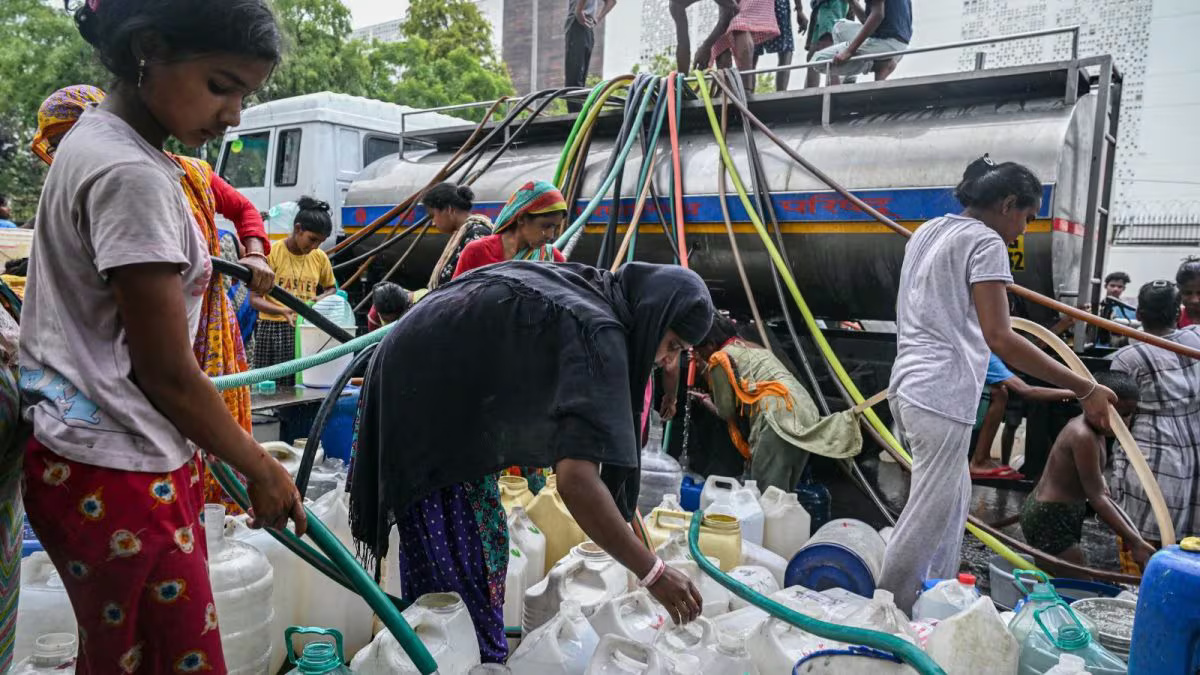
Delhi’s urban water system is entering the peak summer season with a new operational framework aimed at stabilising supply and improving service transparency. The Delhi Summer Water Plan has been introduced to manage seasonal demand, strengthen distribution networks and expand digital access to water services across the capital. Authorities overseeing the programme say the Delhi Summer Water Plan focuses on ensuring consistent production and distribution during months when consumption typically rises due to higher temperatures. Water treatment facilities across the city are currently operating at maximum capacity while monitoring systems track incoming raw water quality to prevent disruptions in supply.
Urban water planners note that Delhi’s seasonal water management challenges are shaped by both rising demand and infrastructure constraints. During summer, residential consumption increases sharply, placing additional pressure on treatment plants, pipelines and groundwater reserves. Ensuring reliable supply therefore requires a combination of operational readiness, infrastructure upgrades and improved monitoring systems. To support these objectives, the government has introduced new digital platforms designed to strengthen interaction between residents and water authorities. These include a chatbot-based service interface, an upgraded customer relationship management platform and the Delhi Jal Board 1916, which enables residents to report service issues and track complaints through mobile devices. Officials from the Delhi Jal Board indicate that the digital tools are expected to improve response times and create greater accountability in service delivery. Urban governance specialists say integrating technology into municipal utilities is increasingly important in large cities, where real-time data and digital feedback channels can help authorities respond faster to supply disruptions. Beyond digital initiatives, the Delhi Summer Water Plan includes infrastructure upgrades aimed at maintaining stable water production. Treatment facilities across the city are being monitored continuously while older pumping equipment and mechanical systems are undergoing maintenance or replacement.
These steps are intended to reduce the risk of breakdowns during the period of highest demand. Authorities are also expanding the network of groundwater-based sources by installing additional tube wells in selected areas. While surface water remains the primary supply source, tube wells can provide supplementary local supply in neighbourhoods facing recurring shortages. Distribution efficiency is another major focus area. Cleaning of storage reservoirs, leak detection programmes and pipeline maintenance are being intensified to minimise water losses during transmission. Water loss through leaks or ageing infrastructure has long been a concern in Delhi’s distribution network, where reducing wastage can significantly improve effective supply. The plan also addresses the tanker system used in areas without full pipeline connectivity. Although tankers are considered a temporary solution, new monitoring mechanisms are being introduced to improve transparency. GPS tracking and digital route management are expected to ensure that deliveries reach designated locations and reduce operational irregularities. Environmental planners emphasise that reliable water management remains closely tied to the health of the Yamuna River, a key source for the city’s drinking water. Maintaining water quality in the river and strengthening treatment capacity will continue to be central to long-term supply security.
As climate variability intensifies and urban demand grows, the Delhi Summer Water Plan highlights the need for cities to integrate infrastructure maintenance, digital governance and environmental stewardship to ensure dependable water services for expanding populations.