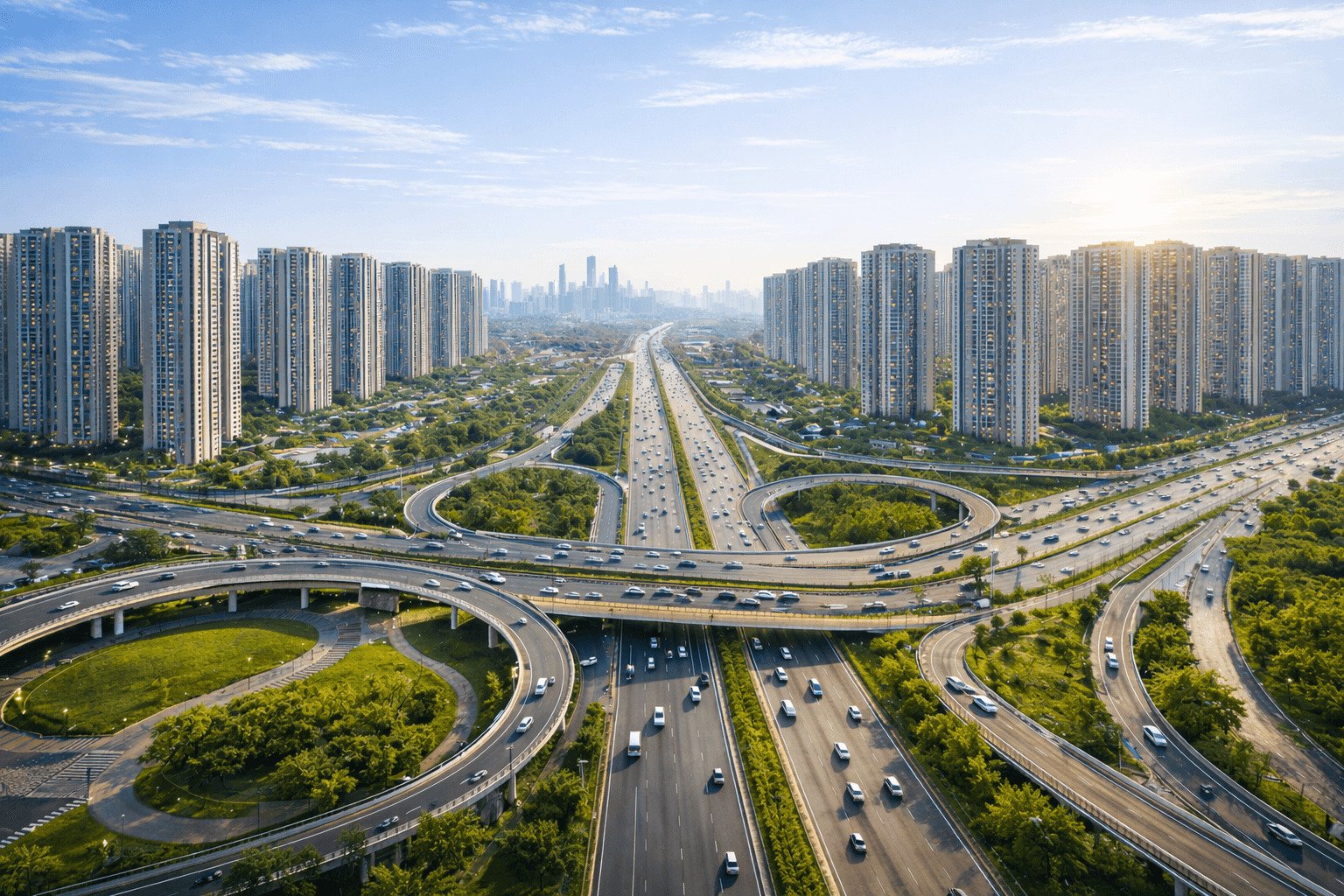
Delhi Dwarka Infrastructure Plan Targets Global Investment
Delhi’s Dwarka sub-city is undergoing a fresh round of infrastructure evaluation as authorities assess key urban projects aimed at transforming the district into a major hub for global events, business activity, and high-quality urban living. The review of several civic and development initiatives signals a broader push to strengthen Dwarka Infrastructure as the capital expands towards the airport corridor and surrounding growth zones. Senior administrators and urban development officials conducted on-site inspections of multiple projects across the sub-city, focusing on drainage upgrades, recreational facilities, hospitality developments, and future commercial clusters. The exercise is part of an effort to align long-term planning in Dwarka with Delhi’s broader ambitions of building globally competitive urban districts that can support economic activity while maintaining liveable neighbourhoods.
Urban planners increasingly see Dwarka Infrastructure as strategically important because of the area’s proximity to Indira Gandhi International Airport and its connection to Urban Extension Road II, two transport corridors shaping the capital’s future development geography. These linkages are expected to attract international conventions, corporate gatherings, and large-scale exhibitions that require modern connectivity and hospitality capacity. Among the projects under review were upgraded storm water channels designed not only to improve drainage but also to function as linear public spaces. Urban infrastructure experts say such designs reflect a growing shift in Indian city planning where essential utilities—such as flood control systems—are integrated with green corridors, cycling tracks, and pedestrian routes. These hybrid infrastructure models are increasingly seen as vital tools for climate resilience and improving everyday urban mobility. Officials also assessed proposals linked to hospitality and commercial development, including land earmarked for a premium hotel and technology-driven business spaces. Real estate analysts believe the evolution of Dwarka Infrastructure could stimulate new commercial activity, particularly if convention tourism and corporate events grow around nearby facilities such as Yashobhoomi Convention Centre.
The area’s emerging convention ecosystem is drawing attention from urban economists who view large event venues as catalysts for surrounding urban growth. When supported by transport access, accommodation capacity, and recreational infrastructure, convention centres can stimulate hospitality, retail, and knowledge-sector employment. Recreational and sporting infrastructure is also part of the district’s evolving development blueprint. Authorities reviewed progress at the Dwarka Golf Course, which is being positioned as a high-standard sports and leisure facility within the sub-city’s broader urban landscape. Such projects, planners say, help anchor residential demand while improving the quality of life for existing communities. At a policy level, the ongoing assessments highlight a shift in Delhi’s planning approach—moving beyond isolated infrastructure projects toward integrated urban districts that combine mobility, environmental resilience, business ecosystems, and public spaces.
For Dwarka residents and investors, the coming years will reveal whether coordinated planning and sustained execution can turn the district into a balanced urban centre—one that supports economic growth while maintaining green infrastructure, efficient drainage systems, and accessible public amenities in an increasingly climate-sensitive city.