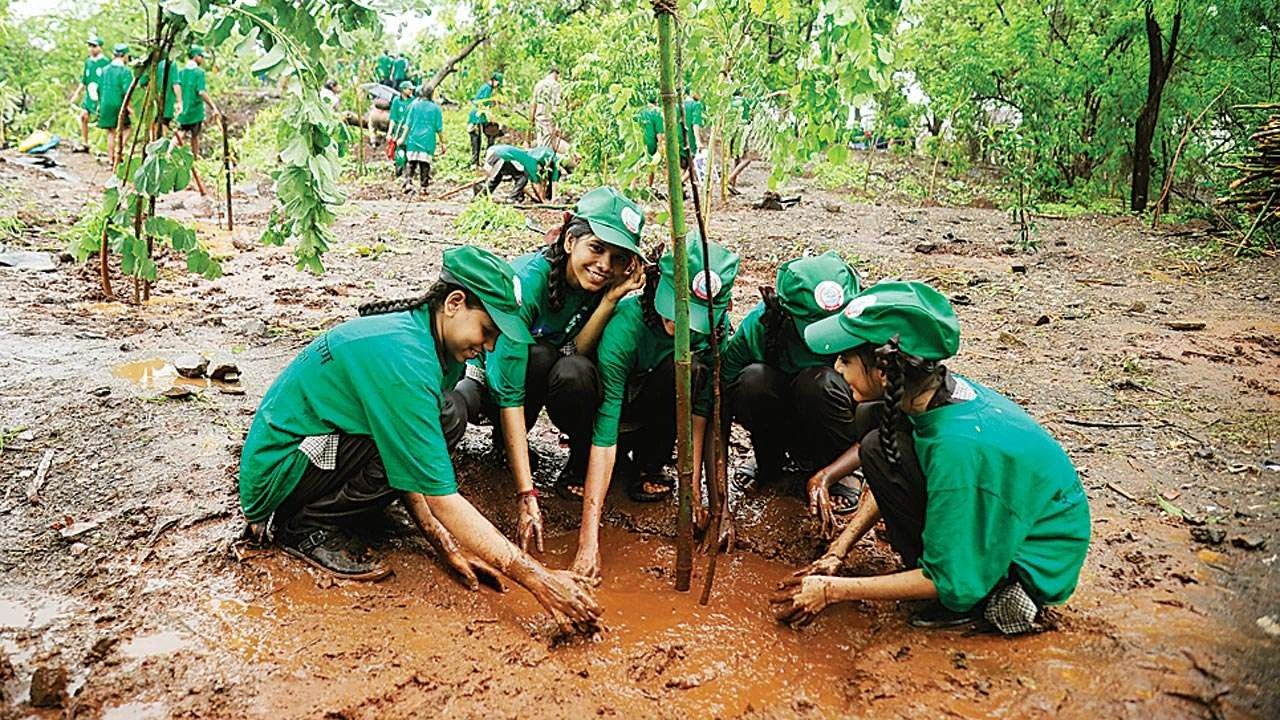
Delhi is preparing to significantly expand its urban greenery under an updated Delhi Green Action Plan, setting a target of planting more than 70 lakh trees, shrubs, and bamboo clusters across the capital by the 2026–27 financial year. The initiative, involving over twenty government agencies, signals a renewed effort to improve air quality, strengthen climate resilience, and increase green cover in one of the world’s most densely populated megacities.
Urban planners view the Delhi Green Action Plan as a crucial step in addressing the capital’s environmental pressures. Delhi continues to face severe seasonal air pollution, rising temperatures, and rapid urban expansion that has steadily reduced open natural spaces. Increasing tree density, particularly in built-up neighbourhoods, is expected to help moderate urban heat islands, absorb airborne pollutants, and improve ecological balance. Officials overseeing the programme indicate that the plantation strategy will be coordinated through multiple civic and planning agencies responsible for parks, urban forests, roadside corridors, and institutional land parcels. The forestry administration is expected to take a central role in managing plantation zones and monitoring survival rates of newly planted saplings through a digital tracking platform designed to record planting locations and growth status. Urban development experts note that plantation targets alone do not guarantee ecological gains unless long-term maintenance is prioritised. Many previous greening initiatives across Indian cities struggled due to poor post-plantation care, lack of irrigation systems, and insufficient monitoring of survival rates. In response, authorities have indicated that the revised framework includes stronger oversight mechanisms and departmental accountability to ensure that the saplings mature into viable tree cover.
Large institutional landowners and planning bodies are expected to contribute a significant share of the plantation drive, particularly in peripheral zones where new infrastructure and housing developments are expanding. Integrating green buffers around transport corridors, residential clusters, and public spaces is also seen as essential for maintaining environmental balance as Delhi continues to urbanise. Environmental economists suggest that increasing tree cover in metropolitan regions generates both ecological and economic value. Urban forests improve public health outcomes, reduce cooling costs in surrounding buildings, and enhance the liveability of neighbourhoods—factors that increasingly influence real estate demand and long-term urban investment decisions. Beyond pollution mitigation, the expanded Delhi Green Action Plan also aligns with national efforts to restore degraded landscapes and increase urban biodiversity. By incorporating shrubs and bamboo hedges alongside trees, planners aim to create layered green habitats that support bird life, improve soil stability, and enhance stormwater absorption during heavy rainfall events.
As the capital continues to grow, the success of the Delhi Green Action Plan will depend not only on the number of saplings planted but on how effectively city agencies manage land, water, and long-term ecological stewardship. For a city grappling with climate stress and rapid development, the next few years will test whether urban greening can evolve from symbolic plantation drives into sustained environmental infrastructure.