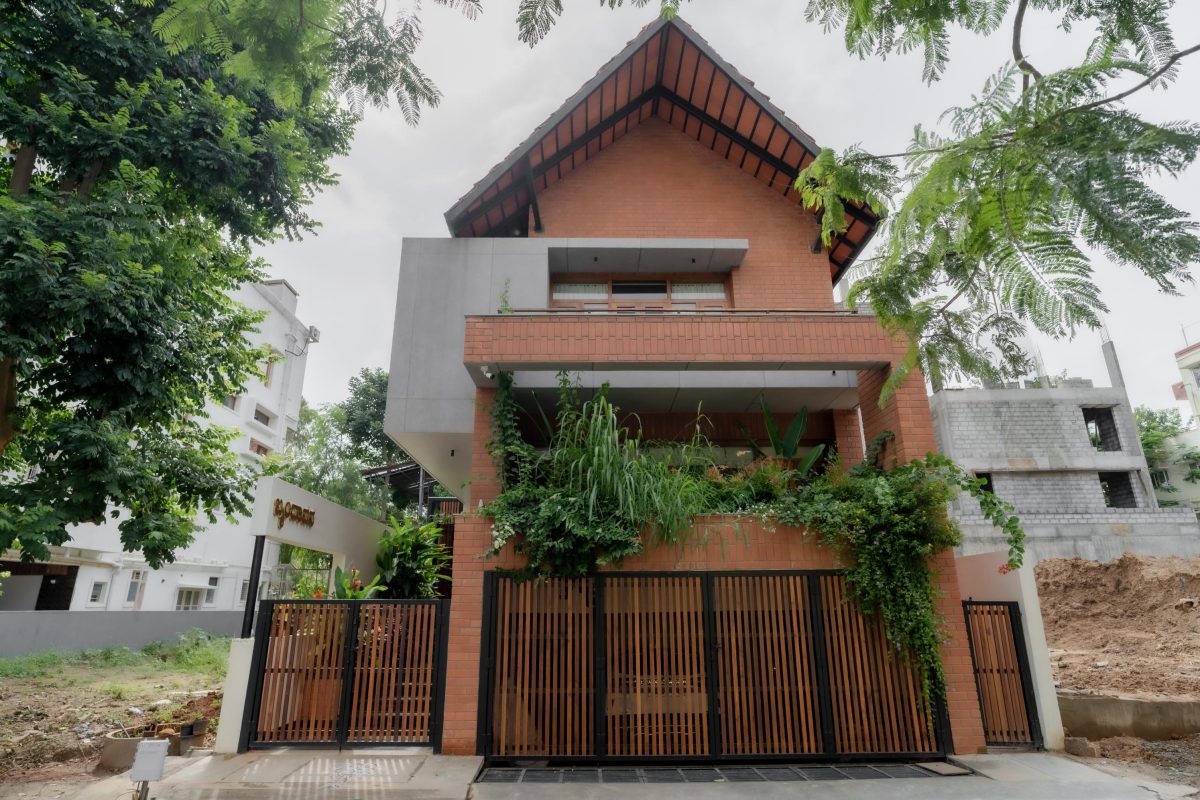
Bengaluru Climate Conscious Home Redefines Urban Living
A climate-responsive residence in Bengaluru is offering a glimpse into how urban homes can adapt to environmental conditions while enhancing liveability. Designed with a focus on passive cooling, material efficiency, and spatial openness, the project reflects a growing shift towards climate-conscious housing in India’s rapidly expanding cities.Located within a dense urban setting, the home integrates architectural strategies that reduce dependence on mechanical cooling. Orientation, shading devices, and ventilation pathways have been carefully planned to optimise airflow and minimise heat gain—critical considerations in a city experiencing rising temperatures and urban heat island effects.
The Bengaluru climate conscious residence also incorporates locally sourced materials and finishes that improve thermal performance. By prioritising materials with lower embodied energy, the design reduces both construction-related emissions and long-term environmental impact. Such choices are increasingly relevant as the construction sector accounts for a significant share of urban carbon footprints.A defining feature of the home is its spatial configuration, which emphasises openness while maintaining privacy. Transitional zones such as courtyards, semi-open areas, and shaded balconies help regulate indoor temperatures and create a gradual interface between indoor and outdoor environments. These elements also enhance natural light penetration, reducing reliance on artificial lighting during the day.Urban planners note that such design approaches are particularly important for cities like Bengaluru, where rapid urbanisation has led to denser built environments and reduced green cover. Climate-responsive homes can mitigate some of these impacts by improving microclimates at the building level and reducing energy demand.
The Bengaluru climate conscious residence also reflects changing homeowner preferences. As awareness of sustainability grows, there is increasing demand for homes that are not only aesthetically appealing but also environmentally efficient and comfortable across seasons. This shift is influencing both individual housing projects and larger real estate developments.Water management and landscape integration further strengthen the project’s sustainability credentials. Features such as rainwater harvesting and drought-resistant planting help reduce resource consumption while supporting resilience in the face of variable rainfall patterns.From a design perspective, the residence demonstrates how traditional architectural principles can be reinterpreted for contemporary contexts. Passive cooling techniques, once common in vernacular architecture, are being adapted using modern materials and construction methods to meet current lifestyle needs.Experts suggest that scaling such approaches across urban housing could significantly reduce energy consumption in cities. With residential buildings accounting for a large share of electricity use—particularly for cooling—climate-sensitive design offers a pathway to more efficient and resilient urban systems.
While projects like this remain relatively niche, they signal a broader transition in the housing sector. Developers and policymakers are increasingly recognising the importance of integrating sustainability into building design, not just as an add-on but as a core principle.As Bengaluru continues to grow, the adoption of climate-responsive housing models will play a key role in shaping the city’s environmental footprint. The project underscores how thoughtful design can balance comfort, efficiency, and sustainability—pointing towards a more resilient future for urban living.