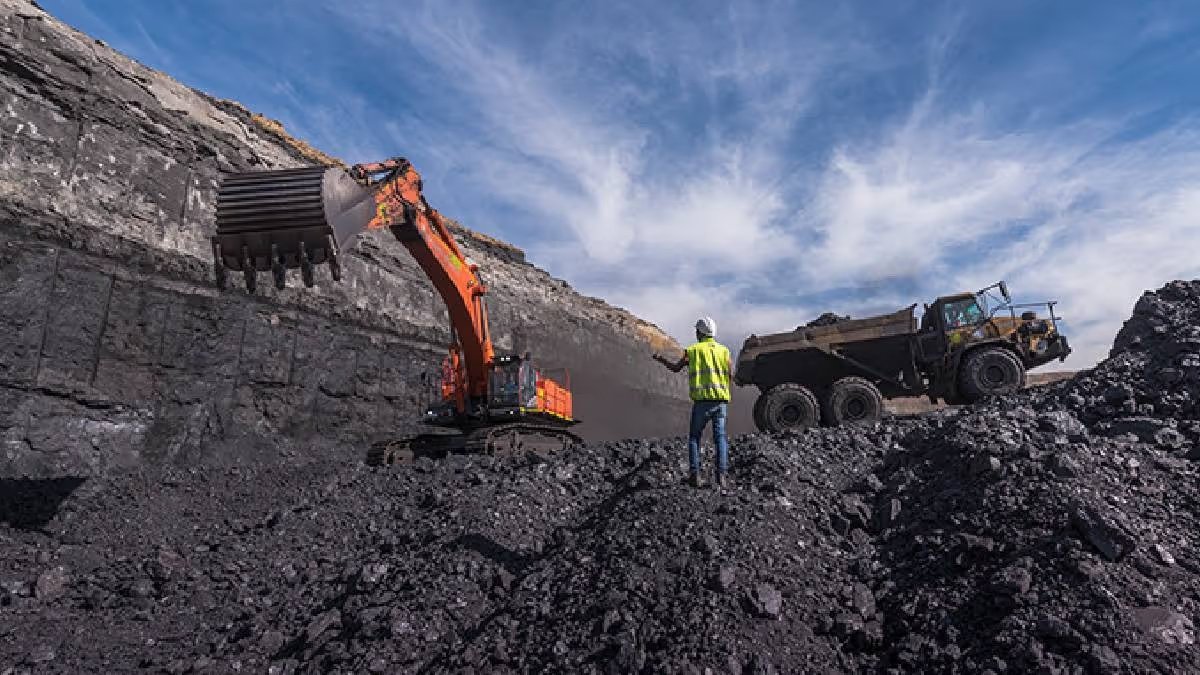
India’s energy landscape is witnessing a short-term shift back towards coal, as rising summer demand and a disruption in gas supplies push power producers to secure higher volumes of domestic fuel. Coal India Limited has reported a modest increase in sales for March, marking the first uptick after six consecutive months of decline.The state-run miner recorded a 0.7% rise in coal dispatches to approximately 69.5 million tonnes, even as production dipped slightly during the same period. This divergence highlights a tightening demand-supply balance, with previously accumulated stockpiles now being drawn down as electricity demand begins to climb.
The rebound is closely linked to a shortage of liquefied natural gas (LNG), which has reduced reliance on gas-based power generation. With gas supplies constrained due to global disruptions, utilities are increasingly turning to coal to meet rising electricity needs, particularly ahead of an expected hotter-than-average summer. Coal continues to dominate India’s energy mix, accounting for nearly three-quarters of total electricity generation. While gas contributes a much smaller share, it plays a critical role during peak demand periods such as heatwaves. The current shortfall has therefore amplified pressure on coal-based generation, prompting a system-wide adjustment.From an urban development perspective, the implications are significant. Reliable electricity supply underpins everything from residential cooling demand to industrial production and infrastructure execution. As cities prepare for extreme heat conditions, ensuring uninterrupted power becomes central to both economic activity and public well-being.
Government directives have reinforced this shift. Power plants have been instructed to operate at full capacity and defer maintenance shutdowns, while industries are being encouraged to rely on captive power generation to ease pressure on the grid. These measures reflect a broader effort to prioritise household electricity access during peak demand months.The recent rise in coal offtake also signals a reversal of earlier trends. A period of milder weather in 2025 had reduced electricity consumption, leading to excess coal inventories at power plants. The current increase suggests these reserves are now being utilised and replenished as demand conditions normalise.However, the renewed reliance on coal raises longer-term questions around sustainability. As one of the most carbon-intensive fuels, increased coal usage can complicate India’s climate commitments, particularly as cities seek to transition towards cleaner and more resilient energy systems.At the same time, the episode underscores the importance of energy diversification. Experts argue that strengthening renewable energy capacity, storage infrastructure, and grid flexibility will be critical to reducing vulnerability to global supply shocks in fossil fuels.
In the near term, coal is expected to remain central to managing peak demand, especially during extreme weather events. The recent rebound in Coal India Limited’s sales highlights how quickly energy systems can shift in response to supply disruptions and climate-driven demand patterns.As India navigates the balance between energy security and sustainability, the coming months will test how effectively the country can manage both immediate power needs and its longer-term transition towards low-carbon urban infrastructure.