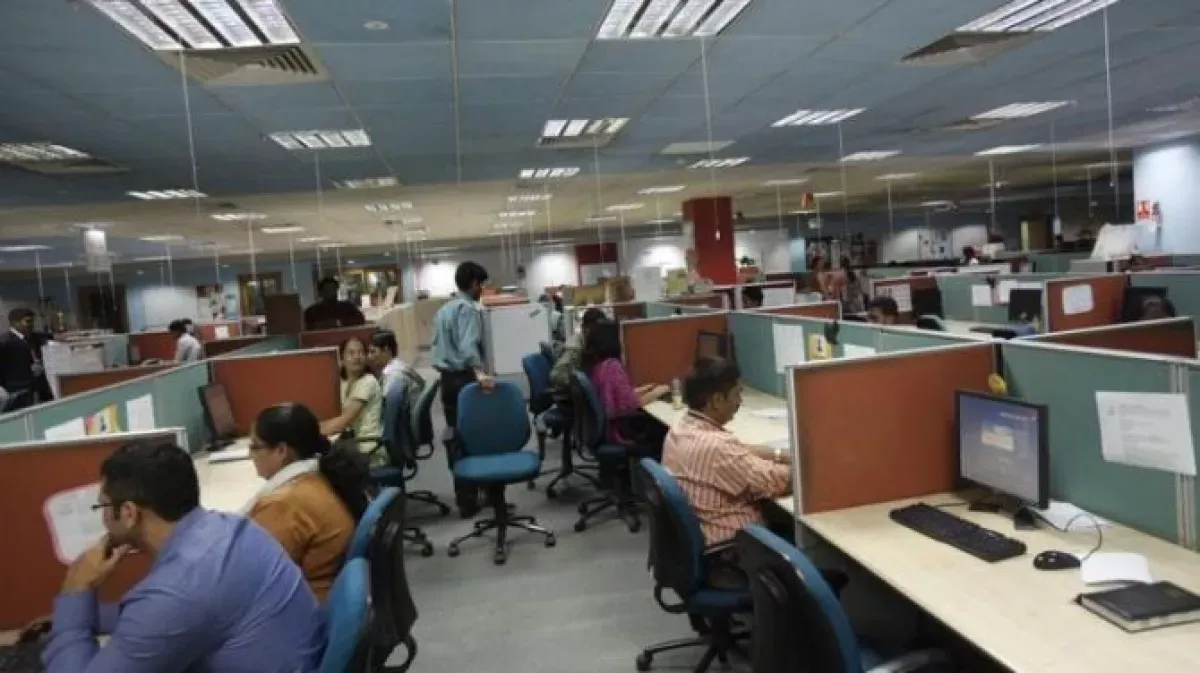
A significant managed office transaction in Bengaluru is underlining how global firms are reshaping their India expansion strategies through flexible infrastructure. IndiQube Spaces has secured a long-term lease of over 48,000 square feet to a healthcare technology company setting up a global capability centre (GCC), in a deal valued at approximately ₹75 crore over five years. The move signals sustained confidence in the Bengaluru GCC office market and its evolving role in urban economic growth.
The scale of the transaction reflects a broader shift in how multinational occupiers approach workspace decisions. Instead of committing to traditional long-term leases with high upfront costs, companies are increasingly opting for managed office providers that offer ready-to-use, scalable environments. This model reduces capital expenditure while allowing firms to respond quickly to changing workforce and business requirements an advantage in sectors such as healthcare technology, where operational agility is critical. Industry experts note that the Bengaluru GCC office market has matured beyond its earlier concentration in IT services. Today, it is attracting diverse sectors including healthcare, finance, and engineering services, each requiring specialised infrastructure and compliance-ready facilities. Managed workspace operators are filling this gap by delivering custom-built environments with integrated facility management, enabling firms to focus on core operations rather than real estate complexities.
From an urban development perspective, such deals also reflect more efficient utilisation of Grade A commercial assets. By acting as intermediaries between developers and occupiers, flexible workspace firms help maintain occupancy levels and optimise building performance. Urban planners suggest that this model could contribute to reducing vacancy rates and supporting more sustainable land use patterns in high-density business districts. The environmental implications are also gaining attention. Consolidated workspaces managed by a single operator can enable better energy management, shared resources, and reduced duplication of infrastructure factors that align with the gradual push towards lower-carbon commercial real estate. While not a complete solution, this approach introduces incremental efficiencies that are increasingly relevant as cities confront climate and resource challenges.
Bengaluru’s continued dominance in the GCC landscape is tied to its deep talent pool, established technology ecosystem, and expanding infrastructure network. However, sustained growth will depend on how effectively the city addresses pressures on mobility, housing, and urban services. Large workspace transactions such as this highlight both opportunity and responsibility: the need to balance economic expansion with liveability and resilience. As more global firms evaluate India as a strategic base for back-end and innovation operations, the demand for flexible, enterprise-grade office solutions is expected to rise. For Bengaluru, the trajectory of the GCC economy will likely shape not just its commercial real estate market, but also the broader contours of its urban future.