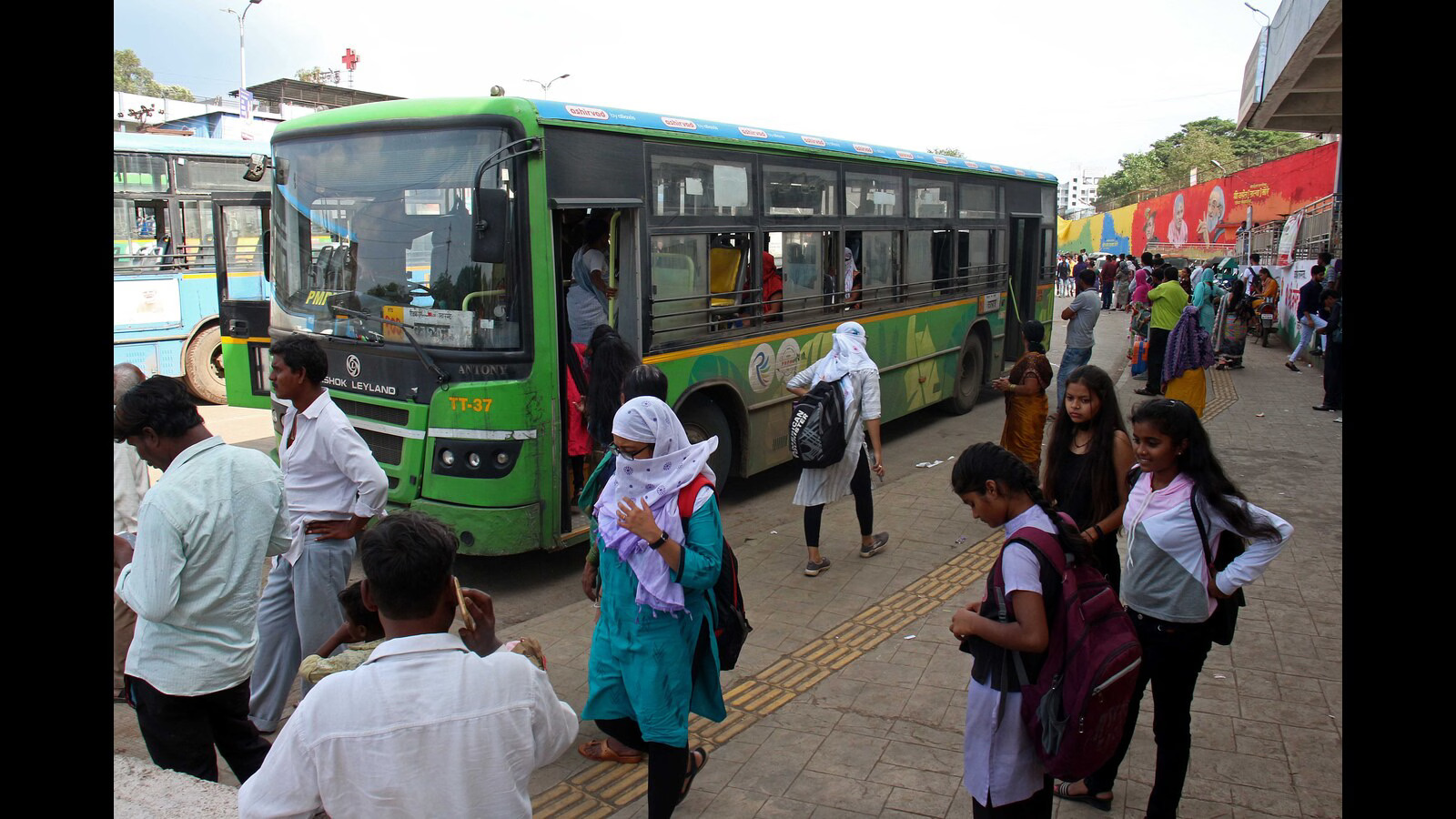
Public bus operations in Pune are facing increasing strain as frequent route diversions disrupt service reliability across some of the city’s busiest transport corridors. The Pune Mahanagar Parivahan Mahamandal Limited (PMPML) has formally raised concerns with civic and traffic authorities, calling for better coordination to minimise operational uncertainty and commuter inconvenience.
At the centre of the issue are key arterial roads that serve as the backbone of Pune’s bus network. These corridors carry a high volume of daily passengers, linking residential areas with commercial hubs, educational institutions, and transit interchanges. Repeated changes in routing, often triggered by traffic management measures, infrastructure works, or public events, are now affecting the predictability of services. Transport officials indicate that the growing frequency of bus route diversions is impacting schedule adherence and increasing turnaround times. For commuters, this translates into longer journeys, missed connections, and confusion over temporary route changes. The problem is particularly acute during weekends and peak activity periods, when diversions tend to be more frequent.
Urban mobility experts note that reliable public transport is essential for reducing dependence on private vehicles and managing congestion in rapidly expanding cities like Pune. When bus route diversions become routine rather than exceptional, they undermine passenger confidence and risk pushing commuters towards less sustainable modes of travel. The issue also reflects a broader challenge in urban governance—coordination between multiple agencies responsible for roads, traffic regulation, and public transport. While diversions may be necessary to manage short-term disruptions or facilitate infrastructure upgrades, their cumulative impact can weaken the efficiency of the overall mobility system if not carefully planned.
Commuters who rely on buses for daily travel, including students and office workers, are among the most affected. Inconsistent routes not only extend travel times but also create accessibility gaps, particularly for those unfamiliar with alternate roads or lacking real-time information. From a planning perspective, experts suggest that cities need integrated traffic and transport management systems that prioritise public transit continuity even during disruptions. Measures such as advance route planning, real-time passenger information systems, and coordinated scheduling can help mitigate the impact of diversions.
The situation also highlights the need to strengthen Pune’s public transport ecosystem as the city continues to grow. With increasing population density and vehicle ownership, ensuring a dependable bus network is critical for achieving more equitable and climate-resilient urban mobility. As discussions between transport authorities and civic agencies continue, the focus is likely to shift towards creating a more predictable operating environment for buses. The outcome will play a key role in determining whether Pune can maintain public transport as a viable, efficient, and inclusive mobility option in the years ahead.
Pune PMPML Flags Frequent Bus Route Disruptions