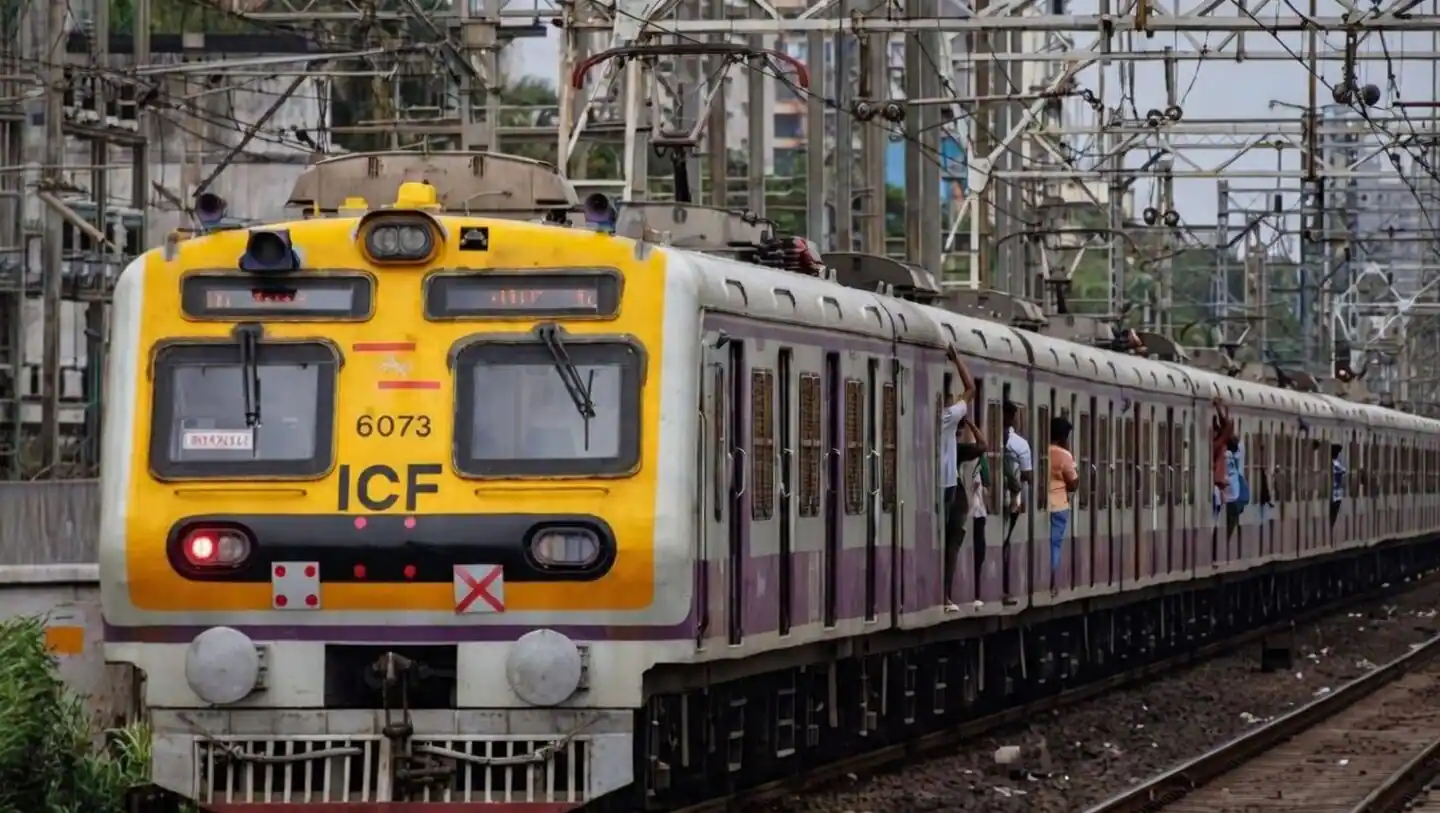
Late-night rail operations across Mumbai are undergoing temporary adjustments this week as infrastructure works intensify on a key urban connector project. Suburban train services on the Central line are being partially curtailed and rescheduled during overnight hours to facilitate the dismantling of an ageing bridge structure in the Prabhadevi area.
The Mumbai train disruption is linked to preparatory work for the Worli–Shivdi Connector, a strategic road project aimed at improving east–west connectivity within the island city. Urban planners note that such interventions, while disruptive in the short term, are critical to unlocking long-term mobility gains in a city constrained by limited road expansion capacity. According to railway officials, scheduled night blocks—typically between late evening and early morning hours—have been introduced to allow safe execution of demolition activities. During these windows, several long-distance suburban services originating from outer nodes such as Kalyan, Kasara, and Khopoli are being short-terminated at intermediate stations including Kurla, Thane, and Dadar. Select services are also originating from these stations instead of the usual southern terminus.
The Mumbai train disruption is expected to affect late-night commuters, including shift workers and essential service staff who rely on the suburban rail network. Experts point out that even off-peak adjustments can have ripple effects in Mumbai’s tightly interconnected transport system, where suburban trains serve as the backbone of daily mobility. From an infrastructure perspective, the removal of older bridge structures is a necessary step in upgrading transport corridors to meet modern capacity and safety standards. The Prabhadevi segment, located in a dense urban zone, has long been identified as a bottleneck for both road and rail integration. Its redevelopment is expected to improve traffic flow and support upcoming transport links.
Transport analysts emphasise that coordinated planning between rail authorities and civic agencies is crucial during such projects. Clear communication of schedule changes, along with alternative travel arrangements, can help minimise inconvenience to commuters while ensuring construction timelines are maintained. The broader Worli–Shivdi Connector project is part of Mumbai’s ongoing effort to enhance intra-city connectivity and reduce congestion across key corridors. By improving linkages between business districts and residential zones, such projects can contribute to more efficient movement of people and goods, supporting economic productivity.
At the same time, experts underline the importance of integrating these infrastructure upgrades with sustainable mobility strategies. Strengthening public transport reliability during construction phases, and ensuring seamless multimodal connections post-completion, will be key to reducing long-term dependence on private vehicles. As the demolition work progresses over the coming days, authorities are expected to gradually restore normal services. The episode highlights the balancing act between maintaining uninterrupted urban mobility and advancing critical infrastructure upgrades in a rapidly evolving metropolitan environment.
Mumbai Local Trains Affected By Prabhadevi Bridge Removal Till April 4