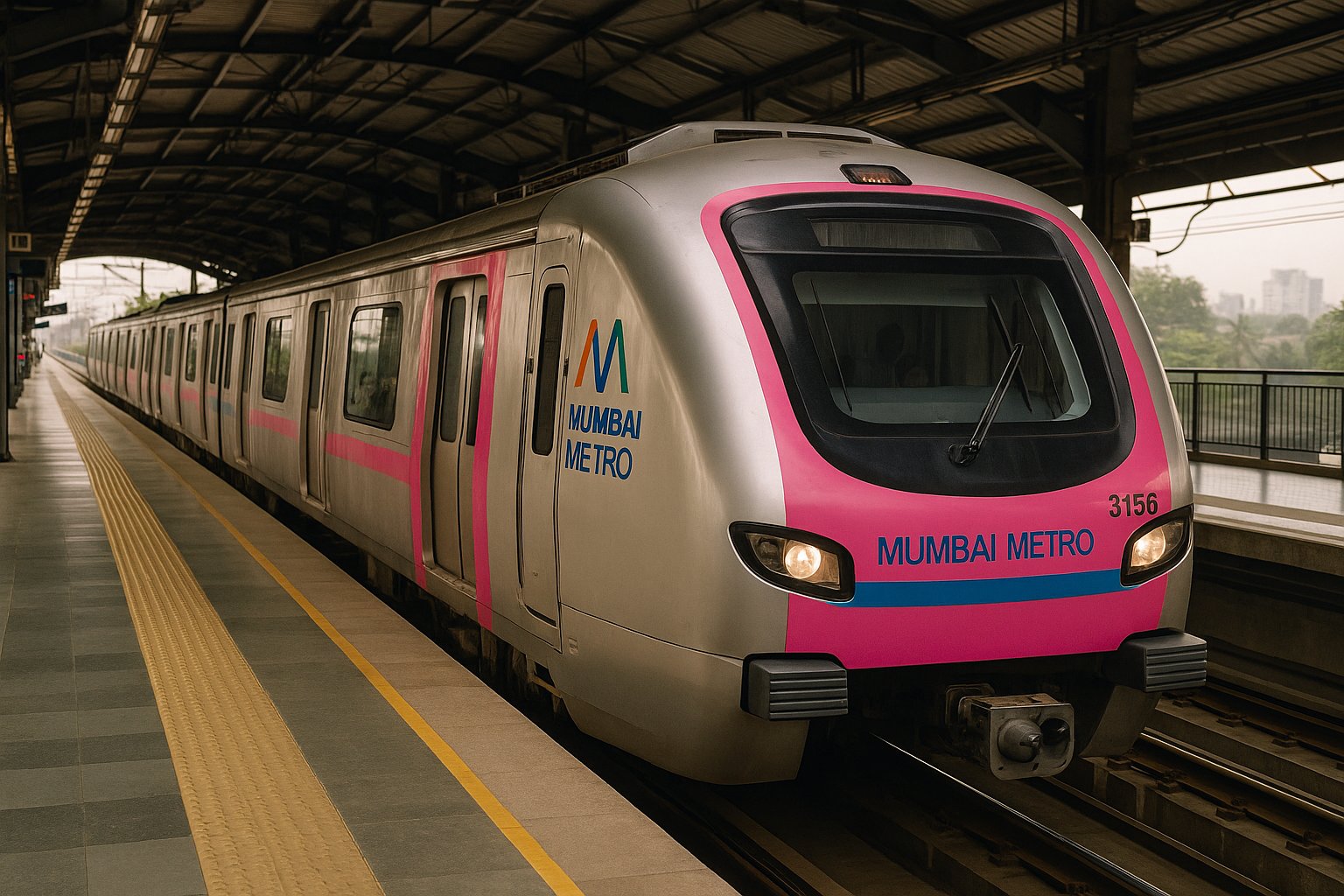
A critical construction milestone has been achieved on the Mumbai Metro Line 5 corridor in Thane, bringing the long-delayed Thane–Bhiwandi–Kalyan route closer to operational readiness. The completion of a key structural segment at a major traffic junction signals progress in a project expected to reshape commuting patterns across the eastern metropolitan belt.
The Thane Kalyan Metro project, spanning nearly 25 kilometres, has been designed to serve densely populated and industrial zones that have historically depended on congested road networks. Urban mobility experts note that this corridor addresses a long-standing infrastructure gap, particularly for residents travelling between Thane, Bhiwandi and Kalyan—areas that have seen rapid population and economic growth over the past decade. The Thane Kalyan Metro is projected to significantly reduce travel time across these nodes, where daily commutes are often unpredictable due to road congestion and freight movement. By offering a high-capacity, grade-separated transit option, the corridor is expected to ease pressure on arterial roads while improving access to employment hubs, healthcare facilities, and educational institutions.
Infrastructure planners highlight that strategic junctions such as Kapurbawdi have been major bottlenecks within the city’s road network. The introduction of metro services is likely to redistribute commuter flows, potentially reducing vehicular load in peak hours. This shift could also improve road safety and lower emissions, particularly in corridors where traffic density contributes to deteriorating air quality. The project is being implemented by the Mumbai Metropolitan Region Development Authority, which has had to navigate complex land acquisition and rehabilitation processes. According to officials, coordinated planning and phased execution have helped maintain construction momentum despite urban constraints.
Integration is a key feature of the Thane Kalyan Metro, with planned interchanges linking it to other metro corridors and suburban rail systems. This multimodal approach is expected to enhance network efficiency, enabling smoother transfers and reducing dependence on private vehicles. Experts suggest that such integration is essential for maximising ridership and ensuring long-term financial and environmental sustainability. With a design capacity of over a thousand passengers per train, the corridor aims to provide a scalable solution to the region’s growing mobility demand. As peri-urban areas continue to urbanise, transport infrastructure of this scale is increasingly viewed as a catalyst for balanced regional development.
From a real estate perspective, improved connectivity is likely to influence land use patterns along the corridor, encouraging transit-oriented development. This could support more compact, mixed-use neighbourhoods that reduce travel distances and promote walkability—key principles in climate-resilient urban planning. As the Thane Kalyan Metro moves closer to completion, attention will shift to operational readiness, service frequency, and last-mile connectivity. The effectiveness of these elements will ultimately determine whether the corridor delivers on its promise of faster, more equitable, and sustainable urban mobility for the wider metropolitan region.
Thane Metro Line 5 Nears Final Construction Stage